Contact Us
Let's be honest about something most chatbot development companies will not say: the majority of chatbots in production right now are terrible. They answer with scripts when the customer asked something specific. They loop through decision trees that lead nowhere. They pretend to understand when they do not. They make your support experience worse, not better — and your customers know it. Here is why this keeps happening.
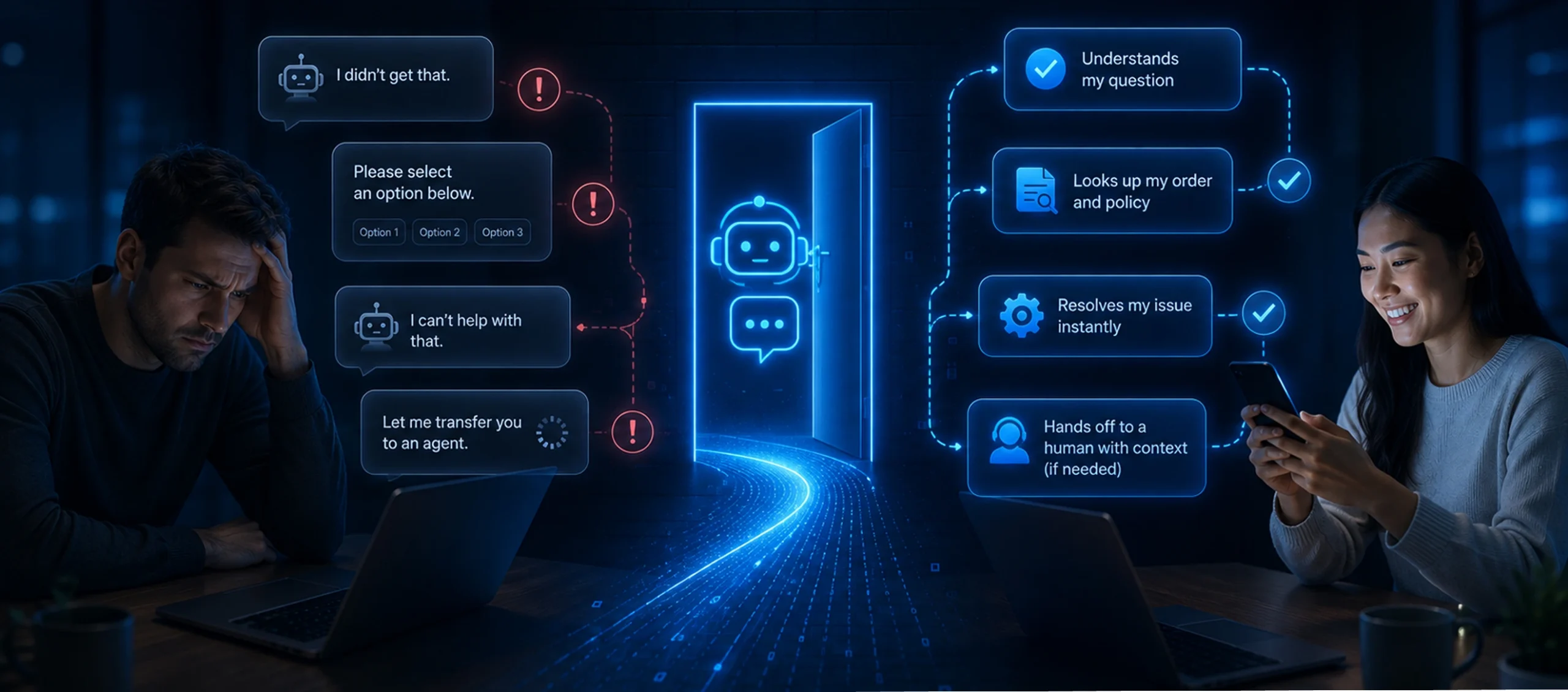
They match keywords, not intent. A customer asks "Can I return this if I already opened the box?" and the bot sends back your generic return policy instead of answering the actual question.
They cannot look up an order, check a status, or pull a specific policy clause. They can only parrot pre-loaded responses. The moment a question requires context, they fall apart.
They work in the demo. They break under real traffic, real edge cases, and real customer frustration. Three weeks after launch, your team turns them off.
We build the other kind. Chatbots that understand language, retrieve from your knowledge base, connect to your systems, and take real action — with guardrails that prevent hallucination and escalation paths that keep humans in the loop where they belong.
This is not a concept. It is a production chatbot we built for a US travel company — the problem, what we built, and the numbers it delivered.
A mid-size US travel company was fielding 800+ support tickets daily across email, chat, and phone. Seventy percent of the questions were about the same fifteen topics — booking changes, cancellation policies, baggage rules, loyalty points. But every ticket required a human agent because their existing FAQ bot could not handle follow-up questions or pull booking-specific data.
A generative AI chatbot connected to their booking engine, knowledge base, and CRM through secure API integrations. The chatbot understands conversational language, retrieves the customer's specific booking details, answers multi-turn questions, and processes simple changes (date modifications, seat upgrades, cancellation requests) end to end. When a question falls outside scope, it escalates to a human agent with the full conversation history — no repeat explanation needed.
Ticket volume dropped in the first 60 days.
Support costs fell — saving over $380,000 annually.
Customer satisfaction score for chatbot interactions.
Human agents’ spent time on complex issues
We do not hand you a chatbot template and call it custom. Every chatbot we build is scoped, designed, and engineered around the way your business actually works.
We start with your support data, your ticket logs, and your customer complaints — not with the technology. Where do your customers ask the same questions over and over? Where do agents waste time looking up information they should have at their fingertips? Where does response time kill the experience? We map the highest-impact chatbot use case, define success metrics, and scope the build. If a chatbot is not the right solution, we tell you. Sometimes an AI agent or a RAG-powered knowledge assistant is a better fit.
This is the core build. We design conversation flows, train the NLP layer, connect to your data sources, integrate with your systems, and engineer a chatbot that handles real customer interactions — not just the five test questions from the demo. Every chatbot we build includes intent recognition, context memory, multi-turn conversation handling, fallback logic, and escalation to human agents with full conversation context.
Standard chatbots match keywords. Ours understand meaning. We build chatbots powered by large language models (GPT, Claude, Gemini, LLaMA) and grounded in your business data through retrieval-augmented generation. The chatbot searches your knowledge base, retrieves the relevant information, and generates an accurate, natural-language response — cited back to its source. No hallucination. No made-up answers. To understand more about how RAG works inside these systems, read our RAG implementation cost guide.
Some businesses need chatbots that talk, not type. We build voice-enabled AI chatbots that handle inbound and outbound calls — answering questions, qualifying leads, scheduling appointments, and routing callers. They sound natural, work around the clock, and integrate with your phone system and CRM.
A chatbot that cannot talk to your CRM, helpdesk, booking engine, or database is a toy. We integrate chatbots with Salesforce, HubSpot, Zendesk, Freshdesk, Intercom, Shopify, your internal tools, and any system with an API. Your chatbot pulls live data and takes real actions inside the tools your team already uses.
Launch day is the starting line. We monitor every chatbot in production — tracking resolution rates, escalation rates, response accuracy, user satisfaction, and conversation drop-offs. We retrain models, refine conversation flows, and adapt to new use cases. Your chatbot gets sharper every month.
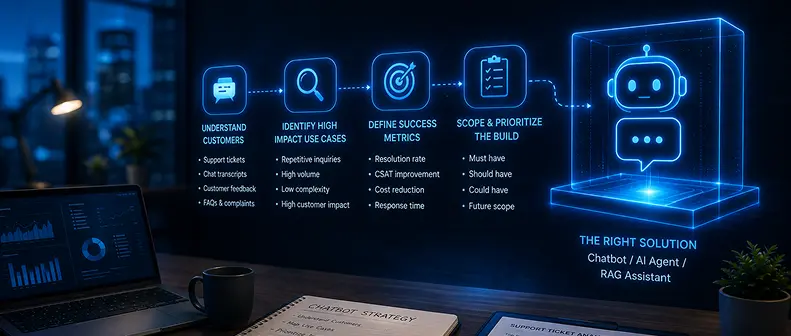
We start with your support data, your ticket logs, and your customer complaints — not with the technology. Where do your customers ask the same questions over and over? Where do agents waste time looking up information they should have at their fingertips? Where does response time kill the experience? We map the highest-impact chatbot use case, define success metrics, and scope the build. If a chatbot is not the right solution, we tell you. Sometimes an AI agent or a RAG-powered knowledge assistant is a better fit.
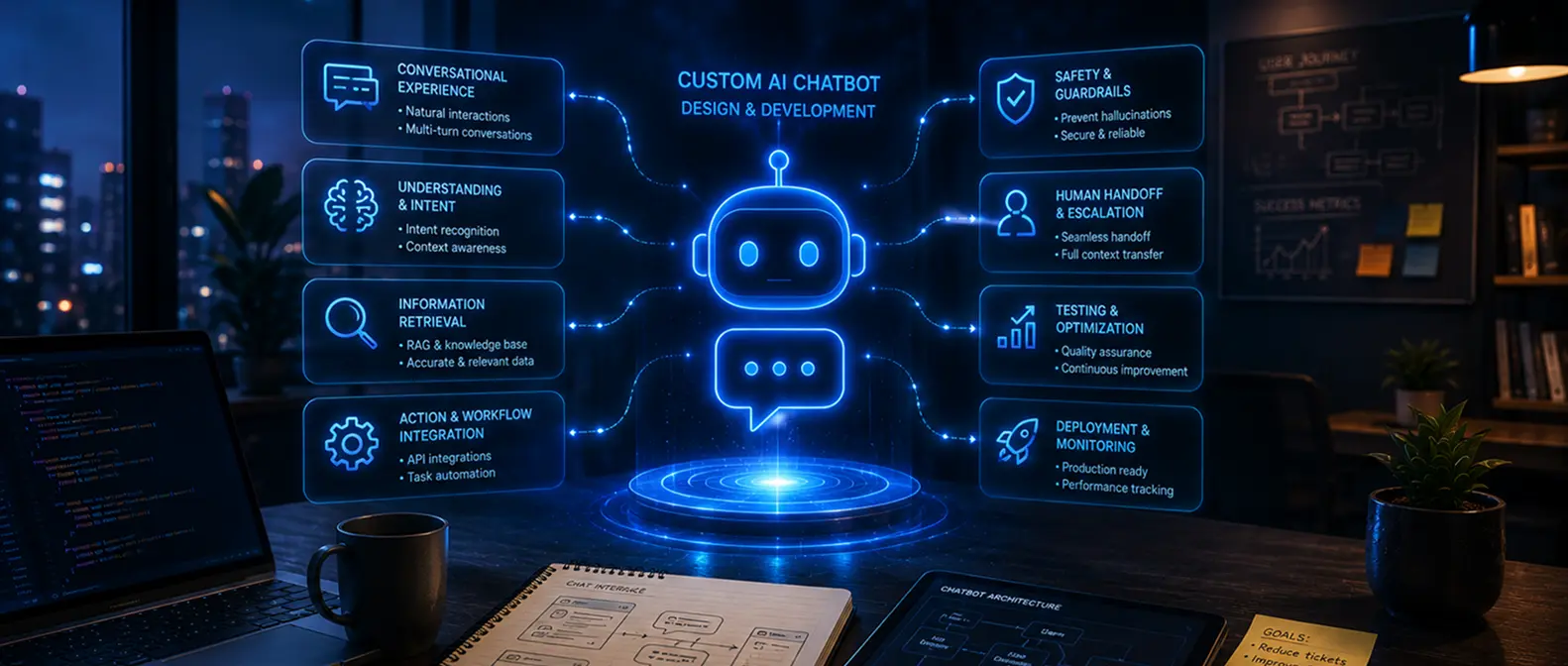
This is the core build. We design conversation flows, train the NLP layer, connect to your data sources, integrate with your systems, and engineer a chatbot that handles real customer interactions — not just the five test questions from the demo. Every chatbot we build includes intent recognition, context memory, multi-turn conversation handling, fallback logic, and escalation to human agents with full conversation context.
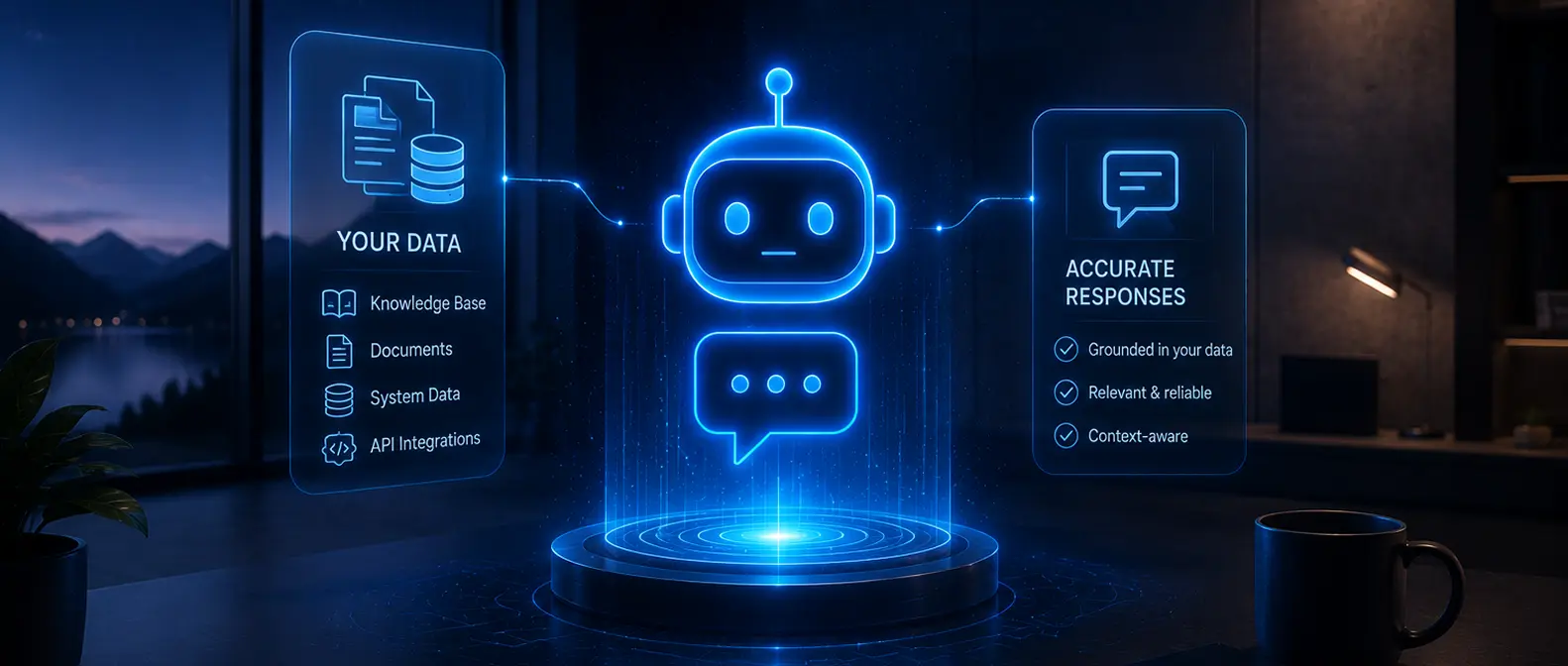
Standard chatbots match keywords. Ours understand meaning. We build chatbots powered by large language models (GPT, Claude, Gemini, LLaMA) and grounded in your business data through retrieval-augmented generation. The chatbot searches your knowledge base, retrieves the relevant information, and generates an accurate, natural-language response — cited back to its source. No hallucination. No made-up answers. To understand more about how RAG works inside these systems, read our RAG implementation cost guide.
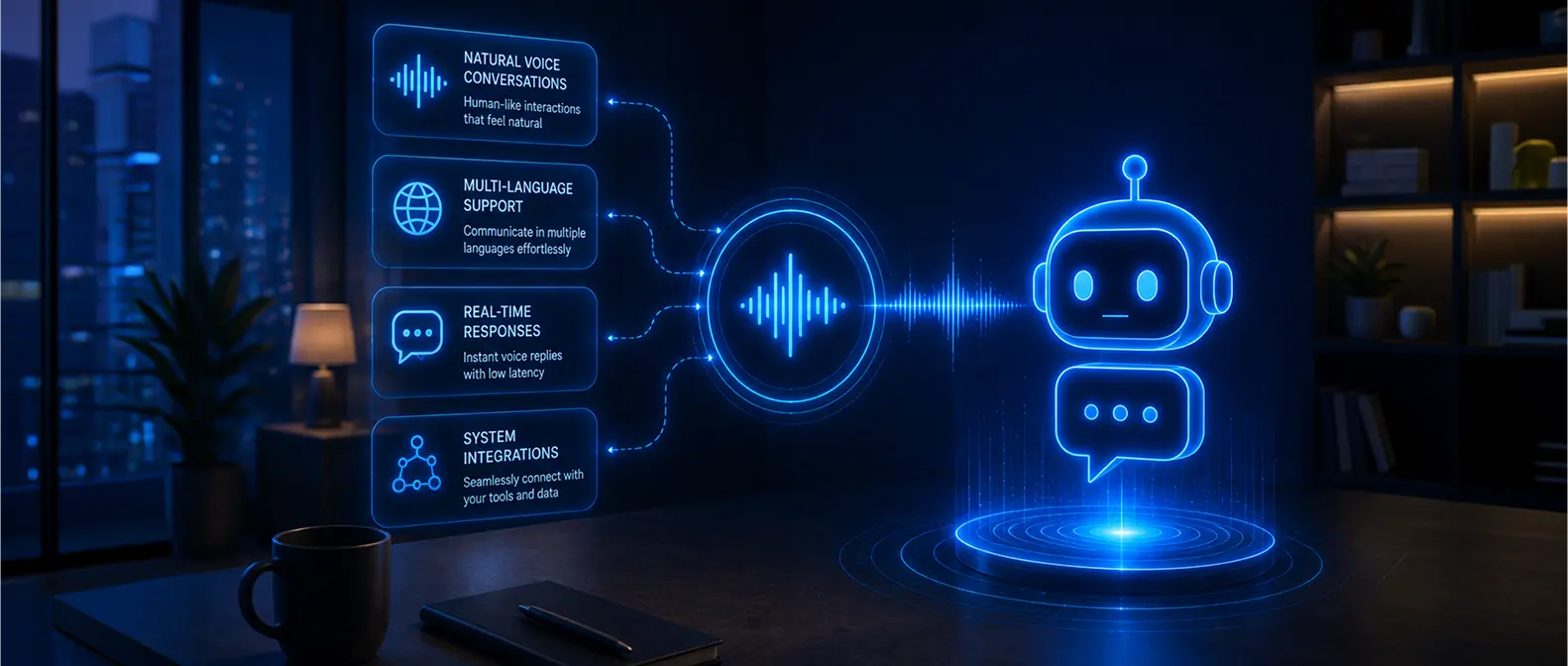
Some businesses need chatbots that talk, not type. We build voice-enabled AI chatbots that handle inbound and outbound calls — answering questions, qualifying leads, scheduling appointments, and routing callers. They sound natural, work around the clock, and integrate with your phone system and CRM.
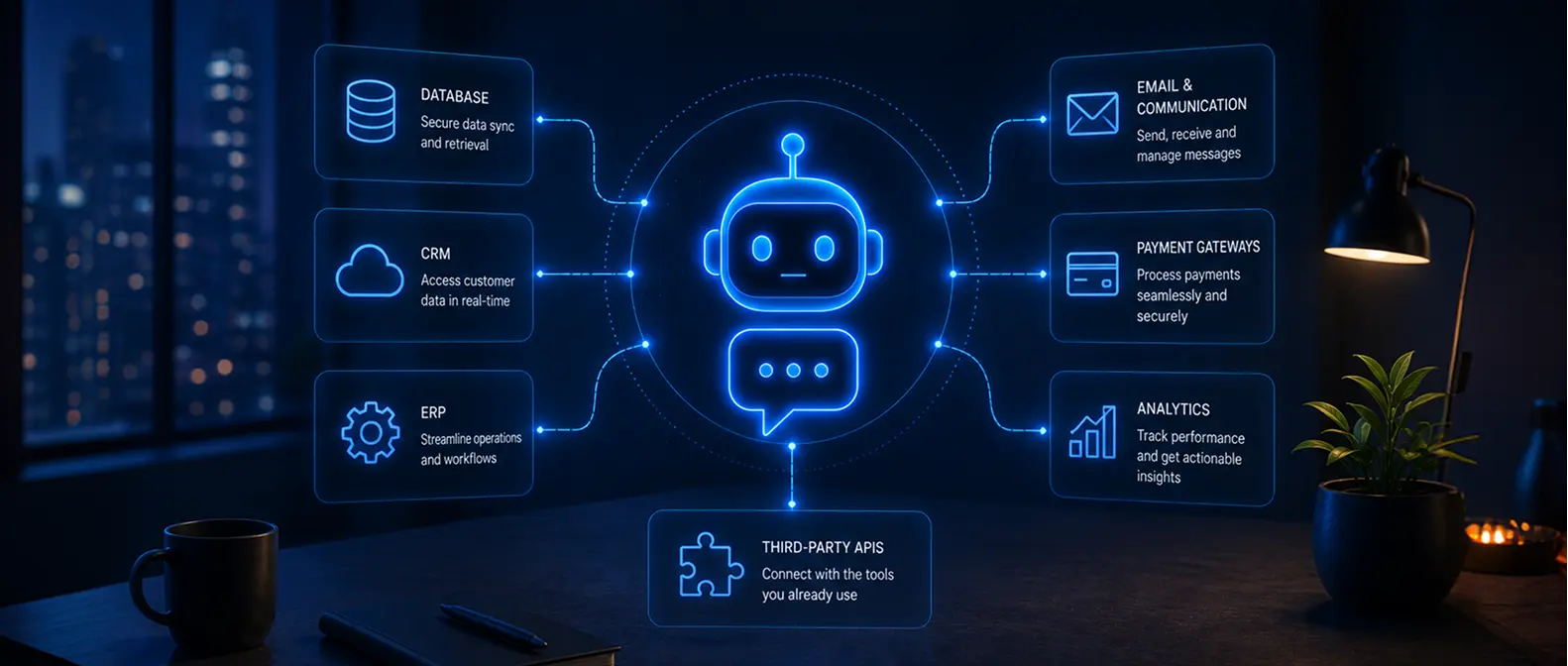
A chatbot that cannot talk to your CRM, helpdesk, booking engine, or database is a toy. We integrate chatbots with Salesforce, HubSpot, Zendesk, Freshdesk, Intercom, Shopify, your internal tools, and any system with an API. Your chatbot pulls live data and takes real actions inside the tools your team already uses.
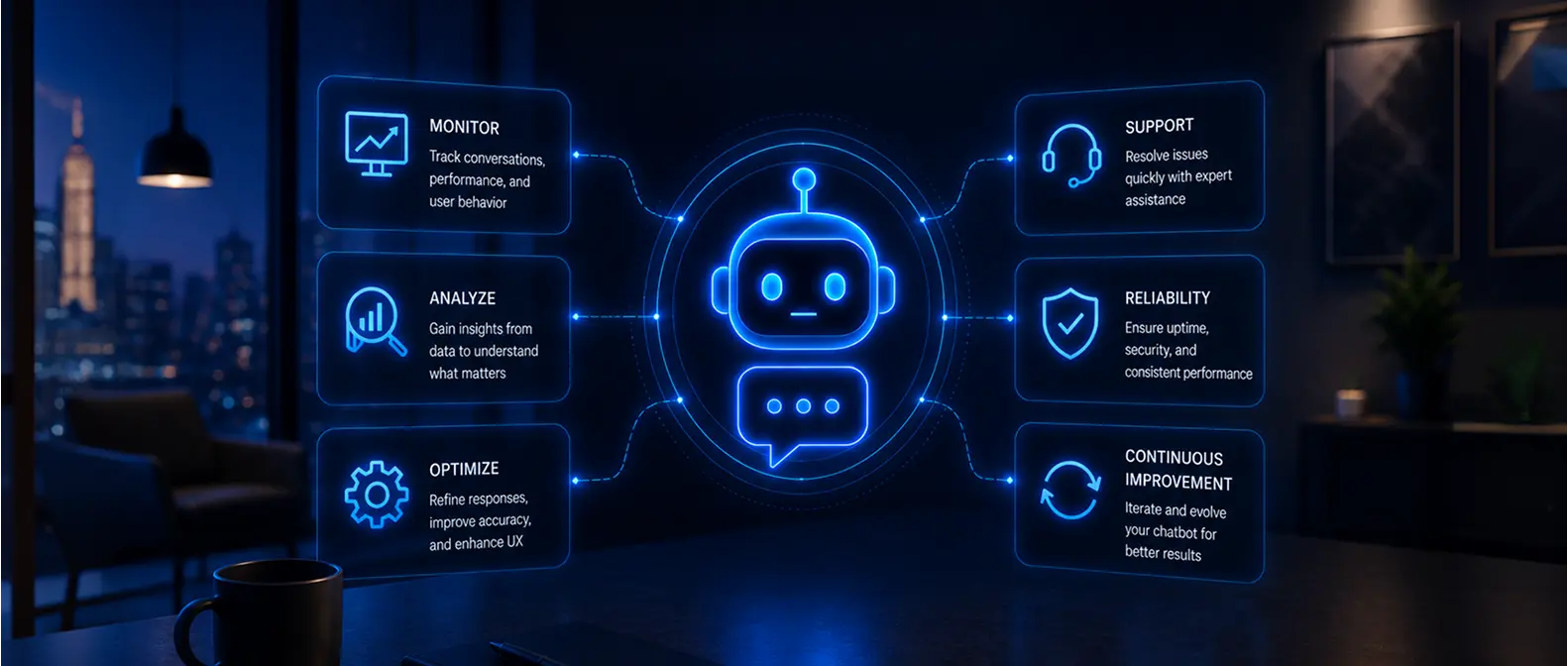
Launch day is the starting line. We monitor every chatbot in production — tracking resolution rates, escalation rates, response accuracy, user satisfaction, and conversation drop-offs. We retrain models, refine conversation flows, and adapt to new use cases. Your chatbot gets sharper every month.
Most vendors will sell you whatever they are building. We would rather help you pick the right tool, even if it means pointing you to a different page on our site.
Not sure? Book a strategy call. We will map your use case and tell you exactly which approach delivers the best ROI for your specific situation.
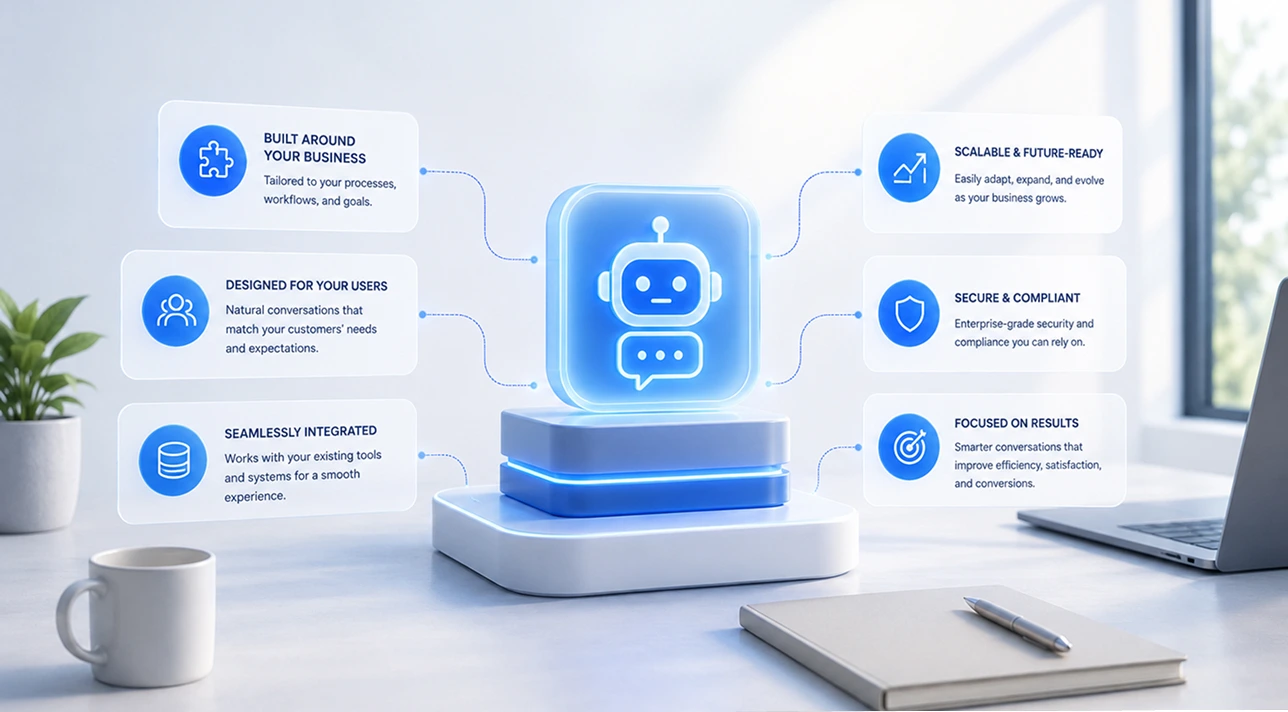
Every business runs differently. A chatbot built for a SaaS helpdesk should not look like one built for a hospital or an e-commerce brand. We scope each build around your actual workflows, data sources, and customer journeys — so the chatbot fits how your team operates, not the other way around.
Handle tier-1 questions end to end — order status, returns, policy inquiries, account questions, troubleshooting — and escalate complex issues to human agents with full context. Not a keyword matcher. A real resolver.
Engage website visitors the moment they arrive, ask qualifying questions, score intent, capture contact information, book meetings, and route high-value prospects to your sales team in real time.
Give your customers and employees instant access to answers from your documentation, manuals, FAQs, and internal knowledge — through natural conversation, not keyword search. Built on RAG architecture for accuracy and source citation.
Help your team with HR questions, IT support requests, onboarding tasks, policy lookups, and internal workflows. They reduce internal ticket volume and free your operations team from answering the same questions daily.
Handle phone calls — inbound and outbound. They answer, qualify, schedule, and route without putting anyone on hold. Ideal for businesses with high call volume and routine phone workflows.
Serve customers in their language. Our multilingual chatbots switch languages seamlessly, maintain context across language shifts, and respect cultural nuances — expanding your reach without expanding your headcount.
Take a real workflow — e-commerce post-purchase support.
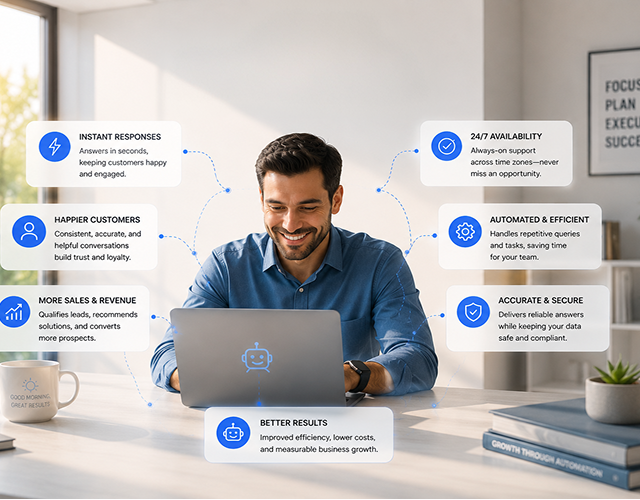
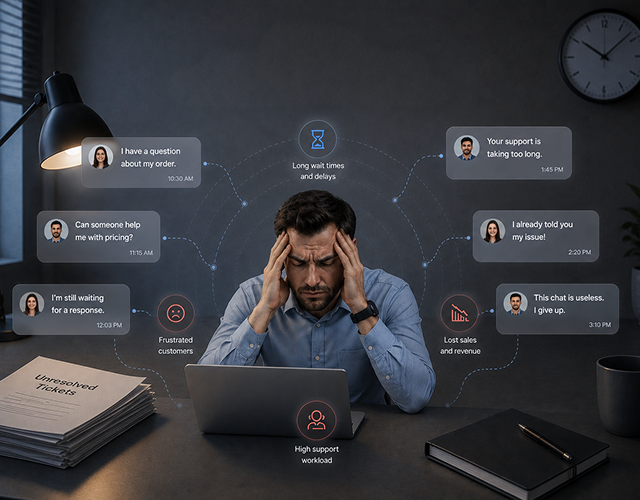
A customer buys a pair of shoes online. Two days later, they want to check shipping status. They open the website chat. A rule-based bot asks them to "select a category." They pick "Orders." The bot sends a link to the tracking page — the same link the customer already tried, which shows "in transit" with no estimated date. Frustrated, the customer types "I want to talk to a person." The bot says "All agents are currently busy." The customer goes to social media and leaves a one-star review. Total interaction time: 6 minutes. Issue resolved: no.
Same customer, same question. They open the chat and type "Where's my order?" The chatbot recognizes the intent, pulls their order from the system, and responds: "Your order #4821 shipped yesterday via FedEx. Current location: Memphis distribution center. Estimated delivery: Thursday before 5 PM. Would you like me to send tracking updates to your phone?" The customer says yes, gets a confirmation, and leaves. Total interaction time: 22 seconds. Issue resolved: yes. CSAT: positive.
We would rather lose a deal over honesty than win one on false expectations. Here is the truth.
Here is a selection of notable projects our skilled professionals undertook to help startups, enterprises, and Fortune 500s across the globe thrive and achieve business goals in the cut-throat digital ecosystem.






Our success metric is resolution rate, not deflection rate. If the chatbot passes the problem to a human, we count that as a miss — and we fix it.
GPT, Claude, Gemini, Mistral, LLaMA, Cohere, open-weight models. We pick the one that fits your use case, your budget, and your compliance requirements. We do not push the model we have a partnership with.
Encryption, access controls, data residency, audit logging. If you need HIPAA-compliant AI, we design for it before the first line of code, not as a last-minute patch.
Our US office works in your time zones. We have delivered generative AI solutions for American startups and enterprises for years. You are not onboarding engineers who need to learn your regulatory environment on your budget.
Code, models, pipelines, vector databases, infrastructure. Full ownership, zero lock-in. When the project ends, your system is entirely yours.
If your use case is better served by a simpler LLM application, a rule-based system, or even a well-structured search page — we will say so. We would rather build trust than build something unnecessary.
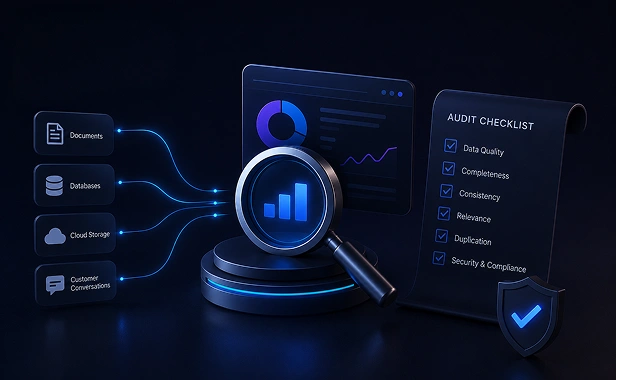
We analyze your support tickets, chat logs, call transcripts, and FAQ data. What are the top 20 questions your customers ask? What takes agents the longest? What causes the most complaints? We define the chatbot's scope, set success metrics, and identify the data sources it needs.
Output: Use case brief, data audit report, go/no-go recommendation.
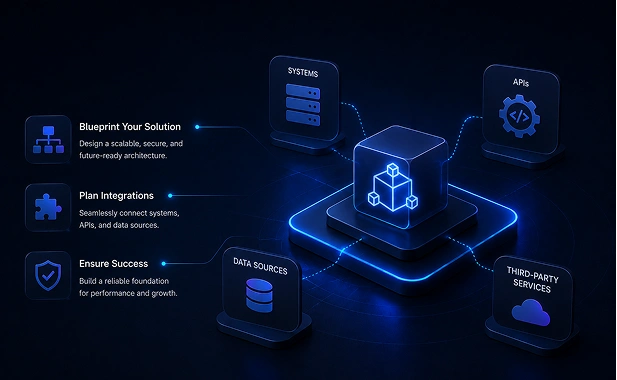
We design the system — LLM selection, RAG pipeline, conversation engine, integration points, escalation logic, channel deployment (web, app, phone, social). Every technical decision ties back to the use case.
Output: Architecture document, integration map, channel strategy.
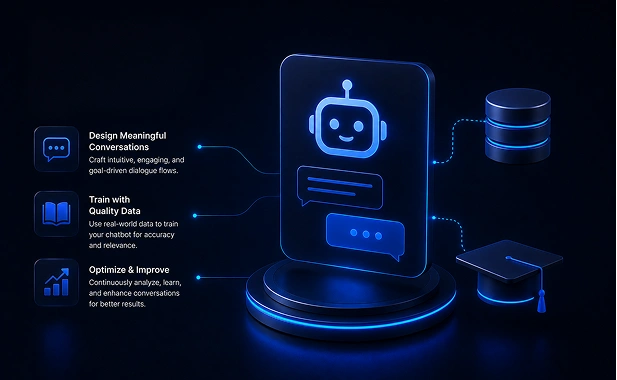
We design conversation flows, train the NLP layer on your actual customer language, build intent trees, configure fallback paths, and set escalation triggers. The chatbot learns how your customers ask questions — not how a generic dataset phrases them.
Output: onversation flow documentation, trained intent models.
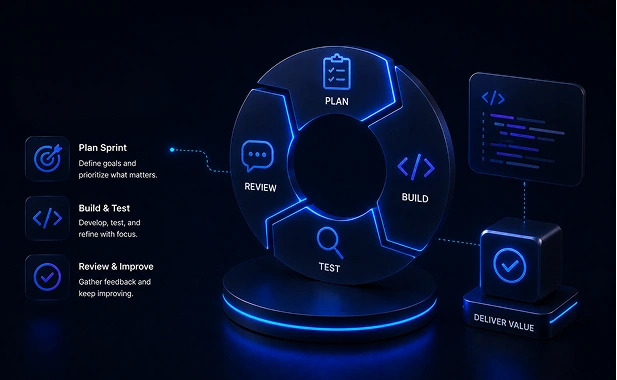
Short cycles. Working demos. You test the chatbot with real queries from your team. Your feedback shapes the tone, the logic, and the responses before anything goes live.
Output: Functional chatbot iterations with documented progress.
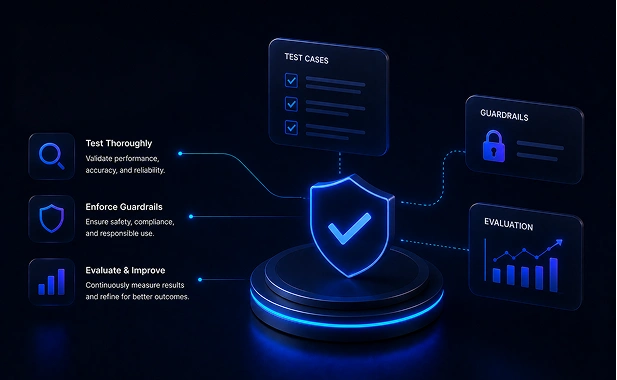
We test against real scenarios, edge cases, adversarial inputs, and integration failures. We measure intent accuracy, retrieval accuracy, response quality, and escalation appropriateness. Guardrails prevent hallucination and off-topic responses.
Output: Test reports, guardrail configs, accuracy benchmarks.
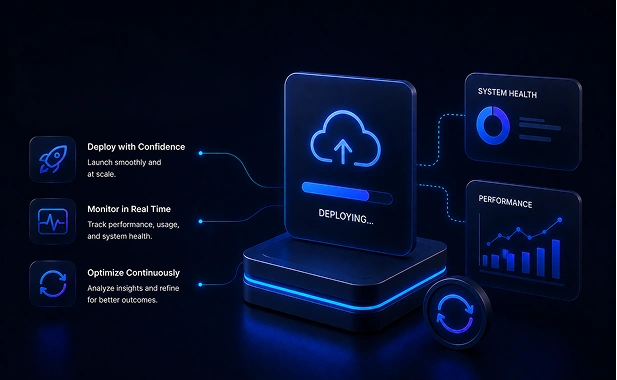
We deploy across your chosen channels, connect to your systems, and monitor from day one. Post-launch, we track resolution rates, CSAT scores, drop-off points, and escalation patterns. We retrain, refine, and improve every month.
Output: Live deployment with dashboards and monthly optimization reports.
The retrieval strategy that works for a real estate brokerage will fail in a hospital. Different data, different regulations, different stakes. We build systems that respect the specifics.
Chatbots that handle appointment scheduling, insurance verification, prescription refill requests, symptom triage, and patient FAQ — all designed for HIPAA-compliant architecture from the ground up. Connected to your EHR, patient portal, and scheduling system. We have deep experience building healthcare software that meets regulatory standards.
Chatbots that qualify property leads, answer listing questions, schedule viewings, and guide prospects through the inquiry process — 24/7, across web and social channels. Integrated with your MLS feed, CRM, and real estate platform.
AI tutoring assistants and enrollment chatbots that answer student questions from course materials, handle admissions inquiries, and automate registration workflows. Built on your curriculum data, not the open internet. Works seamlessly with the education software your institution already runs.
Booking assistants, post-booking support bots, and real-time travel update chatbots. They pull from itinerary data, fare rules, and cancellation policies to give travelers accurate, instant answers. Our travel software development team builds the platforms these chatbots live inside.
Membership inquiry bots, class booking assistants, and engagement chatbots that keep members active and informed. Connected to your scheduling system, payment platform, and fitness software.

GPT

Claude

Gemini

Mistral

LangChain

Pinecone

Weaviate

ChromaDB

Qdrant

PostgreSQL

Elasticsearch

Salesforce

Shopify
Most chatbot development companies hide their prices behind a contact form. We believe in transparency. Here are real ranges based on projects we have shipped. Most of our chatbot clients invest between $30,000 and $80,000 and see payback within the first quarter.
AI chatbot development services cover the full process of designing, building, testing, and deploying custom chatbots that use artificial intelligence — typically natural language processing and large language models — to understand customer questions, retrieve relevant information, and resolve issues through conversation. It goes beyond rule-based bots that follow scripts to systems that genuinely understand intent and context.
A rule-based chatbot follows pre-written scripts and decision trees. It can only respond to questions it was specifically programmed for. An AI chatbot uses natural language processing and machine learning to understand intent, maintain conversation context, handle follow-up questions, and generate natural responses — even for questions it has never seen before. The gap in user experience between the two is enormous.
Yes — US startups and enterprises are the core of our work. We’ve delivered generative AI and custom software for American companies since 2018, with 200+ production projects shipped and a US office that operates in your time zone. A recent example: an AI chatbot we built for a US travel company cut support tickets 58% in the first 60 days and saved over $380,000 a year, while lifting CSAT to 4.6/5. When you work with us, you’re not onboarding a team that has to learn your market on your budget.
Projects range from $12,000 for a starter chatbot to $250,000+ for an enterprise multi-channel platform. Most clients invest between $35,000 and $85,000 for a production chatbot with RAG integration, system connections, and ongoing optimization. See our detailed AI/ML development cost guide for more context.
Yes. We have US locations in Los Angeles, San Francisco, New York, and Texas, and our US team works your business hours across every time zone. The engagement runs the same whether you’re on the East or West Coast — discovery and data audit, architecture and integration planning, build in sprints you review, testing with guardrails, then deployment and monthly optimization. For regulated US industries we design for compliance from day one, including HIPAA for healthcare and SOC 2 / GDPR for enterprise. And you own everything at the end — code, models, and infrastructure, with zero vendor lock-in.
A single-channel chatbot with basic integrations can go live in three to five weeks. A production chatbot with RAG, multi-channel deployment, and multiple system integrations takes two to four months. Enterprise platforms run four to eight months. Read more about how long AI development takes.
Yes. We integrate chatbots with Salesforce, HubSpot, Zendesk, Freshdesk, Intercom, Shopify, and virtually any system with an API. Your chatbot pulls live data and takes real actions inside the tools your team already uses.
We use retrieval-augmented generation to ground every response in your actual data. On top of that, we add confidence thresholds, output validation, source citation, and human escalation triggers for uncertain queries. RAG reduces hallucination by 80 to 95 percent. Guardrails handle the remaining gap.
Yes. Our multilingual chatbots support dozens of languages, switch seamlessly mid-conversation, and maintain context across language shifts.
A chatbot primarily handles conversations — answering questions, resolving support issues, capturing leads. An AI agent goes further by taking autonomous actions inside your workflows — processing documents, routing tasks, making decisions, coordinating across systems. If you need action, not just conversation, explore our AI agent development services.
Yes. You own the code, the models, the conversation data, the integrations, and the infrastructure. No vendor lock-in. No recurring platform fees you did not agree to.
Yes. We design for HIPAA compliance from the architecture phase — encryption, access controls, audit trails, and data residency are built in, not bolted on.
We provide ongoing monitoring and optimization — tracking resolution rates, CSAT scores, escalation patterns, and conversation drop-offs. We retrain models, refine flows, and adapt to new use cases. Your chatbot improves continuously.
We measure success by resolution rate, not deflection rate. We show our prices. We tell you when a chatbot is not the answer. We build with senior engineers who have shipped 200+ production applications. And when the project ends, you own everything.