 +1 740 762 6496
 +91 70189 46603

Contact Us
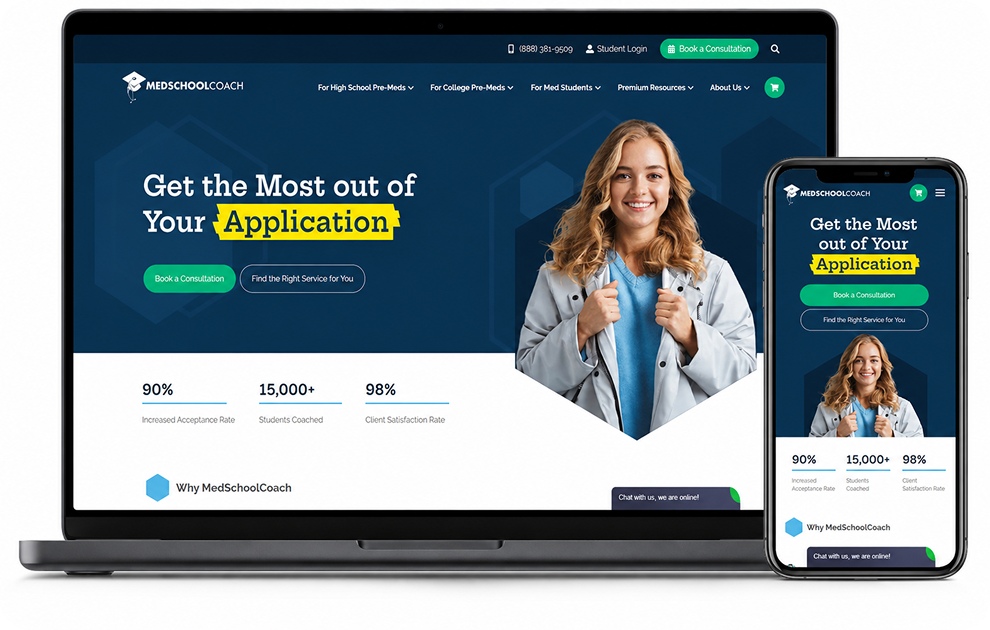
Alongside the web platform, Med School Coach operates the MCAT Prep mobile app — a companion study product with more than 80 hours of high-yield video, 1,000+ flashcards across seven subjects, and a 1,000+ question practice bank covering all four AAMC exam sections. The app had built a loyal base of pre-med users and a 4.8-star App Store rating across 1.2K+ ratings, but its original codebase had reached the end of its useful life: performance was degrading, the design language had drifted away from the refreshed Med School Coach brand, and shipping new features had become slow and risky.
Med School Coach in-house design team produced a complete Figma redesign of the app and handed it to us as the source of truth. Our mandate was twofold — implement that design pixel-accurately, and rebuild the application underneath it on a modern, maintainable foundation that could support years of future feature work without another ground-up rewrite.
6-8 People
Dedicated specialists including UI/UX designers, frontend and backend developers, React Native mobile engineers, and a project manager — collaborating across design, development, and quality assurance.
2-3 Months
Design
Development
Testing
Launch
Hepta Slab
Aa Bb
Raleway
A B C D E F G H I J K L M N O P Q R S T U V X Y Z
A B C D E F G H I J K L M N O P Q R S T U V X Y Z
1 2 3 4 5 6 7 8 9 0
! @ # $ % ^ & * ( ) _ + : “ { } ? /






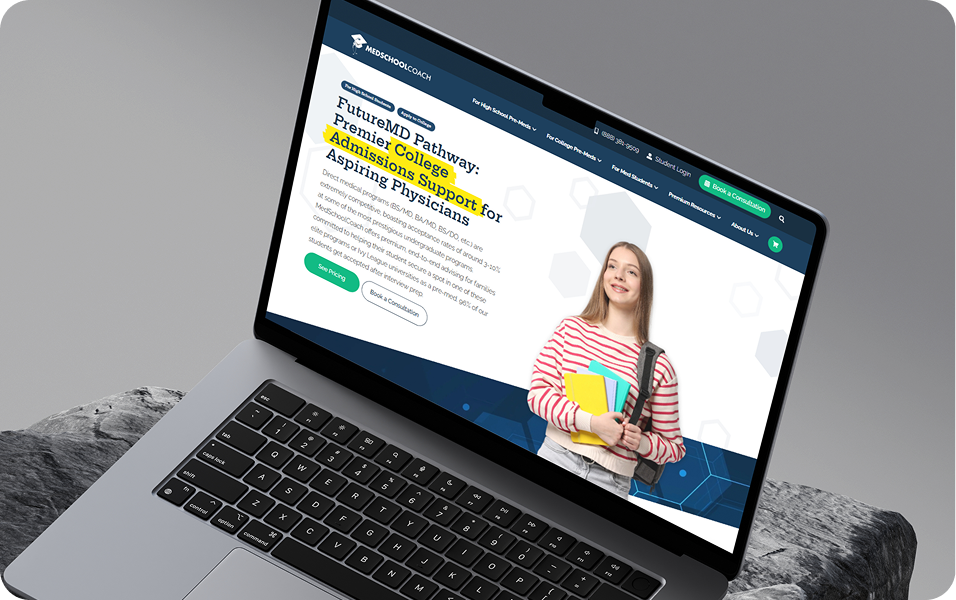
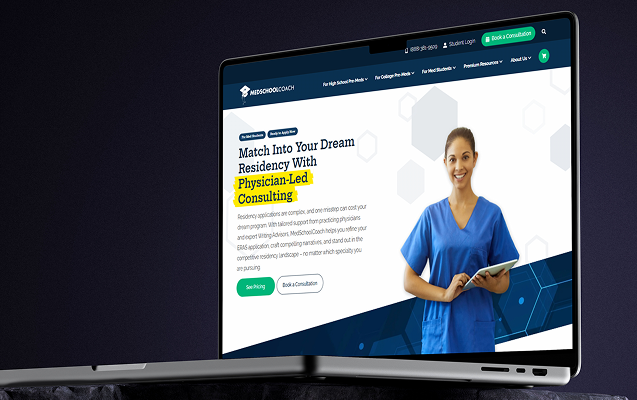
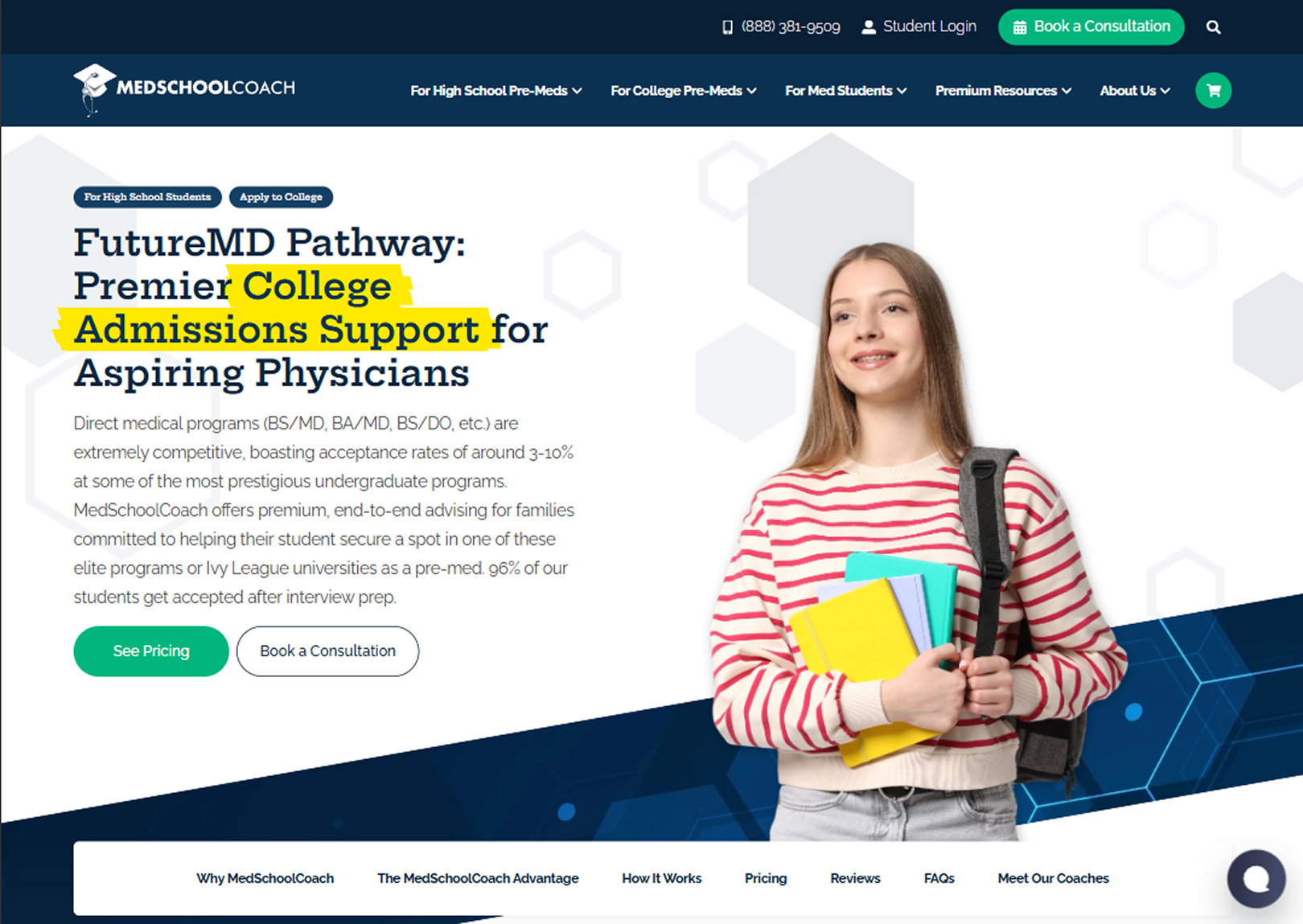
Med School Coach serves aspiring doctors at every stage, from high school and college pre-meds to medical students. We designed a unified platform that guides each audience while driving consultations, promoting prep resources, and showcasing an extensive library of admissions content backed by medical experts.
High school students applying to BS/MD programs, college pre-meds preparing for the MCAT, and medical students preparing for USMLE boards all have fundamentally different needs, timelines, and service requirements. A single navigation structure and page hierarchy had to serve all three clearly — without overwhelming any one audience or burying key service offerings.
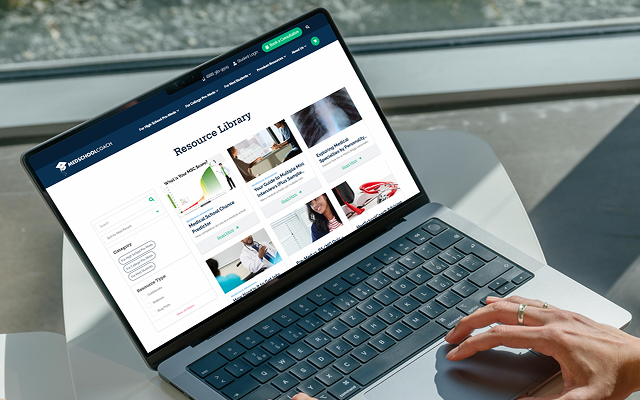
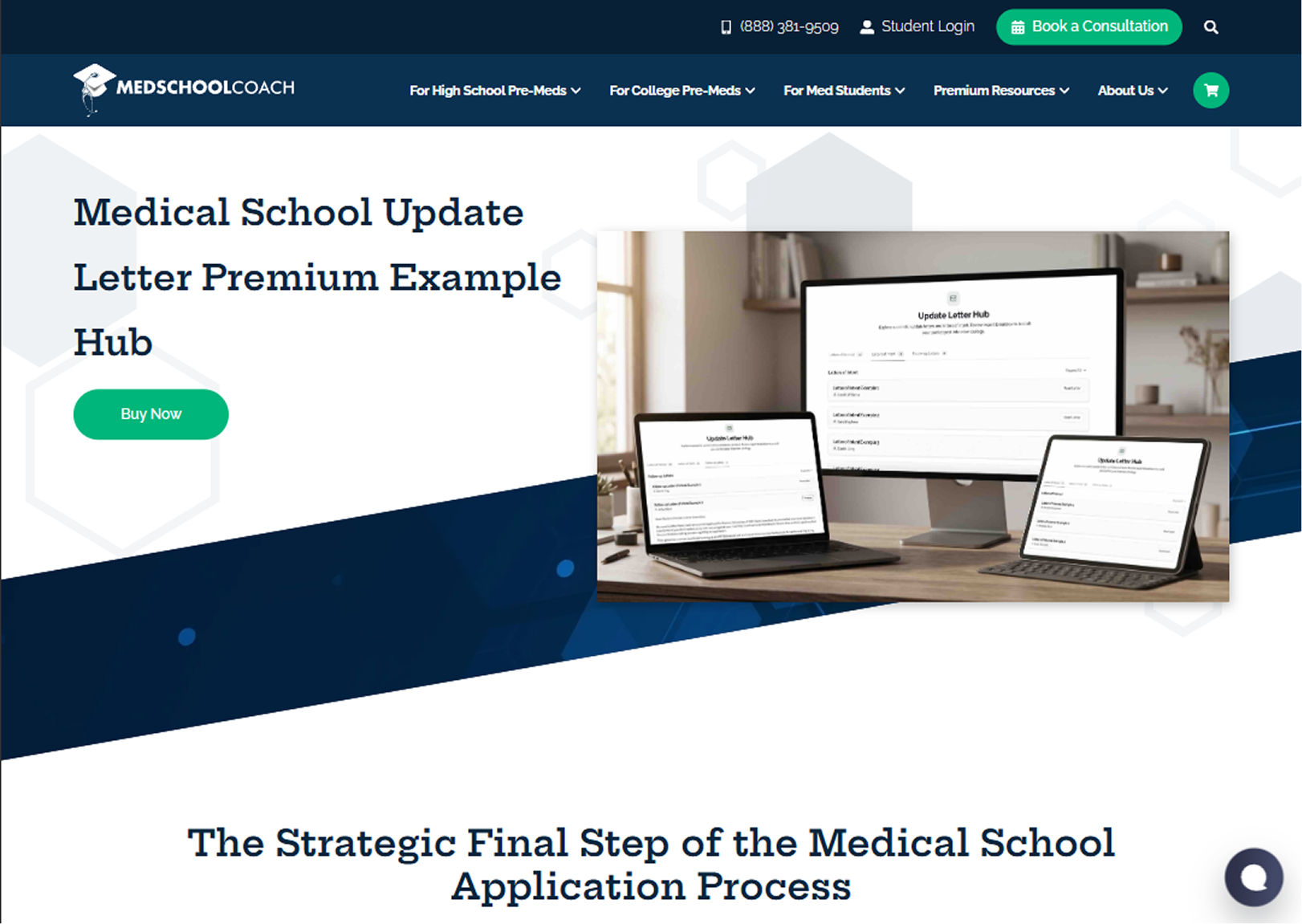
Med School Coach premium resources — 1,600+ secondary essay examples across 150+ MD and DO programs, 220+ personal statement examples with paragraph-by-paragraph breakdowns, 230+ interview questions with sample responses, and 120+ AMCAS Work & Activities examples — required a structured, searchable, and fast content delivery system capable of handling thousands of entries while remaining intuitive to navigate.
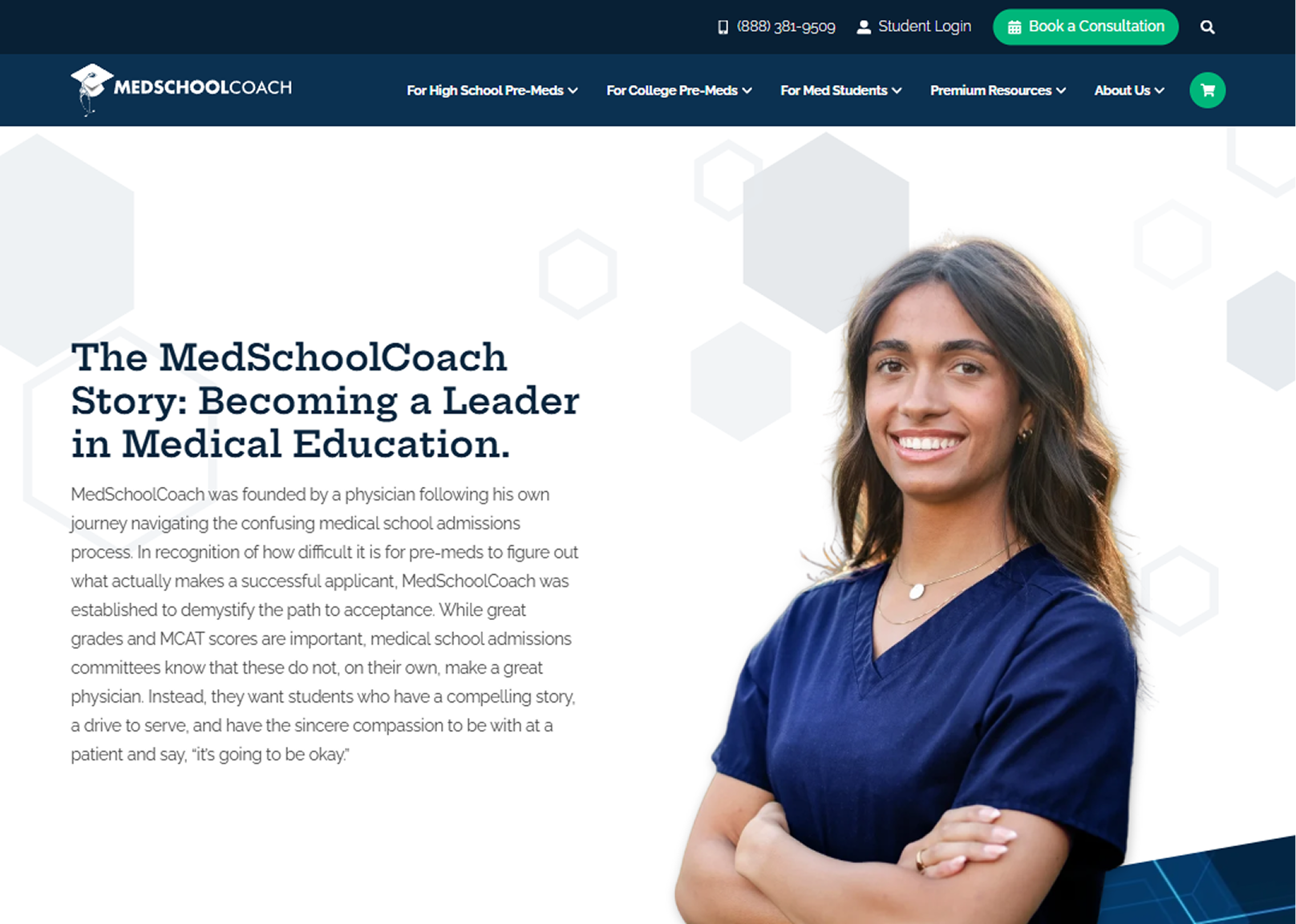
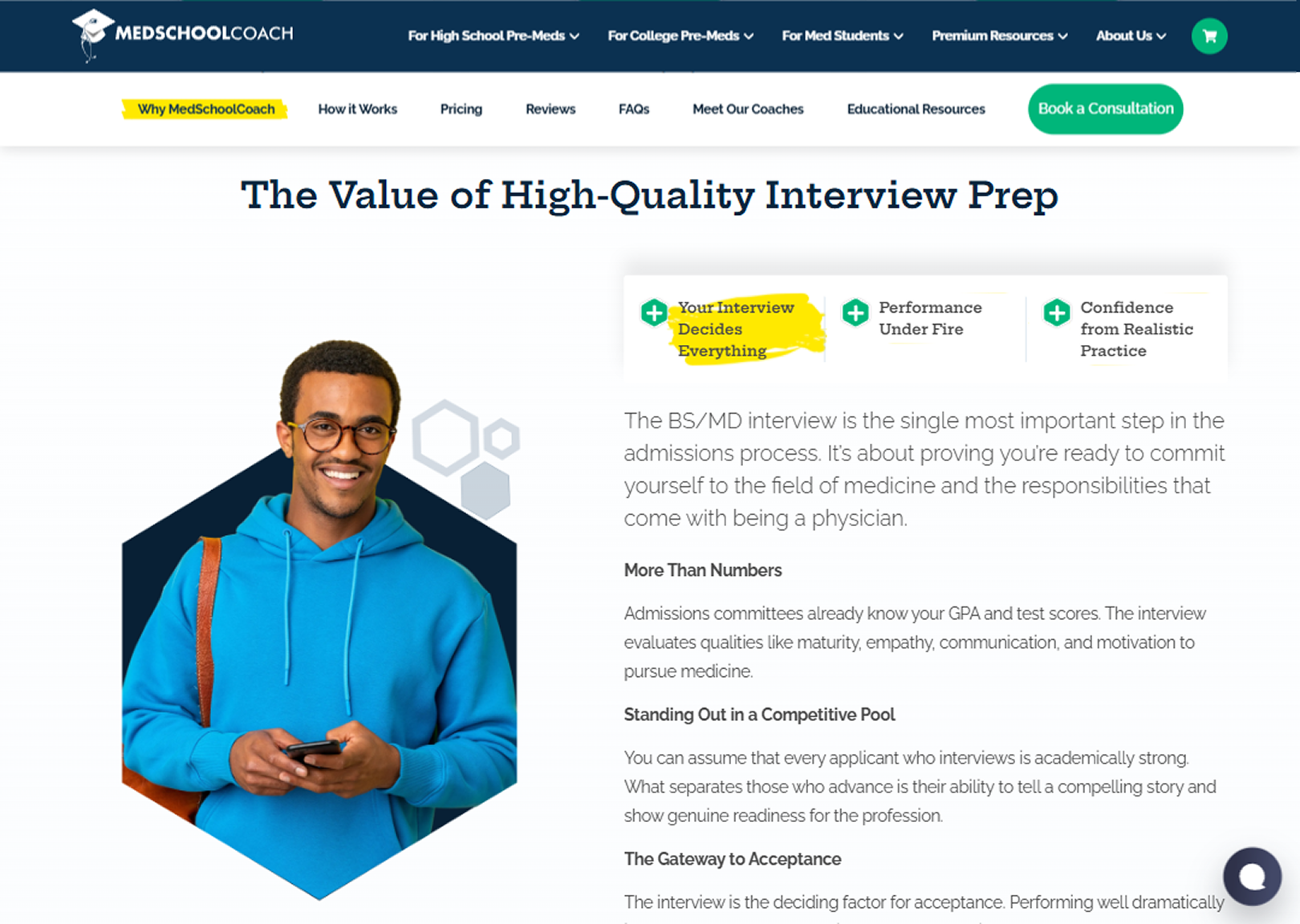
In medical education, trust is the primary purchase trigger. The platform needed to surface physician advisor credentials, student success outcomes, satisfaction rates, and acceptance statistics throughout the funnel — not just on a single testimonials page — to drive consultation bookings and product purchases from an audience that is detail-oriented, high-stakes, and inherently skeptical.
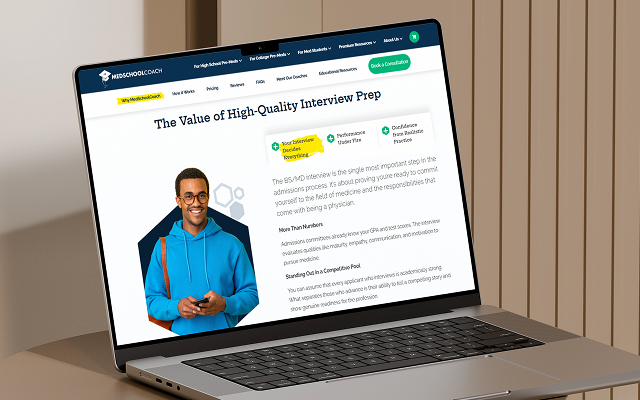
With thousands of students actively using the platform during peak application and MCAT seasons, the site needed to deliver fast load times, stable uptime, and a smooth experience across devices — backed by Cloudflare CDN and an optimized front-end stack.
The MCAT Prep app was not a greenfield build — it had thousands of students mid-way through structured study plans, active subscriptions, and accumulated progress across videos, flashcards, and question banks. The rebuild had to preserve every user's account, subscription entitlement, and study history intact through the transition, so that a student two months into a six-month prep schedule opened the new version and found their exact place waiting for them.


The client's design team delivered a complete, high-fidelity Figma covering every screen, state, and component of the redesigned app. Implementing it faithfully across two platforms meant translating a single design source into a shared component library that held its spacing, typography, and interaction behaviour identically on iOS and Android — while resolving the platform-specific cases the design file didn't need to specify, from safe-area handling to native navigation gestures.
MCAT preparation is unavoidably content-heavy: chemical equations, mathematical formulas, organic chemistry structure diagrams, and instructor whiteboard notes all had to render cleanly and legibly inside questions, answer explanations, flashcards, and lecture notes — on a five-inch phone screen, at any text size, without a student ever having to pinch-zoom to read a subscript.


Unlike apps built around a single session, MCAT prep runs for three to six months of daily study. The app had to carry students through that entire arc — a personalised schedule that adapts to their available study hours and exam date, an "Up Next" queue that always answers what do I do today, and a progress dashboard that makes months of accumulated effort visible enough to sustain motivation on the hard days.
The client needed a modern, high-performance web platform to serve as the authoritative digital home for every Med School Coach service:


The app was rebuilt from the ground up on React Native, replacing an ageing codebase with a single shared foundation serving both platforms. The result is measurably faster and more stable in daily use, and — just as importantly — a codebase where a new feature ships once instead of twice, cutting the cost and risk of every release that follows.
Working from the Figma supplied by Med School Coach design team, we built a reusable component library — typography scale, colour tokens, buttons, cards, form controls, navigation patterns, and empty and loading states — mapped one-to-one to the design file. Every screen was reviewed against its Figma frame before sign-off, so the shipped app matches the intended design on both platforms rather than approximating it.
A rebuilt player delivers 80+ hours of high-yield MCAT instruction with previous/next lesson navigation, letting students move through a subject without returning to the library between videos. Instructor whiteboard snapshots and full lecture notes sit alongside each lesson, so a student can jump straight back to the visual explanation of a concept instead of scrubbing through the timeline to find it.
More than 1,000 flashcards across seven MCAT subjects and 1,000+ practice questions were rebuilt into a faster, cleaner study experience. Students filter the question bank by status — new, correctly answered, incorrectly answered, or flagged — or drill a single subject in isolation, turning a large undifferentiated bank into targeted revision aimed at their actual weak points.
The scheduler builds a personalised day-by-day study plan from the student's exam date and the hours they can realistically commit, and an "Up Next" queue advances automatically as each day's videos are completed. The progress dashboard tracks completion across the full syllabus, giving students a concrete measure of how far through the MCAT journey they are — the feature students most consistently credit for keeping them accountable.
A dedicated rendering layer handles mathematical and chemical notation across questions, answer explanations, flashcards, and lecture notes, including organic chemistry structure diagrams. Equations, subscripts, and molecular structures display correctly and legibly at any text size, on any screen — removing a friction point that sits at the centre of nearly every MCAT science question.
Single sign-on supports email, Google, and Apple, backed by subscription handling that recognises entitlements reliably across weekly, monthly, and yearly plans and restores purchases correctly when students sign in on a new device. Study progress and subscription status follow the student across devices rather than being stranded on one handset.
A refreshed daily study notification system keeps students returning through multi-month preparation cycles, and in-app tutoring requests let a student who is stuck on a subject reach a Med School Coach tutor directly from the screen where they got stuck — connecting the free app to the core tutoring business at the exact moment of highest intent.
We followed a structured 5-step process to deliver the Med School Coach platform:
Mapped user journeys, service offerings, content architecture, and conversion goals. Audited the existing MCAT Prep app to define rebuild priorities, feature parity, and data migration requirements.
Designed the three-track web navigation and premium content hub. Audited the complete MCAT Prep app Figma, resolved platform-specific gaps, and converted the designs into a shared component library for development.
Built the web platform using Preact and HubSpot CMS, with Stripe and Cloudflare integrations. Rebuilt the mobile app in React Native using a single codebase for iOS and Android.
Validated web performance, responsiveness, payments, and cross-browser compatibility. Tested the app across iPhone, iPad, and Android for video playback, subscriptions, restore flows, offline behaviour, and pixel-level design accuracy.
Launched the web platform with full HubSpot CRM integration. Released the rebuilt app on the App Store and Google Play while preserving existing student accounts, subscriptions, and study progress.
We designed distinct, optimized user flows for each audience segment:
Onboarding → Sign Up (Email / Google / Apple) → Set Exam Date & Weekly Study Hours → Personalised Study Schedule Generated → Home Dashboard "Up Next"
Home Dashboard → Up Next → Video Lesson → Whiteboard Notes / Lecture Notes → Lesson Flashcards → End-of-Lesson Questions → Progress Updated
Premium Content Tap → Paywall → Plan Selection (Weekly / Monthly / Yearly) → In-App Purchase → Full Library Unlocked
Practice → Filter by Subject or Status (New / Correct / Incorrect / Flagged) → Question → Answer Explanation → Flag for Review
Any Subject Screen → Tutoring → Request Info → Med School Coach Tutor Match

Both products were delivered within the 2–3 Month timeline, production-ready and fully integrated:
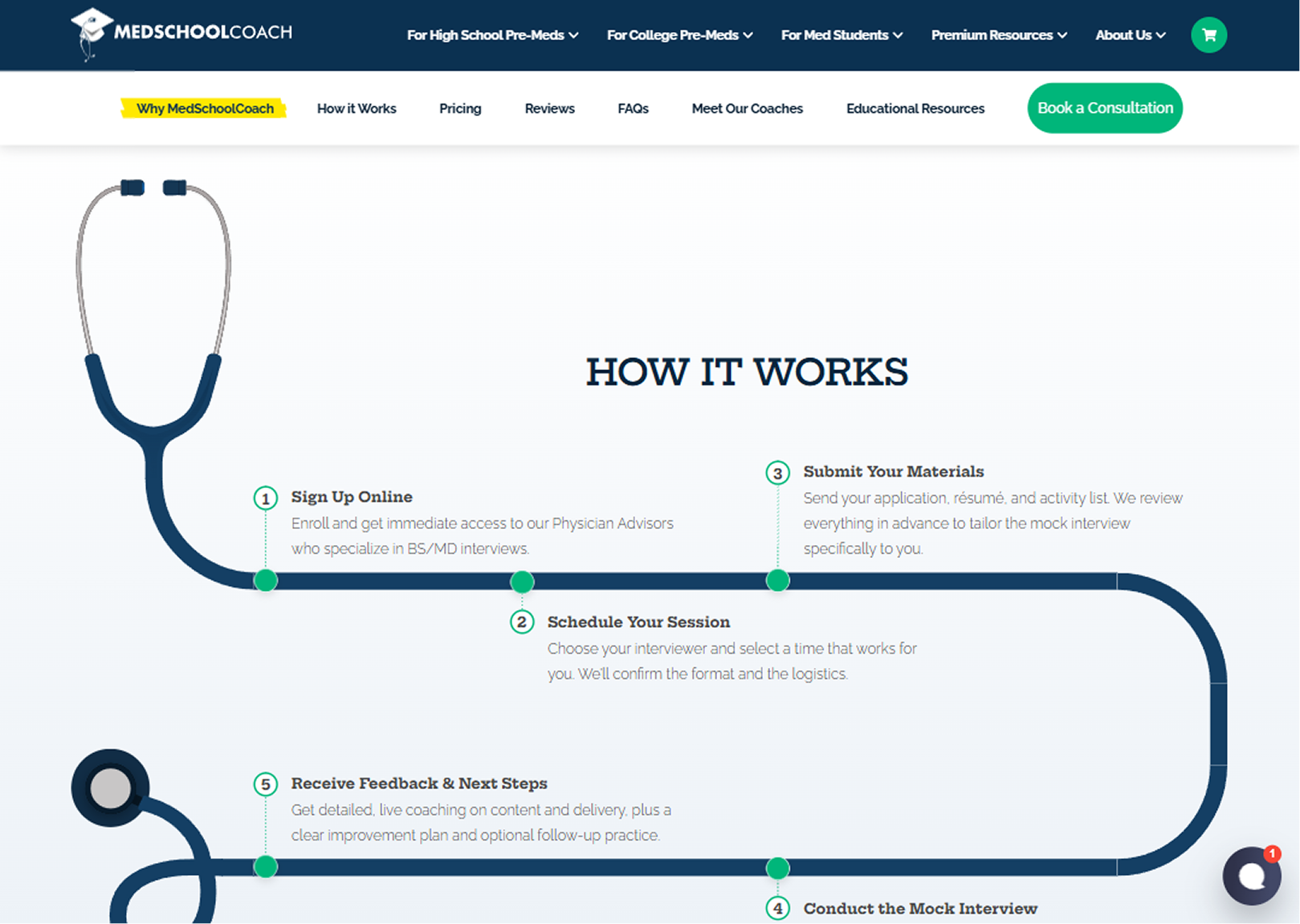
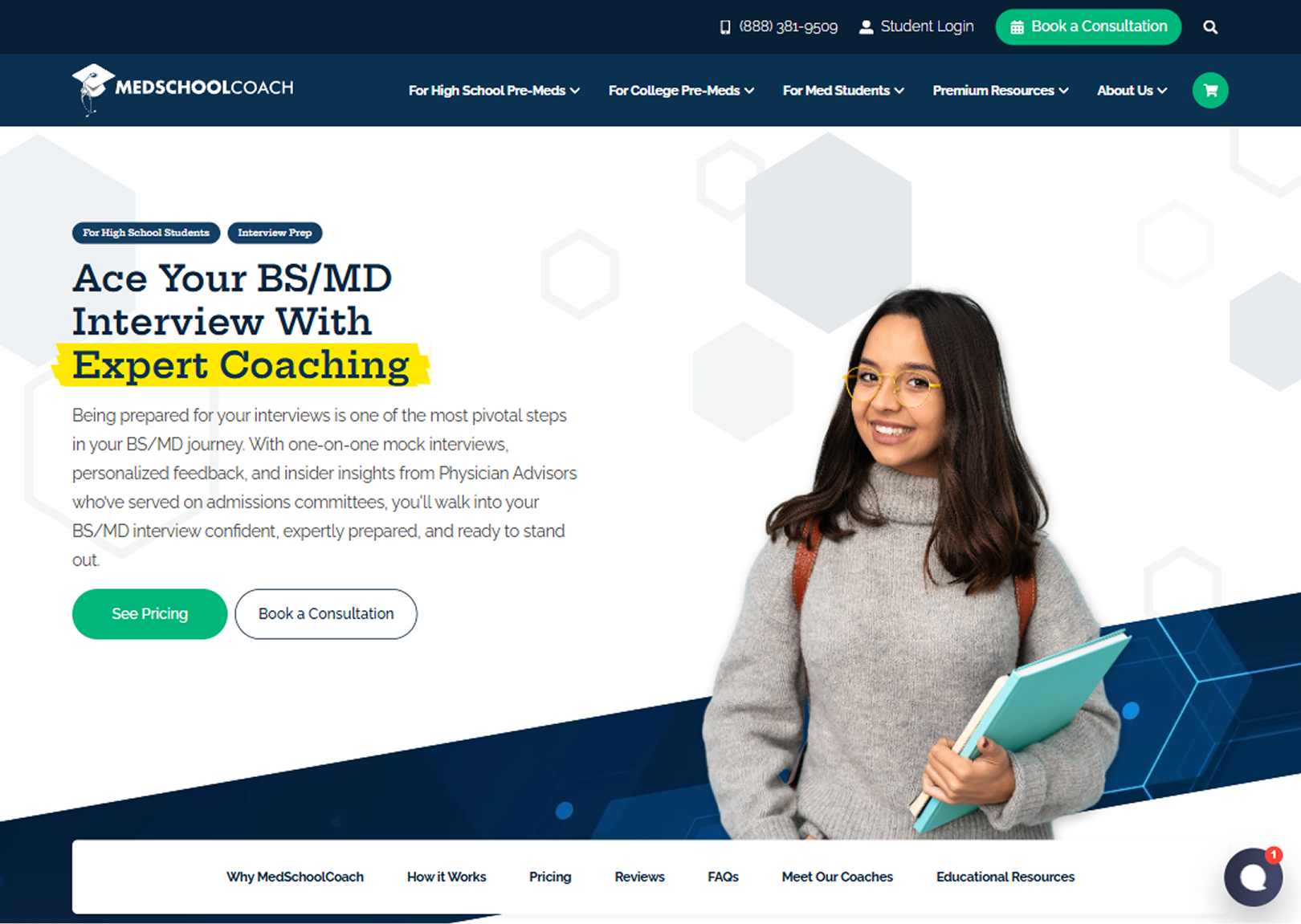
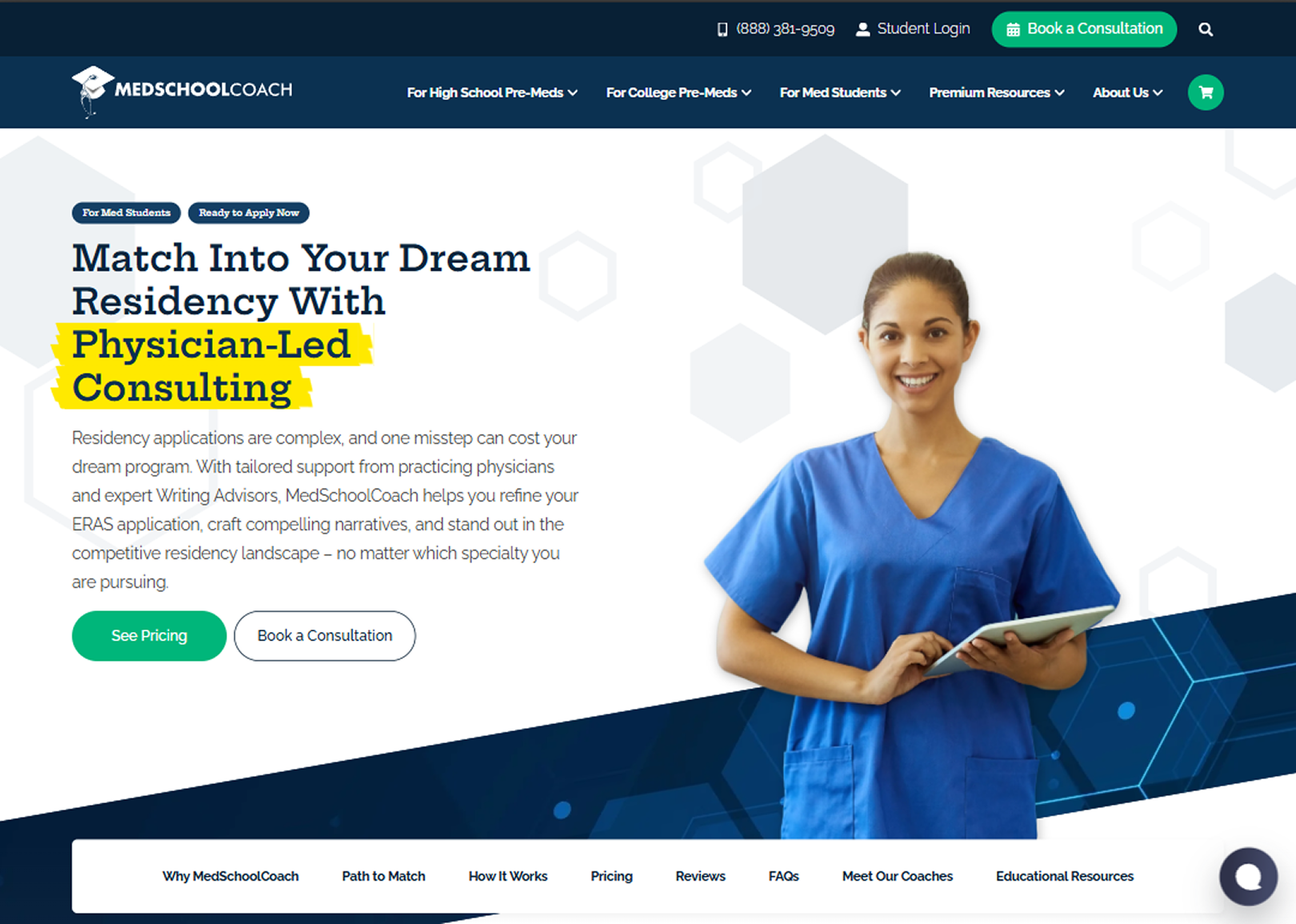
This project delivered two connected products for Med School Coach — a modern, conversion-optimised web platform and a fully rebuilt MCAT Prep mobile app. On the web, we architected a three-segment user experience, built a scalable premium content hub, integrated HubSpot CRM deeply, and surfaced physician advisor credentials and student outcomes throughout the funnel. On mobile, we implemented the client's Figma redesign pixel-accurately and rebuilt the application on React Native, giving Med School Coach a faster, more stable app on a foundation built to carry years of future feature work — while every existing student's progress and subscription carried through untouched. Together, the two products give Med School Coach a digital ecosystem that matches the trust and reputation of a company that has guided 15,000+ students toward careers in medicine, and supports every stage of the physician journey — from 9th grade to residency match day.
The design was provided. Med School Coach in-house design team produced a complete, high-fidelity Figma covering every screen and state of the redesigned app, and handed it to us as the source of truth. Our role was to implement that design pixel-accurately across iOS and Android, translate it into a reusable component library, resolve the platform-specific cases a design file doesn't need to specify, and rebuild the application underneath it on a modern foundation.
The original codebase had reached the point where performance issues were difficult to resolve and every new feature carried disproportionate risk and cost. Rebuilding on React Native replaced two divergent platform codebases with one shared foundation — so features now ship once rather than twice, and the app has a stable base for years of future development rather than another rewrite in two years' time.
Preserving student state was a hard requirement from day one. Accounts, active subscriptions, and study progress — including position within a personalised study schedule, flashcard history, and question bank status — all carried through to the rebuilt app. A student mid-way through a six-month prep plan opened the new version and found their exact place waiting for them.
The app is built on React Native, giving iOS and Android a single shared codebase. [Append your confirmed supporting libraries — navigation, state management, video playback, math rendering, in-app purchases, push notifications, and crash reporting.]
The app is free to download and use, with premium content available through in-app subscription — weekly, monthly, and yearly plans. That model makes the app both a study tool and an acquisition channel: students discover Med School Coach through free content, and can request a tutor directly in-app when they need expert help on a specific subject.


5 reviews

86 reviews

1 reviews
We look forward to hearing from you.
The Auspicious Team will be happy to help you with
custom software development and IT staffing.
