+1 740 762 6496
 +91 70189 46603

AI Agent Development Services That Actually Ship to Production
Half the AI agent projects on the market never make it past a demo. They look great in a meeting, fall apart in production, and leave your team cleaning up the mess. We build the other kind. Auspicious Soft is an AI agent development company that builds autonomous agents for US businesses — agents that follow your rules, use your data, connect to your systems, and handle real work without someone babysitting them every step of the way. From single-task automation agents to multi-agent systems that coordinate entire workflows, our AI agent development services are engineered for one thing: going live and staying live.
Most AI Agent Projects Fail.
Here Is Why.
When Gartner says 85 percent of AI projects do not deliver intended outcomes, that is not a technology problem. It is a framing problem.
Companies pick a use case because it sounds impressive, not because it has real volume. They skip the data audit. They build with a junior team that has never shipped production software. They hand the client a chatbot wrapped in an “agent” label, collect the check, and disappear.
The result is an agent that hallucinates when it sees unfamiliar input, breaks the moment your data changes, and gets shut off inside of two weeks because nobody trusts it.
That is the market you are shopping in right now. And that is exactly why choosing the right AI agent development company matters more than choosing the right model.
85%
of AI Projects Fall Short—Strong Framing Makes The Difference.
AI Agent Development Services — From Strategy to Production to Support
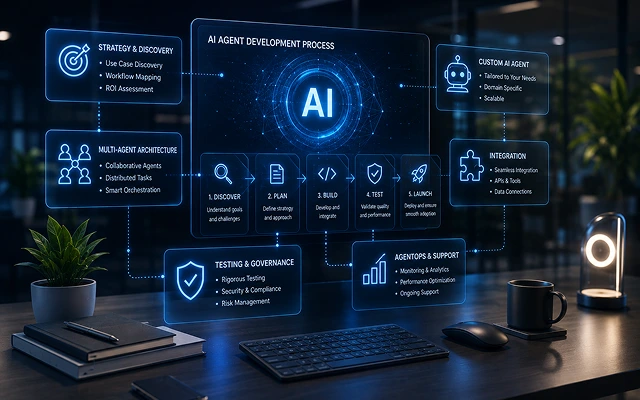
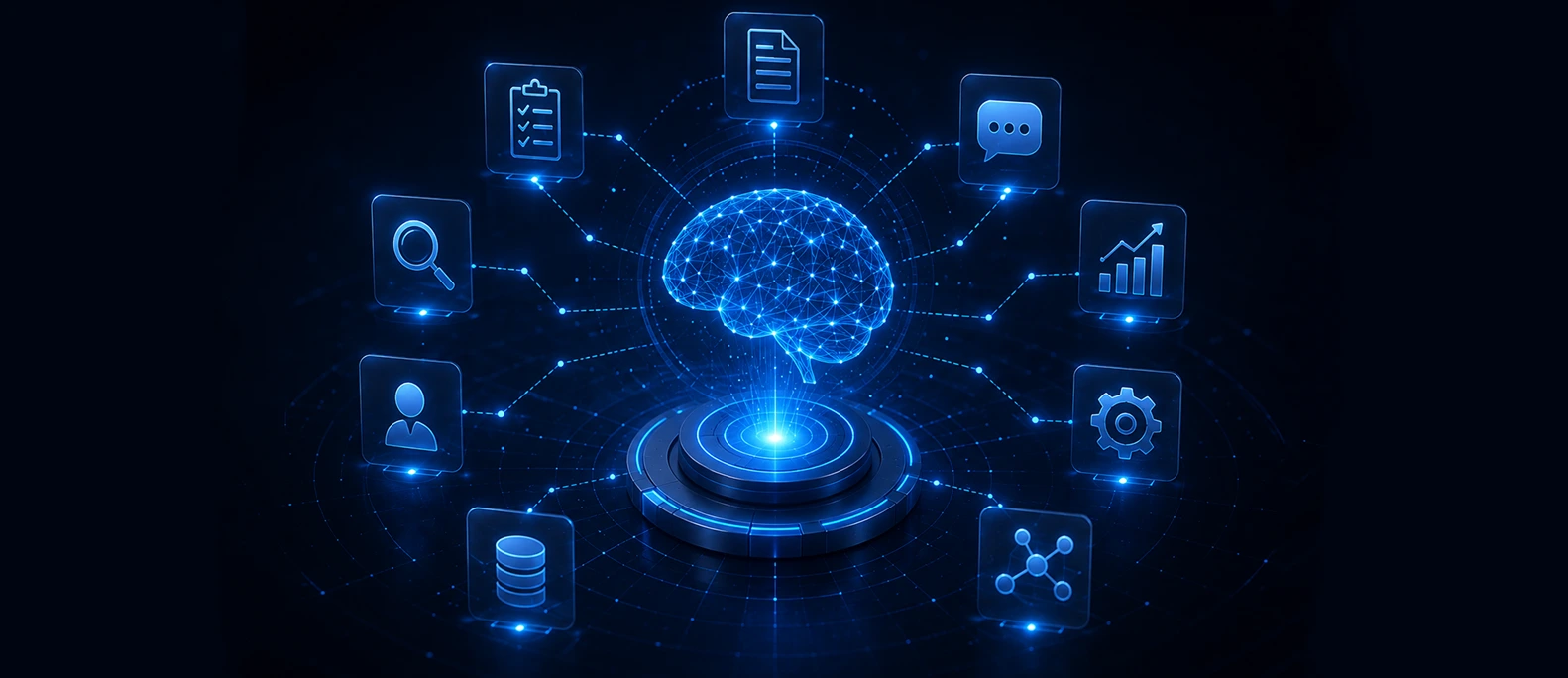
An AI agent is software that takes an input, gathers context from your systems, decides what to do, and acts — updating records, sending replies, routing tasks or calling other tools. Unlike a chatbot, which only responds, an agent completes multi-step work without a person driving each step. We do not sell one thing and call it a service. Building a production AI agent involves a chain of decisions that need to be right, and we cover every link.
AI Agent Strategy and Use Case Discovery
Most vendors start with the technology. We start with your P&L. Where is your team spending time on work a machine could handle? Where are errors costing you money? Where would a two-minute response time instead of a two-hour one change your revenue? We map your workflows, identify the highest-ROI agent opportunities, define the success metrics upfront, and cut anything that does not earn its place in the build.
Custom AI Agent Development
This is the core of what we do. We design, build, test, and deploy custom AI agents that are trained on your data, connected to your tools, and governed by your rules. Every agent we build has a defined job, approved tools, guardrails against hallucination, fallback paths when things go sideways, and human-in-the-loop controls where they matter.
Multi-Agent System Architecture
Some workflows are too complex for one agent. An order comes in, gets validated by one agent, checked for inventory by another, routed for fulfillment by a third, and confirmed by a fourth. We architect multi-agent systems where specialized agents collaborate, hand off tasks, share context, and recover from errors — just like a well-run team, but faster and without the meetings.
AI Agent Integration
Your AI agent is useless if it cannot talk to the tools your team already runs. We connect agents to your CRM, ERP, helpdesk, databases, cloud storage, and third-party APIs through secure integrations. Our agents fit your stack. They do not replace it. And they do not create a shadow system that your IT team has to maintain separately.
Agent Testing, Guardrails, and Governance
We test every agent against real-world scenarios, edge cases, adversarial inputs, and integration failures before anything goes live. We build in confidence thresholds, output validation, policy checks, and stop controls. Every decision the agent makes is logged and auditable. If your industry requires HIPAA, SOC 2, GDPR, or PCI compliance, we design for that from day one — not as an afterthought.
AgentOps — Monitoring, Optimization, and Ongoing Support
Deployment is not the finish line. It is the starting line. We monitor your agents in production — tracking task completion, accuracy, latency, token costs, error rates, and user feedback. We retrain models, refine prompts, update retrieval pipelines, and adapt to new business rules. Your agents get sharper over time, not stale.
Custom AI Agents Built Around How Your Business Actually Runs
Off-the-shelf agents force you to change your process. Ours fit the process you already have. Here are the types of agents we build and when each one makes sense.
Task Automation Agents
Task Automation Agents
Agents that handle repetitive, rule-heavy work — invoice processing, data entry, document extraction, form routing, report generation. They follow your SOPs exactly and run around the clock.
Customer Support Agents
Customer Support Agents
Not a keyword-matching chatbot. These agents understand intent, pull context from your knowledge base and CRM, resolve tier-1 issues end to end, and escalate the rest. They cut your ticket volume without cutting your quality.
Sales and Lead Qualification Agents
Sales and Lead Qualification Agents
Agents that engage inbound leads the moment they arrive, ask qualifying questions, enrich contact data, score intent, book meetings, and route hot prospects to your closers. Your reps talk to buyers, not tire-kickers.
Internal Operations Agents
Internal Operations Agents
Agents that sit inside your workflows and keep work moving — triaging IT tickets, routing HR requests, handling procurement approvals, pulling reports, and flagging exceptions across platforms.
Research and Analyst Agents
Research and Analyst Agents
Agents that scan documents, summarize reports, track competitors, monitor regulatory changes, review contracts, and surface answers your team would spend hours digging for.
Multi-Agent Systems
Multi-Agent Systems
Multiple specialized agents collaborating on complex workflows. One agent gathers data, another analyzes it, a third acts on it, and a fourth validates the result. Coordinated through defined handoffs, shared context, and recovery paths.
Voice AI Agents
Voice AI Agents
Agents that handle inbound and outbound calls — answering questions, qualifying leads, scheduling appointments, and routing callers. They sound human, work around the clock, and never put anyone on hold.
Domain-Specific Agents
Domain-Specific Agents
Agents trained on your industry’s regulations, terminology, and workflows. A healthcare agent that understands HIPAA. A finance agent that knows KYC. A legal agent that reads contracts the way a junior associate would — but in seconds instead of hours.
Task Automation Agents
Agents that handle repetitive, rule-heavy work — invoice processing, data entry, document extraction, form routing, report generation. They follow your SOPs exactly and run around the clock.
Best for: High-volume operations with structured data and clear rules.

Customer Support Agents
Not a keyword-matching chatbot. These agents understand intent, pull context from your knowledge base and CRM, resolve tier-1 issues end to end, and escalate the rest. They cut your ticket volume without cutting your quality.
Best for:Support teams drowning in repetitive requests with knowledge base content they can draw on.
Sales and Lead Qualification Agents
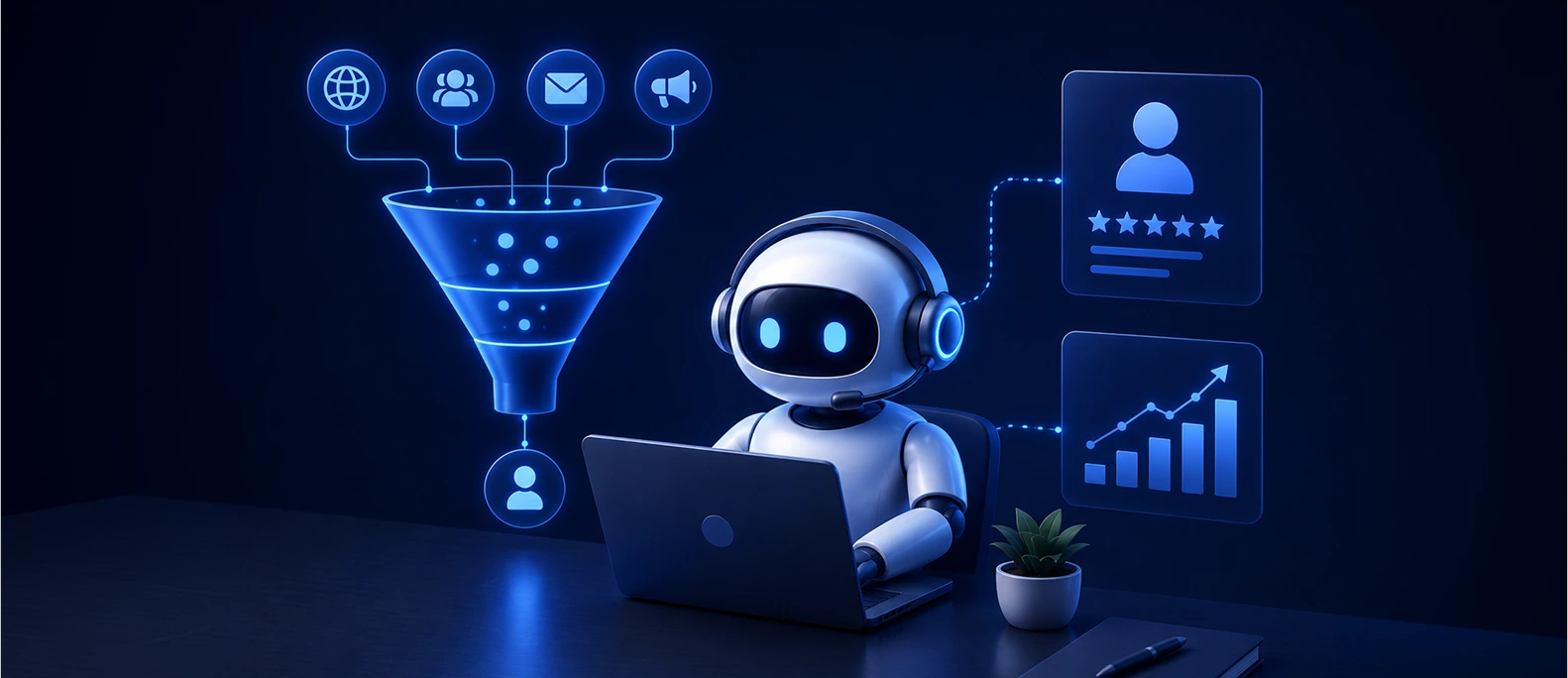
Agents that engage inbound leads the moment they arrive, ask qualifying questions, enrich contact data, score intent, book meetings, and route hot prospects to your closers. Your reps talk to buyers, not tire-kickers.
Best for:Sales teams with high inbound volume and a defined ICP.
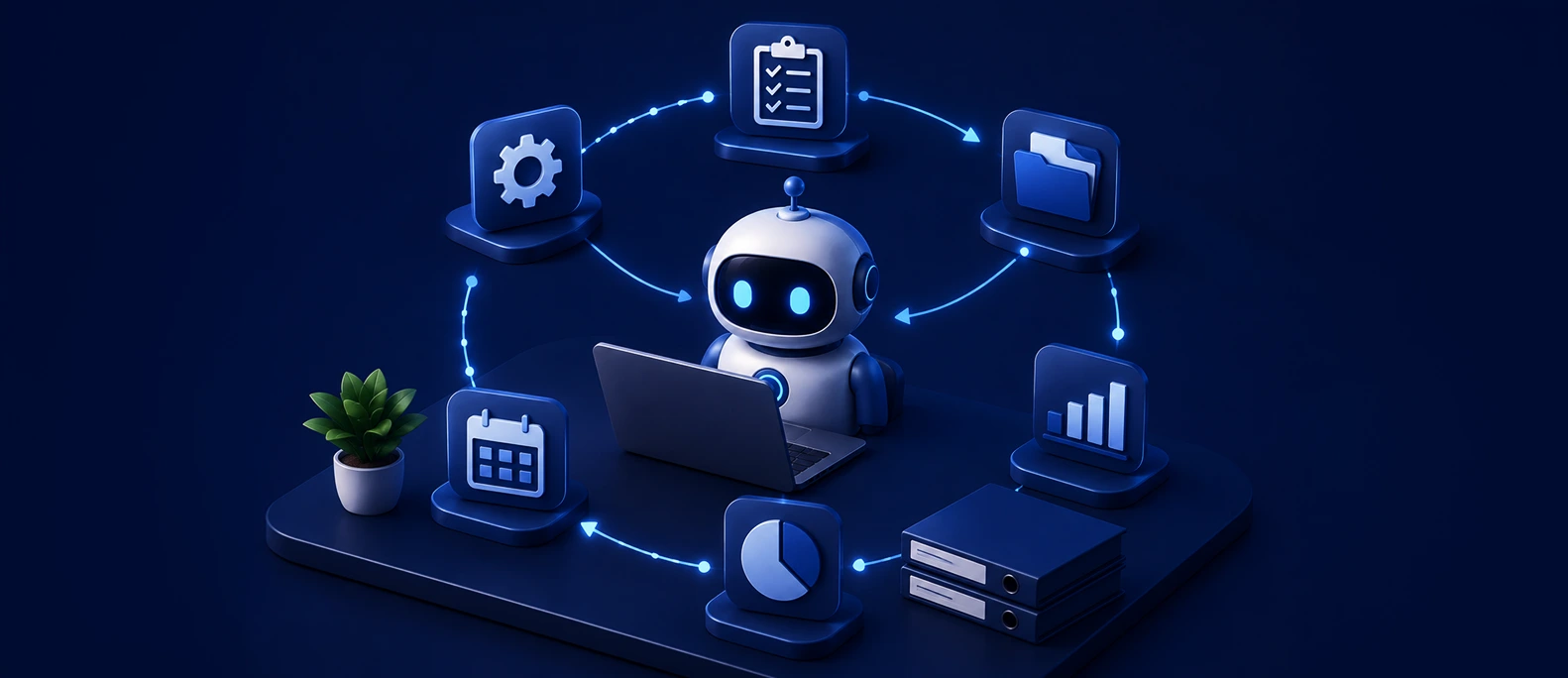
Internal Operations Agents
Agents that sit inside your workflows and keep work moving — triaging IT tickets, routing HR requests, handling procurement approvals, pulling reports, and flagging exceptions across platforms.
Best for:Teams that spend half their day copying information between tools.
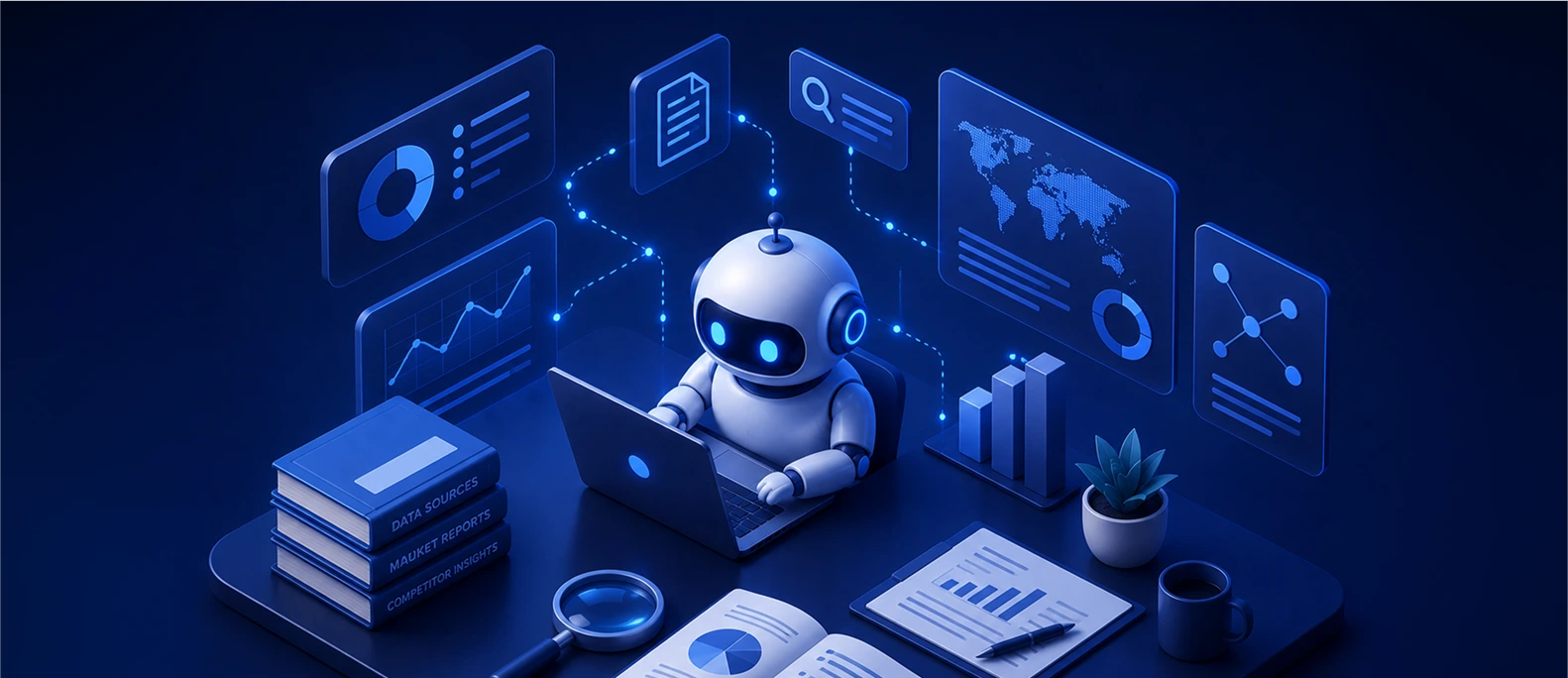
Research and Analyst Agents
Agents that scan documents, summarize reports, track competitors, monitor regulatory changes, review contracts, and surface answers your team would spend hours digging for.
Best for:Legal, finance, and strategy teams that make decisions based on large volumes of information.
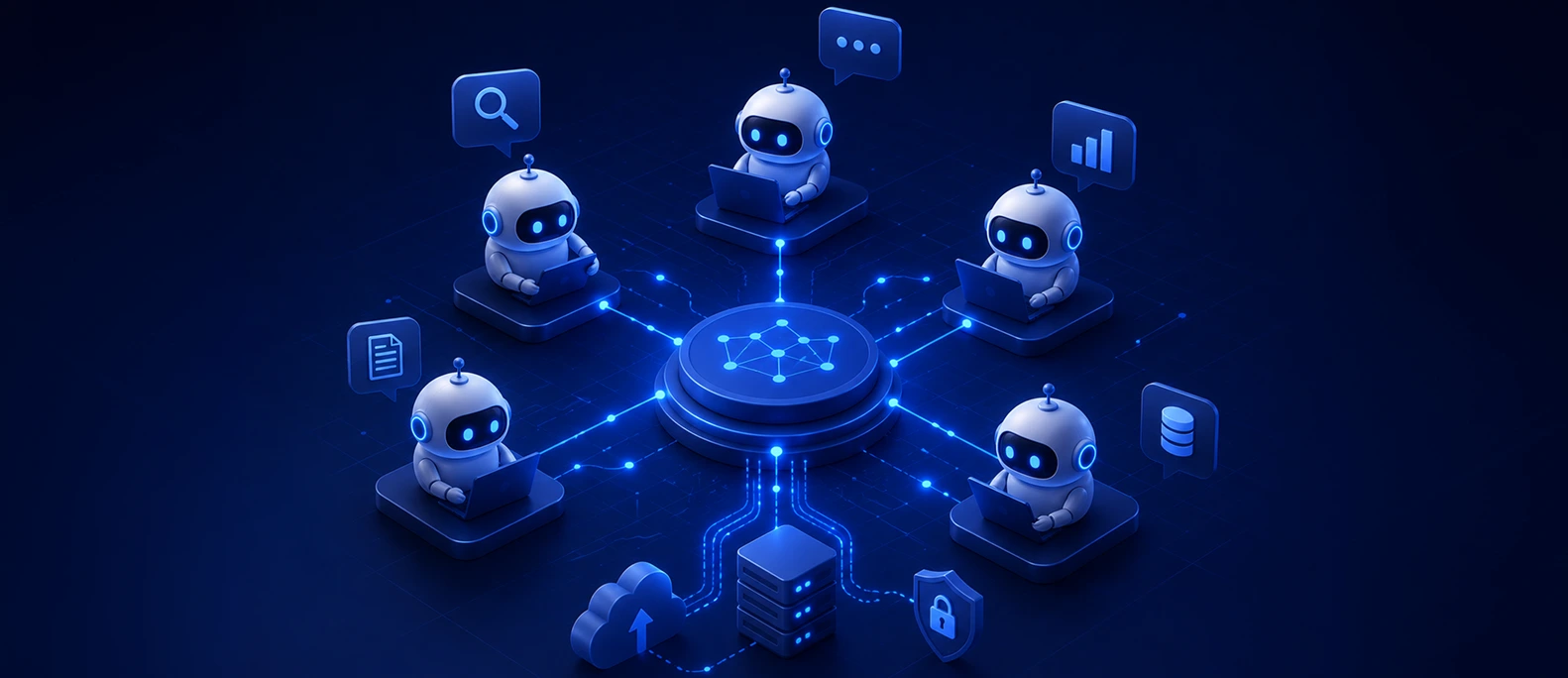
Multi-Agent Systems
Multiple specialized agents collaborating on complex workflows. One agent gathers data, another analyzes it, a third acts on it, and a fourth validates the result. Coordinated through defined handoffs, shared context, and recovery paths.
Best for:End-to-end processes that span multiple departments and systems — claims processing, order fulfillment, supply chain coordination.
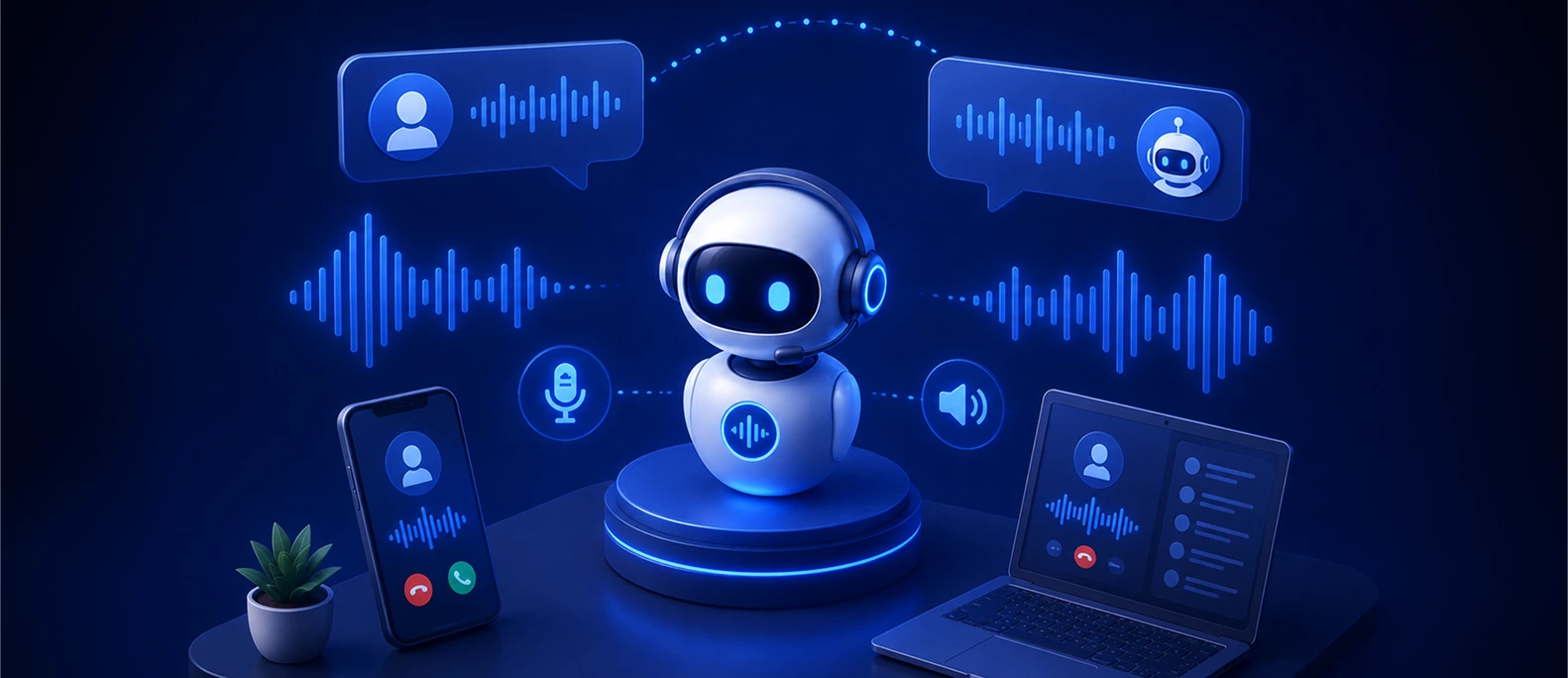
Voice AI Agents
Agents that handle inbound and outbound calls — answering questions, qualifying leads, scheduling appointments, and routing callers. They sound human, work around the clock, and never put anyone on hold.
Best for:Businesses with high call volume and routine phone-based workflows
Domain-Specific Agents
Agents trained on your industry’s regulations, terminology, and workflows. A healthcare agent that understands HIPAA. A finance agent that knows KYC. A legal agent that reads contracts the way a junior associate would — but in seconds instead of hours.
Best for:Regulated industries where generic models produce dangerous outputs.
What AI Agents Can Do for Your Business — and What They Cannot
We think you deserve a vendor who tells you the truth before you sign the contract, not after.
What no AI agent on the market can do
- Replace strategic judgment — agents execute, they do not set company direction
- Work well without clean, accessible data — garbage in, garbage out still applies
- Handle every edge case on day one — agents need monitoring, feedback, and tuning
- Guarantee zero hallucination — guardrails and validation reduce it to near-zero, not absolute zero
- Succeed without internal buy-in — if your team does not trust the agent, they will work around it
What a well-built AI agent can do:
- Automate tasks that follow structured rules and use your existing data
- Reduce response times from hours to seconds for customer-facing workflows
- Cut support ticket volume by 30 to 60 percent with tier-1 automation
- Qualify and route leads faster than your fastest SDR
- Process documents, extract data, and update records without human clicks
- Run around the clock without breaks, sick days, or quality drops
- Coordinate multi-step workflows across tools and departments
- Get smarter over time as you feed it better data and sharper rules
How Our AI Agents Actually Work — No Jargon Version
When someone sends a message, submits a form, or a scheduled event fires, here is what happens inside one of our agents:
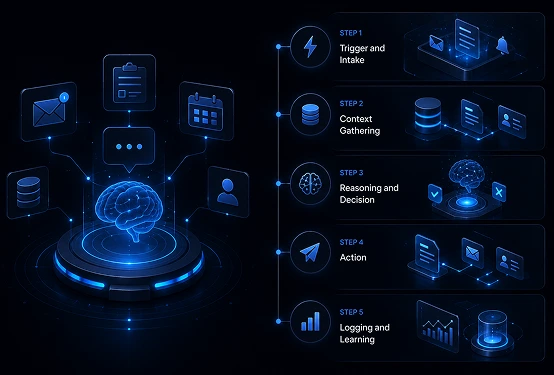
Trigger and Intake
Something happens: a support ticket lands, a lead fills out a form, an invoice arrives, a Slack message pings. The agent wakes up and reads the input.
Context Gathering
The agent pulls what it needs — your knowledge base, CRM records, past conversation history, policy documents, database entries. It does not guess. It looks things up.
Reasoning and Decision
The agent processes the input against your business rules, the context it gathered, and the task it was built for. This is where the LLM, your private data, and custom logic work together.
Action
The agent executes. It updates a record, sends a reply, routes a task, generates a document, calls another tool, or escalates to a human — depending on what the situation requires.
Logging and Learning
Every action is logged. We monitor outputs, flag edge cases, and use production data to make the agent sharper over time. No black box. Full auditability.
Why AI Agent Development Is No Longer Optional
The data from live deployments in 2026 is clear, and it is not subtle.






The Difference Between a Demo and a Real Build
AI is not one size fits all. We build for the rules and the realities of your field.


Before (manual):
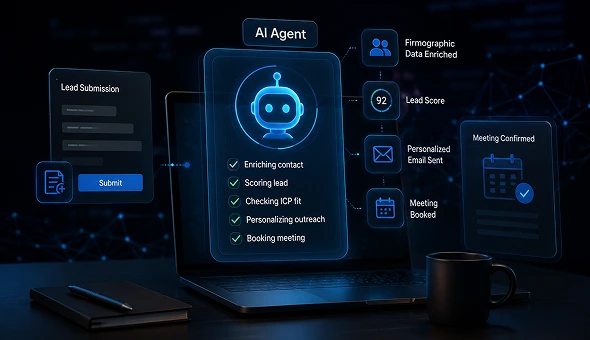
A lead fills out a form on your website. It sits in your CRM for two hours until an SDR notices it. The SDR opens the lead, Googles the company, checks LinkedIn, decides if it is worth a call, types up notes, and either emails the prospect or moves on. Total time per lead: 15 to 25 minutes. Leads that arrive after 5 PM wait until the next morning. Hot leads go cold.
After (AI agent):
The lead fills out the same form. Within 30 seconds, your AI agent reads the submission, enriches the contact with firmographic data, scores it against your ICP, sends a personalized follow-up email, and books a meeting on your rep's calendar if the lead qualifies. If it does not qualify, the agent tags it, files it, and moves on. Your SDR opens their morning with three booked calls instead of fifty unworked leads.
The Difference Between a Wrapper and a Real AI Agent
What You Often Get Elsewhere
- A ChatGPT wrapper branded with your logo
- An agent that hallucinates the moment it sees unfamiliar data
- No guardrails, no monitoring, no fallback plan
- A demo that works beautifully, then breaks under real load
- Your data piped through public models with no controls
- A vendor who disappears after the invoice clears
- Vague scope and creeping costs
What You Get with Auspicious Soft
- Custom agents trained on your data, governed by your rules
- Guardrails, output validation, and confidence thresholds built in
- Production-grade architecture with monitoring and alerting from day one
- Agents tested against edge cases, adversarial inputs, and integration failures
- Private, encrypted, and compliant by design — your data never touches a public model unless you say so
- A team that stays through deployment and beyond — AgentOps is part of the deal
- Fixed scope, clear estimates, and no surprises at the finish
Why Auspicious Soft for AI Agent Development
We are not a research lab running experiments on your budget. We are not a consulting firm that hands you a deck and wishes you luck. We are engineers who ship production software. Here is what that means for your AI agent project.

We ship to production — that is the baseline, not the ceiling.
Prototypes are easy. Systems that hold up under real load, real data, and real users are not. We have shipped 200+ production applications. We know what breaks and how to prevent it.
Security is baked in, not bolted on.
Every agent includes encryption, access controls, multi-factor authentication, and audit logging. We design for the compliance standards your industry requires — HIPAA, SOC 2, GDPR, PCI — from architecture onward.
Built for US teams, on US time.
We have a US office, work in your time zones, and have delivered software for American startups and enterprises for years. You are not onboarding a team that needs to learn your market.
Senior engineers only.
No juniors learning on your project. Our AI agent development team builds with LangChain, LangGraph, CrewAI, Semantic Kernel, and custom orchestration. They know the difference between a demo and a deployment.
You own everything.
Code, models, data pipelines, infrastructure. When the project ends, you walk away with full ownership. No vendor lock-in. No recurring platform fees you did not agree to.
Proof every sprint, not promises every quarter.
We build in agile sprints with working demos at the end of each one. You see your agent reason, decide, and act before it ever touches production.
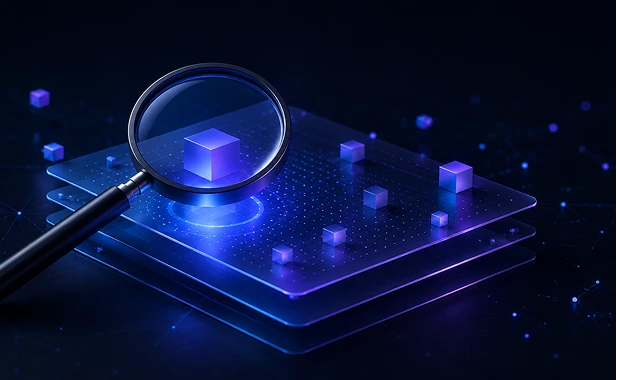
Discovery and Use Case Mapping
We interview your team, walk through the workflow, identify the volume, and define the success metric. Then we scope the agent — what it does, what it does not do, what tools it needs, and where humans stay in the loop. This is where most projects succeed or fail. We get it right.
Output: Prioritized use case brief with scope, estimated cost, and expected ROI.
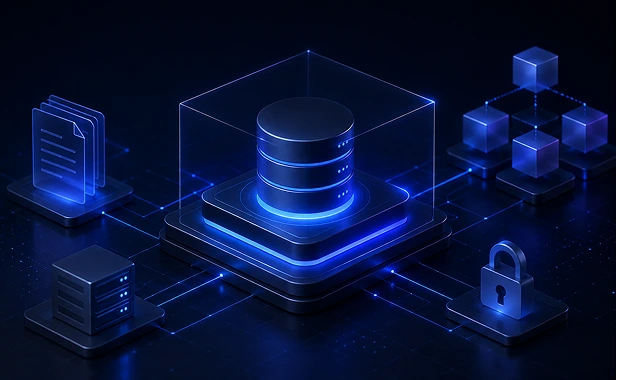
Data and Integration Audit
We examine the systems, data sources, APIs, permissions, and existing workflows the agent will need to work with. We identify integration constraints early so the agent can operate reliably within your current technology environment.
Output: Data and integration map with technical requirements and dependencies.
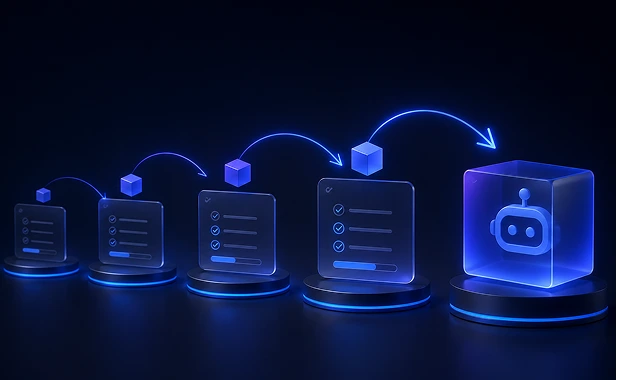
Architecture and Agent Design
We design the agent architecture, determine the right models and orchestration approach, define memory and tool usage, and establish the guardrails required for reliable decision-making.
Output: Complete agent architecture and technical implementation plan.
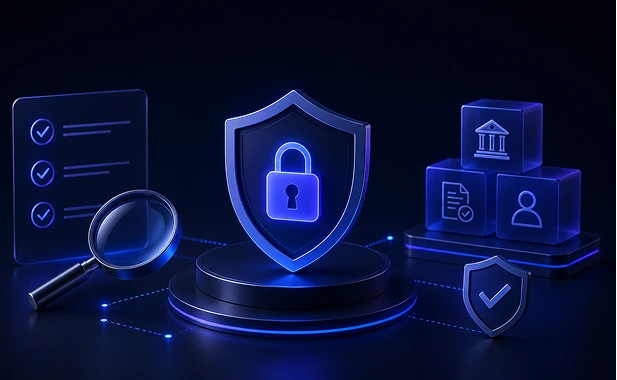
Development and Training
Our engineers build the agent and connect it to the required tools, APIs, databases, and business systems. We develop the workflows, prompts, memory, and decision logic needed for the agent to perform its job.
Output: Working AI agent with integrated tools and business workflows.
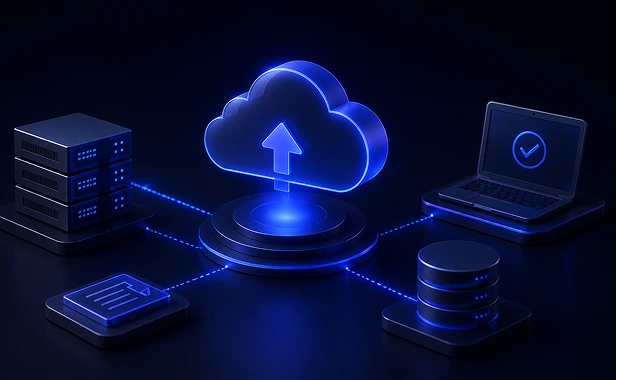
Testing and Deployment
Before production, we test the agent against real-world scenarios, edge cases, failures, security requirements, and performance expectations. Once validated, we deploy it into your production environment.
Output: Tested and production-ready AI agent deployment.
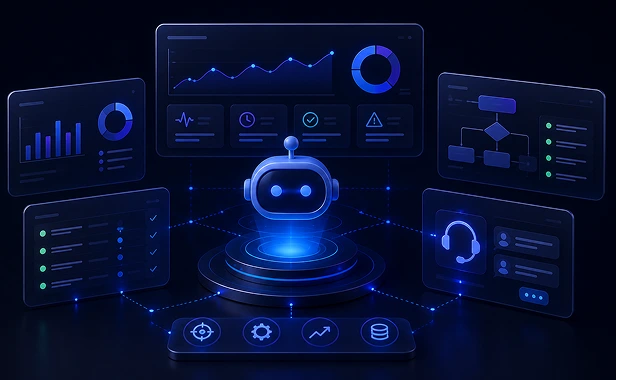
Optimization and Support
After launch, we monitor how the agent performs in real conditions, identify opportunities for improvement, optimize workflows, and continuously improve reliability and business outcomes.
Output: Ongoing monitoring, optimization, and production support.
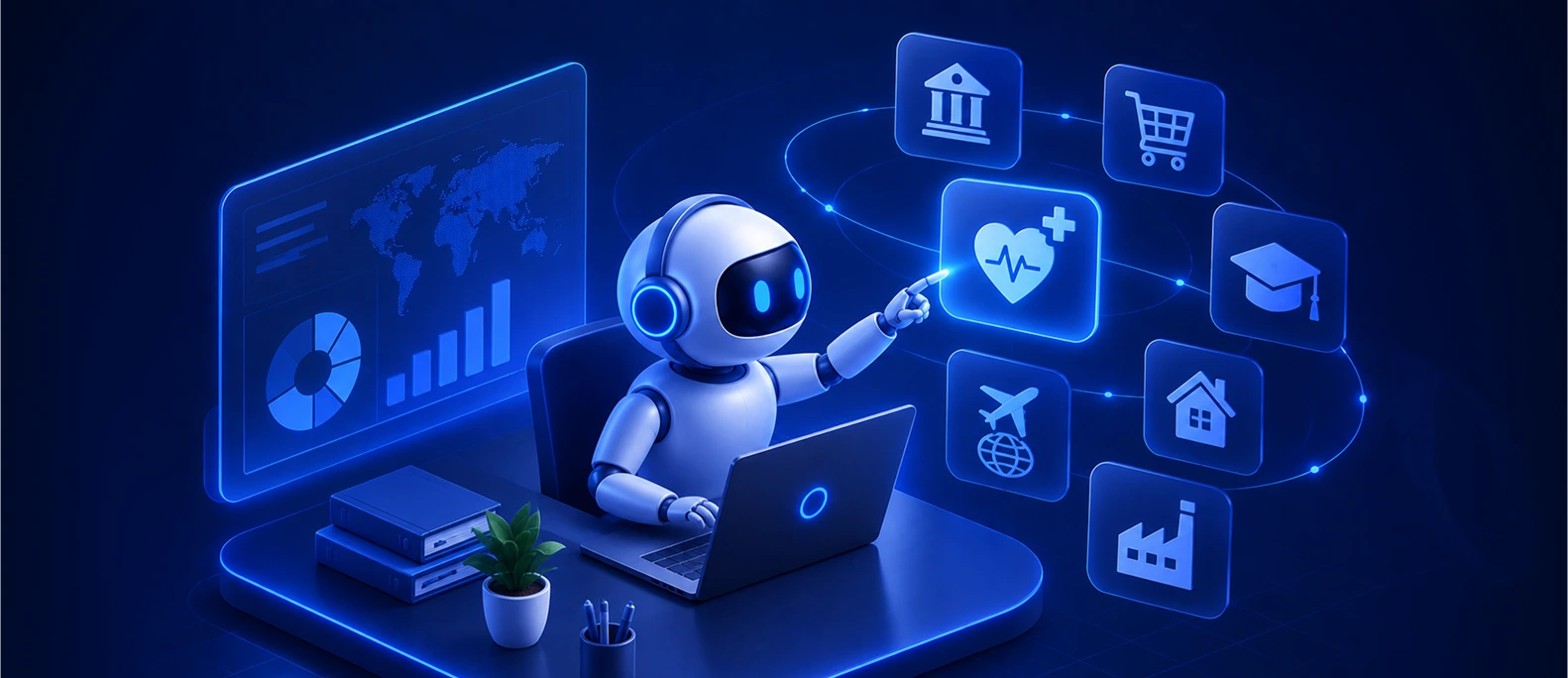
AI Agents Built for the Rules and Realities of Your Industry
An AI agent that works in retail will fail in healthcare. Every industry has its own data, its own regulations, and its own workflows. We build agents that respect yours.
Healthcare
Agents that qualify inbound leads the moment they arrive, answer property questions from your listing data, schedule showings, and revive stalled deals with timed follow-up. Connect to your MLS feed, CRM and document library so agents get instant answers on pricing, availability and lease terms instead of chasing them across three systems. Built alongside our real estate software development team.
Real Estate
Agents that qualify inbound leads the moment they arrive, answer property questions from your listing data, schedule showings, and revive stalled deals with timed follow-up. Connect to your MLS feed, CRM and document library so agents get instant answers on pricing, availability and lease terms instead of chasing them across three systems. Built alongside our real estate software development team.
Education
Agents that handle admissions enquiries, route student support tickets, process enrolment documents, and answer policy questions from your student handbook and course catalogue. Institutions absorb peak intake volume without adding seasonal headcount, and students get answers at 11pm instead of waiting for the office to open. Part of our education software development practice.
Travel
Agents that field booking enquiries, assemble itineraries, and answer fare-rule, baggage and cancellation questions from your actual policy documents rather than a generic script. High chat and call volume gets absorbed around the clock and across time zones, with escalation to a human the moment a booking needs judgment. Backed by our travel software development team.
Fitness
Agents that qualify membership enquiries, book trials and personal training sessions, run retention outreach on lapsing members, and answer operational policy questions for front-desk staff. Connect to your member database and class schedule so nothing needs a manual lookup. Built with our fitness software development team.
Is Your Business Ready for an AI Agent?
AI agents are powerful, but they are not the right move for every team at every stage. Here is an honest look at when an agent makes sense and when it does not.
You may not be ready if:
- You do not have a clear use case — you just want "AI" in general
- Your data is a mess, and you have no plan to clean it
- You expect zero errors on day one with no monitoring or tuning period
- You want to replace your entire team, not augment them
- You are looking for the cheapest possible option, not the most effective one
An AI agent is a strong fit if:
- You have a workflow with clear inputs, rules, and repeatable steps
- Your team spends hours each day on work that follows the same pattern
- You have data — structured or unstructured — that the agent can learn from
- Your leadership is willing to invest in adoption, not just technology
- You are ready to define what the agent should and should not do
- You have a system (CRM, ERP, helpdesk, database) the agent can connect to
If you are not sure which side you fall on, book a strategy call. We will tell you the truth — even if that truth is "not yet."
The Technology Behind Our AI Agents
We pick tools based on what performs, not what has the best marketing. Our stack is technology-agnostic — we select the right combination for your use case, your data, and your infrastructure.
Foundation Models
GPT
Claude
Gemini
Mistral
Agent Frameworks and Orchestration
Langchain
CrewAI
AutoGen
Semantic Kernel
Amazon Bedrock Agents
Knowledge and Data
Pinecone
Weaviate
ChromaDB
PostgreSQL
Redis
Elasticsearch
Knowledge Graphs
Cloud and Infrastructure
AWS
Google Cloud
Microsoft Azure
Docker
Kubernetes
Integration and Protocols
OAuth 2.1
MCP
How Much Does AI Agent Development Cost?
We do not hide our prices behind a "contact us" wall. Here are real ranges based on what we have built.
Starter Agent
Production Agent
Enterprise Agent System
Most of our AI agent clients invest between $40,000 and $90,000 and see payback within the first two quarters. The final cost depends on scope, integrations, data complexity, and compliance requirements. Start with a strategy call — we will give you a real range before you commit to anything.
AI Agent Development FAQs
What is AI agent development?
AI agent development is the process of designing, building, and deploying autonomous software systems that can perceive inputs, make decisions, take actions, and learn from results — all within your business workflows and with minimal human intervention. It covers single-task agents, multi-agent systems, and everything in between.
What is the difference between an AI agent and a chatbot?
A chatbot answers questions in a conversation. An AI agent goes further — it takes action. It reads your data, reasons through decisions, calls APIs, updates records, routes tasks, and completes multi-step workflows. A chatbot is a receptionist. An agent is a team member.
What types of AI agents can you build?
We build task automation agents, customer support agents, sales and lead qualification agents, internal operations agents, research and analyst agents, multi-agent systems, voice AI agents, and domain-specific agents trained on your industry’s rules and terminology.
How long does it take to develop an AI agent?
A single-purpose agent can go live in three to six weeks. A production agent with multiple integrations takes 3 to 5 months. Enterprise multi-agent systems run four to eight months, depending on scope, data complexity, and compliance requirements.
How much does AI agent development cost?
Projects range from $15,000 for a starter agent to $250,000 or more for an enterprise multi-agent system. Most clients invest between $40,000 and $90,000 for a production-grade agent with integrations, guardrails, and AgentOps support.
How do you prevent AI agents from hallucinating?
We build in multiple layers of protection: retrieval-augmented generation grounded in your data, confidence thresholds that flag uncertain outputs, output validation against expected formats, human-in-the-loop controls for high-stakes decisions, and continuous monitoring that catches drift. No system eliminates hallucination to absolute zero, but ours reduce it to near-zero with audit trails for everything.
Will the agent work with our existing software?
Yes. We integrate agents with CRMs, ERPs, helpdesks, databases, APIs, and third-party tools. Our agents are built to fit your stack, not replace it.
Do we own the AI agent after the project?
Yes. You own the code, the models, the data pipelines, and the infrastructure. No vendor lock-in. No recurring platform fees tied to our proprietary tools.
Can you build AI agents that comply with HIPAA, SOC 2, or GDPR?
Yes. We design for compliance from day one — encryption, access controls, audit trails, data residency, and permission-sensitive retrieval are baked into the architecture.
What is a multi-agent system?
A multi-agent system is an architecture where multiple specialized AI agents collaborate on a complex workflow. Each agent handles a defined role — one gathers data, another analyzes it, a third takes action, a fourth validates the result. They communicate through structured handoffs and shared context.
What happens after the agent goes live?
We provide ongoing AgentOps — monitoring accuracy, latency, cost, and error rates. We retrain models, refine prompts, update data pipelines, and adapt to new business rules. Your agent improves continuously based on production data.
What makes Auspicious Soft different from other AI agent development companies?
We are a production-first AI agent development company. We show our prices. We tell you what agents cannot do. We build with senior engineers who have shipped 200+ apps. We have a US office and work in US time zones. And when the project ends, you own everything. No lock-in, no surprises.