+1 740 762 6496
 +91 70189 46603

TABLE OF CONTENT
- Who Is BlackTherapy
- The Hot Take Nobody Says Out Loud
- What BlackTherapy Needed the App to Do
- The Tech Stack and Why Each Choice Was Made
- The 90-Day Timeline — What Happened Each Week
- The Moment That Nearly Broke the Timeline
- How Patient Data Was Protected at Every Layer
- Why Mental Health Made This Project Different
- The Real Mistakes Teams Make in Telehealth App Development
- Results After Launch
- Why the Right Telehealth App Development Company Changes Everything
- Visual Ideas with Placement
- FAQs
Overview
- A HIPAA-compliant telehealth app can launch in 90 days. The secret is making all compliance decisions before writing a single line of code.
- HIPAA is not a checklist. It is an architecture decision. Teams that treat it as a checklist get burned.
- Video calling, secure messaging, and booking are the three core features. Everything else is secondary.
- The right tech stack for healthcare is boring on purpose. Proven tools beat trendy ones every time.
- Mental health apps carry higher privacy stakes than most healthcare products. The code must reflect that.
- Picking the wrong telehealth app development company costs more in fixes than it saves in fees.
BlackTherapy needed a HIPAA-compliant telehealth platform for mental health care. They had 90 days. Auspicious Soft built it, tested it, secured it, and launched it on Day 88. No security incidents in six months post-launch. App Store rating of 4.7. Here is exactly how it was done and what most other teams get wrong.
Who Is BlackTherapy
BlackTherapy is a mental health platform built around a specific and important gap. Black communities in the US are significantly underserved in mental health care. Finding a therapist who understands cultural context, lived experience, and the unique pressures of that community is genuinely hard.
BlackTherapy’s answer was to build a platform that connects Black patients with licensed therapists who get it. Not a generic telehealth app. A focused, community-specific mental health platform.
They came to Auspicious Soft with a clear ask. Build a secure, working telehealth app. Make it HIPAA compliant. Get it live in 90 days. There were therapists waiting and a community that needed this now.
That kind of clarity makes a project easier. Vague briefs kill timelines. This one did not.
The Hot Take Nobody Says Out Loud
Here is the opinion that most telehealth app development companies will not give you.
Ninety percent of teams building healthcare apps treat HIPAA compliance like a coat of paint. They build the app first. Then they try to make it compliant. This is completely backwards and it is the reason so many healthcare apps have data breaches, failed audits, and expensive rewrites.
HIPAA compliance is not something you add. It is something you design into the foundation. If your dev team is asking about compliance after the architecture is already decided, you are already behind.
Need a HIPAA-Compliant Telehealth App?
Talk to Our Healthcare Experts Today.The analogy is simple. You would not build a house and then add the foundation later. The foundation comes first. Everything else sits on top.
This was the first thing said to BlackTherapy in Week 1. No product code until the architecture is signed off. They agreed. That decision is a big reason the project finished on time.
Our custom mobile app development process always starts with architecture before code. This is true for every industry. For healthcare it is non-negotiable.
The Tech Stack and Why Each Choice Was Made
The rule for healthcare tech stack decisions is simple. Boring is better. Use tools that have been in production healthcare environments. Use vendors that will sign a Business Associate Agreement. Avoid anything new and unproven.
Our API development team evaluated every vendor against one question before anything else. Will you sign a Business Associate Agreement? If the answer was no, the vendor was out.
| Layer | Tool Chosen | Why |
|---|---|---|
| Mobile App | React Native | One codebase for iOS and Android. Faster delivery without sacrificing quality. |
| Backend API | Node.js | Fast, Stable, Large Ecosystem, Strong HIPAA-Friendly Libraries Available. |
| DataBase | PostgreSQL on AWS RDS | HIPAA-Eligible. Encryption At Rest. AWS Signs a BAA. |
| Video Calls | Twilio Video | Signs a BAA. End-To-End Encryption. No Default Video Storage. |
| Secure Messaging | Custom Built | Off-The-Shelf Messaging Tools Do Not Meet HIPAA Standards. |
| Cloud | AWS | Largest Set of HIPAA-Eligible Services of Any Cloud Provider. |
| Auth | Auth0 with MFA | Proven Healthcare Authentication. Multi-Factor is Non-Negotiable. |
| Payments | Stripe | Signs a BAA. Handles PCI Compliance Separately from HIPAA. |
| Analytics | Mixpanel with HIPAA config | HIPAA-safe Behavioral Data. Standard Google Analytics is not Compliant. |
Every vendor on this list signed a Business Associate Agreement before development began. This is not optional. Using a vendor that does not sign a BAA is a HIPAA violation regardless of how secure the rest of your app is.
You can verify AWS HIPAA eligible services and Twilio HIPAA compliance documentation directly on their official pages before making your own vendor decisions.
The 90-Day Timeline — What Happened Each Week
Days 1 to 14 — Architecture First, Code Never
Week 1 and Week 2 had zero product code written. This surprises clients every time. It should not.
These two weeks covered:
- Full HIPAA compliance review with a healthcare consultant
- Mapping every data flow that touches protected health information
- BAA signing with AWS, Twilio, Auth0, Stripe, and Mixpanel
- Architecture sign-off from a security specialist
- Wireframes and UX flows reviewed and approved by BlackTherapy
The moment that showed how right this approach was came on Day 6. During the data flow mapping session, the team identified that the planned notification system would have sent appointment reminders containing the therapist’s name and session type to the patient’s email. That combination is protected health information under HIPAA. It would have been a violation baked into the core notification system from day one.
Caught on Day 6. Fixed before a single line of code was written. If it had been caught after launch, it would have required a formal breach notification to every affected patient and a report to the HHS Office for Civil Rights.
Two weeks of planning saved a potential federal compliance incident.
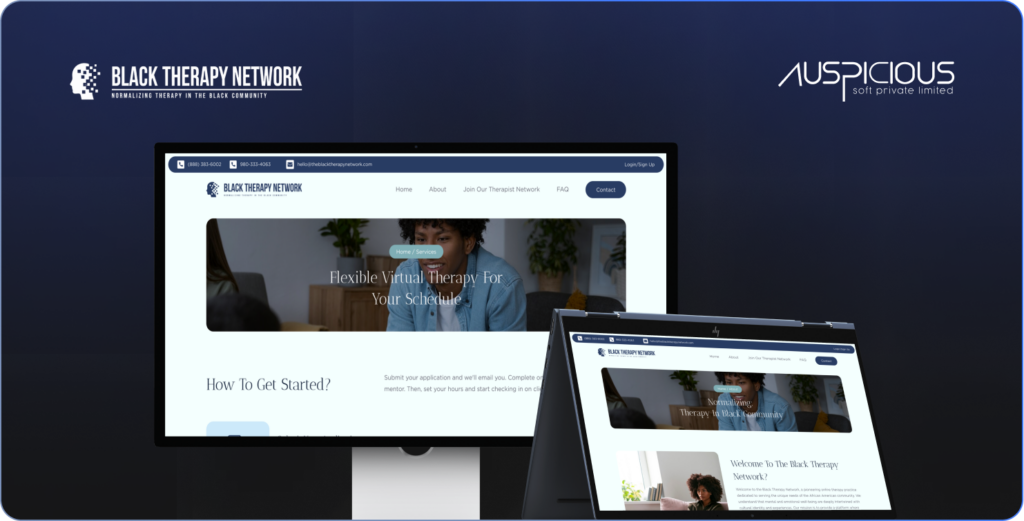
Planning a Telehealth App?
Start with a Free Architecture and Compliance Review. Talk to an Expert
Days 15 to 45 — The Core Build Sprint
This was the longest and most intense phase. The team ran two-week sprints with daily standups and weekly demos for BlackTherapy.
What was built in this phase:
- User registration, login, and therapist profile system
- Appointment booking with calendar sync
- Twilio Video integration with waiting room, session timeout, and audio fallback
- Custom secure messaging with end-to-end encryption at the message level
- Session notes with field-level encryption tied to therapist credentials
- Stripe payment flow with HIPAA-separated data handling
- Admin dashboard for therapist and patient management
- Push notification system built to exclude PHI from notification payloads
The most complex single piece of work was the secure messaging module. No existing library handled encryption in a way that satisfied HIPAA requirements and worked cleanly with React Native. The team built it from scratch. It took 11 days. It was worth it.
This is one reason cross-platform app development done properly is harder in healthcare than in other industries. The platform constraints of iOS and Android both need to be accounted for in every security decision, not just the feature design.
Days 46 to 70 — Security Testing and Hardening
QA in a healthcare app is not the same as QA in a standard mobile app. The question is not only whether features work. The question is whether a motivated attacker can access patient data.
What happened in this phase:
- Functional QA across iOS and Android for every user flow
- Penetration testing by an independent security firm with healthcare experience
- HIPAA compliance audit checking all 18 PHI identifiers against the HIPAA Security Rule
- Load testing for 500 concurrent video sessions
- API security testing for injection, authentication bypass, and authorization flaws
- All critical and high severity findings resolved before Day 70
The penetration test found two medium severity issues. One was an API endpoint that returned slightly more user data than the minimum necessary standard requires. One was a session token that did not invalidate correctly on logout. Both were fixed within 48 hours.
Finding issues in testing is the goal. Finding them after launch is the problem.
Knowing how to perform user testing for your app properly is a skill that saves healthcare products from expensive post-launch failures.
Days 71 to 90 — Launch and Go Live
- App Store and Google Play submissions on Day 71
- Final HIPAA compliance documentation package completed
- Internal training for BlackTherapy admin staff
- Soft launch on Day 80 with 15 therapists and 40 patients
- Full launch on Day 88
- Real-time monitoring with CloudWatch alerts active from Day 1 of launch
The app went live two days before the deadline.
The Moment That Nearly Broke the Timeline
On Day 52, Apple rejected the first TestFlight build. The reason was a privacy label issue. The app had not correctly declared in its App Store privacy manifest that it collected health and fitness data. This is an Apple requirement that sits completely separately from HIPAA.
This was a four-day delay. The compliance documentation was updated, the privacy manifest was corrected, and the resubmission was approved. The buffer in the timeline absorbed it. Projects with no buffer do not survive these moments.
The lesson is clear. App Store compliance and HIPAA compliance are two separate requirements. You need both. Teams that focus entirely on HIPAA and forget App Store privacy requirements hit this wall at the worst possible time.
How Patient Data Was Protected at Every Layer
| Layer | Protection Applied |
|---|---|
| Database | AES-256 encryption at rest. Credentials in AWS Secrets Manager with auto-rotation. |
| API | JWT tokens required on every endpoint. Tokens expire after 15 minutes of inactivity. |
| File Storage | S3 with server-side encryption. All file access via signed URLs that expire in 60 seconds. |
| Session Notes | Field-level encryption. Only the therapist whose credentials match can decrypt. |
| Audit Logs | CloudWatch logs every API call, login, file access, and failed authentication. Retained for 6 years. |
| Notifications | Push notification payloads contain zero PHI. Only a prompt to open the app. |
| Messaging | End-to-end encrypted at the message level. Not just in transit. |
One detail worth highlighting. The push notification decision was debated internally. Patients want to know what the notification is about without opening the app. That is convenient. It is also a HIPAA risk if the notification payload contains PHI. Convenience lost. Compliance won. The notifications say “You have a new message in BlackTherapy.” Nothing more.
Why Mental Health Made This Project Different
Building for mental health is not the same as building for general telehealth. The data is more sensitive. The stakes for a breach are higher. A patient’s blood pressure reading being exposed is bad. A patient’s therapy session notes being exposed can destroy a career, a relationship, or a family.
This reality shaped three specific decisions.
First, therapist phone numbers and personal email addresses are never visible anywhere in the app. All contact goes through the platform. This protects therapists from patients and patients from potential misuse of their own data.
Second, session notes use field-level encryption. Even a database administrator with full AWS access cannot read a therapy note without the decryption key tied to the specific therapist’s account. This is not standard practice. It should be for every mental health app.
Third, the app does not allow screenshots on Android. On iOS, a privacy screen overlay appears if the app detects a screen recording attempt. This protects patients who may be sharing their screen without realizing a therapy session is visible.
None of these features were in the original brief. They came from understanding what the data actually means to the people sharing it.
The Real Mistakes Teams Make in Telehealth App Development
This is the part most case studies skip because it makes the industry look bad. Here it is anyway.
Mistake 1: Building first, complying later. The most common and most expensive mistake. Retrofitting HIPAA compliance onto an existing architecture can cost as much as rebuilding from scratch.
Mistake 2: Trusting vendor marketing over BAA status. “We take security seriously” is not a BAA. If a vendor will not sign a BAA, they cannot handle your PHI. Full stop. Check Stripe HIPAA compliance as an example of what a proper vendor security page should look like.
Mistake 3: No penetration testing. Internal QA teams find bugs. External security firms find exploits. These are not the same thing. Skipping penetration testing on a healthcare app is negligence.
Mistake 4: Collecting more data than necessary. HIPAA requires minimum necessary data collection. Every extra field you collect is extra liability. If a feature works without collecting date of birth, do not collect date of birth.
Mistake 5: Treating launch as the finish line. HIPAA compliance is ongoing. New features, new vendors, and new regulations require ongoing review. This is why app maintenance and support matters far more in healthcare than in any other app category.
Mistake 6: Hiring a cheap generalist team over a specialist one. A team that has never built a HIPAA-compliant app will learn on your project. You will pay for that education in time, rework, and legal risk. Our software development services are built around teams that have solved these problems before, not teams discovering them for the first time.
Results After Launch
Six months post-launch, here is where BlackTherapy stood:
- Zero security incidents or breach reports
- App Store rating of 4.7 out of 5
- Google Play rating of 4.6 out of 5
- Session booking to completion rate above 80 percent
- Therapist onboarding time cut from multiple days to under two hours
- Zero HIPAA findings when a formal compliance review was conducted at the 90-day post-launch mark
- Platform scaled from 15 therapists at soft launch to over 200 active therapists within five months
The metric that mattered most to BlackTherapy was not the rating. It was the completion rate. When a patient books a therapy session and actually shows up, that is care being delivered. Above 80 percent means the platform is trusted enough that people follow through. In mental health care, that is the whole point.
We Built It for BlackTherapy. We Can Build It for You. Start Your Telehealth Project
Why the Right Telehealth App Development Company Changes Everything
The difference between a generalist mobile team and a healthcare-focused telehealth app development company is not just experience. It is the questions they ask before writing code.
A generalist asks: what features do you need?
A healthcare-focused team asks: what data does each feature touch, who can access it, how is it stored, how is it transmitted, and what happens if it is breached?
Those are different conversations. They produce different products.
Auspicious Soft has delivered mobile app development services across healthcare, fintech, and enterprise for clients across the US. The BlackTherapy project benefited from decisions made on previous healthcare builds. The data flow mapping process, the vendor BAA checklist, the penetration testing workflow — none of that was invented for BlackTherapy. It was refined over years of real healthcare work.
If your product also needs a strong web development foundation alongside the mobile app, that experience carries over directly. Compliance, security architecture, and data protection principles apply across platforms.
That experience is what makes a 90-day HIPAA-compliant build possible.
Visual Ideas with Placement
| Visual | Type | Where To Place |
|---|---|---|
| 90-Day Timeline Infographic | Horizontal Phase-By-Phase Timeline | After The "90-Day Timeline" Section Heading |
| HIPAA Data Protection Layers Diagram | Layered Stack Diagram | After The Data Protection Table |
| Tech Stack Architecture Flow | Simple Diagram Showing Frontend To Backend To Cloud | After The Tech Stack Table |
| App UI Mockup | Booking Screen and Video Session Screen Side By Side | After The "Core Build Sprint" Section |
| Results Stats Block | Visual Stat Cards Showing 4.7 Rating, 80% Completion, 0 Incidents | After The Results Section |
Auspicious Soft is a mobile app and software development company serving clients across the US. With 30+ certified developers and 200+ products delivered, the team builds secure, scalable, and compliant digital products for healthcare, fintech, and enterprise.
Need a HIPAA-Compliant Telehealth App?
Talk to Our Healthcare Experts Today.FAQs
How long does telehealth app development take?
A focused telehealth app with video, booking, and secure messaging takes 60 to 90 days with an experienced team and a clear scope. More complex platforms with EHR integration or multi-specialty support take four to six months or longer.
How much does it cost to build a HIPAA-compliant telehealth app?
A solid HIPAA-compliant telehealth app typically costs between $40,000 and $120,000 depending on features and platforms. Ongoing compliance monitoring and maintenance adds 15 to 20 percent of the development cost each year.
What makes a telehealth app HIPAA compliant?
End-to-end encryption, role-based access controls, audit logs, signed Business Associate Agreements with every vendor, and documented breach notification procedures. All of this must be in the architecture from Day 1, not added after launch.
Can you use Zoom for a clinical telehealth app?
Zoom for Healthcare offers a BAA and is HIPAA-eligible. Standard Zoom is not. Most custom telehealth platforms use dedicated video APIs like Twilio Video for more control and cleaner HIPAA documentation.
What technology is used in telehealth app development?
React Native or Flutter for mobile, Node.js or Python for the backend, PostgreSQL or MongoDB for the database, Twilio for video, and AWS or Azure for cloud hosting. Every vendor must support HIPAA and sign a BAA.
Do mental health apps need HIPAA compliance?
Yes. Any app that handles protected health information from patients is covered by HIPAA. Mental health apps that connect licensed therapists with patients definitely qualify.
What is the biggest mistake in healthcare app development?
Building first and adding compliance later. It never works cleanly. It always costs more than getting it right at the architecture stage.
How do I find a good telehealth app development company?
Ask for case studies that specifically involve HIPAA compliance. Ask which vendors they use and whether those vendors sign BAAs. Ask about their penetration testing process. A company that cannot answer these questions clearly has not built compliant healthcare products before. The BlackTherapy case study above is an example of what real healthcare experience looks like in practice.
Do not Miss Our Latest Tech Insights
Stay one step ahead in the fast-moving world of AI and technology. Add us as a Preferred Source on Google and get our latest articles, guides, and industry insights delivered straight to your search feed.