+1 740 762 6496
 +91 70189 46603

TABLE OF CONTENT
- The Hot Take Most People Skip
- The 72 Hour Rule (A Simple Way to Know)
- What Is Custom Software in Plain Words?
- What Is Off-the-Shelf Software?
- Custom Software vs Off-the-Shelf: Quick Comparison Table
- Case Study: A Retail Client Who Made the Switch
- When Custom Software Wins
- When Off-the-Shelf Software Makes Sense
- Myth vs Reality (What Owners Get Wrong)
- The Real Cost Story Nobody Puts on a Sales Page
- The 4 Silent Costs of Off-the-Shelf Nobody Warns You About
- The Middle Path Most Blogs Ignore (Hybrid)
- How to Decide in Under Ten Minutes
- Custom Software vs Off-the-Shelf: Best Fit By Industry
- Security, Compliance, and the Boring Stuff That Matters
- Why Businesses Pick Auspicious Soft for Custom Software
- FAQs
Overview
- The real difference between Custom Software and Off-the-Shelf in plain words.
- The 72 Hour Rule Auspicious Soft uses to help founders decide fast.
- A real retail client case study showing how one brand cut $933 per month by ditching 7 SaaS tools.
- The 4 Silent Costs of Off-the-Shelf software nobody puts on a sales page.
- A quick comparison table across 10 key points.
- When Custom Software wins, when Off-the-Shelf makes sense, and when to go hybrid.
- Best fit by industry (healthcare, retail, real estate, fitness, education, fintech, logistics).
- 12 FAQ answers built for Google featured snippets and voice search.
- Written by Anil Thakur, Founder and CEO of Auspicious Soft, 15+ years and 200+ builds.
Pick Off-the-Shelf if the work is small, common, and money is tight. Pick Custom Software if the workflow is different, if the SaaS bill is climbing past 500 dollars a month, or if a customer once asked for something and the answer had to be no. Most growing businesses land on a hybrid model by year three. The trick is spotting the switch point early.
Now the honest, longer answer that most blogs skip.
The Hot Take Most People Skip
Most blogs frame Custom Software vs Off-the-Shelf like a fair fight. It is not. Off-the-Shelf tools were built for someone else’s business. Yours just borrows a chair at their table. That works for a while. Then, one quiet Tuesday, it does not.
Across 200+ builds Auspicious Soft has shipped since 2018, the same pattern shows up. The tool that felt like a bargain in year one starts to feel like a leash by year three. Not always. Not for everyone. But often enough to be a rule of thumb.
The 72 Hour Rule (A Simple Way to Know)
Here is a shortcut Auspicious Soft uses with founders. If your team spends more than 72 hours a month (roughly 3 people, 6 hours a week) fixing broken workflows inside your SaaS tools, you have already paid for a custom build. You just paid it in salaries instead of code.
That is the 72 hour rule. Track it for a month. If the number climbs, the answer is not another plugin.
What Is Custom Software in Plain Words?
Custom Software is built for one company. Yours. Your rules. Your workflow. Your logo. Your data model. Nothing else lives inside it. A team of developers writes the code, tests it, and ships it. Then the code belongs to you.
Think of it like a house built to your plans. Off-the-Shelf is a rented flat. Both give shelter. Only one lets you knock down a wall when you feel like it.
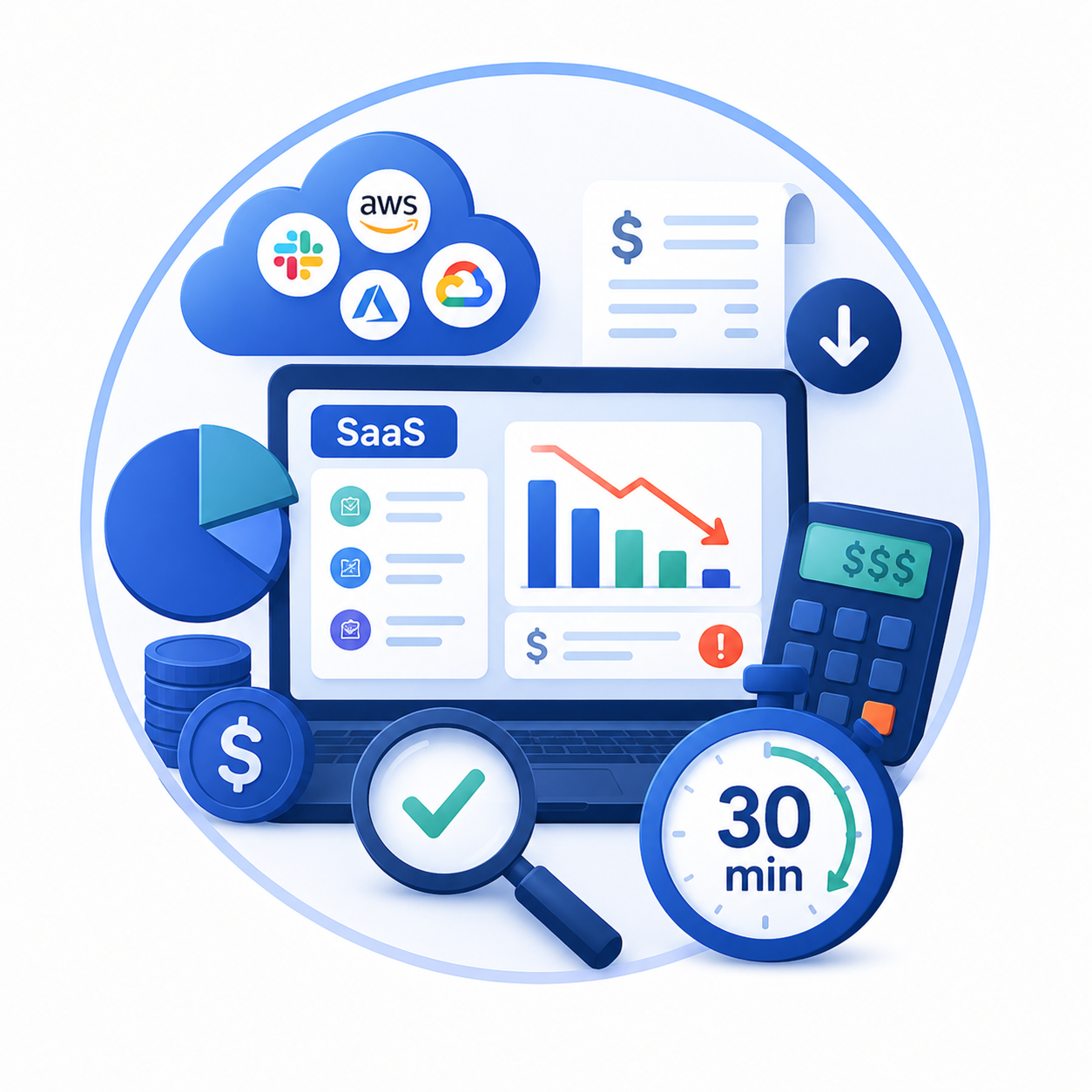
Your SaaS Bill is Quietly Killing Your Margins
Get a free 30 minute audit from Auspicious Soft. Zero Pressure. Real numbers.What Is Off-the-Shelf Software?
Off-the-Shelf software is ready made. Sign up. Pay a monthly fee. Start using it in an hour. Shopify, HubSpot, QuickBooks, Zoho, Salesforce, Monday, Notion. All Off-the-Shelf.
The vendor owns the code. You own the frustration when a feature you need is not on their roadmap. Fair trade for how fast you get started. Not a fair trade forever.
Custom Software vs Off-the-Shelf: Quick Comparison Table
| Point | Custom Software | Off-the-Shelf Software |
|---|---|---|
| Fit | Built For Your Exact Workflow | Built For The Average Buyer |
| Upfront Cost | Higher | Very Low or Free |
| Monthly Cost | Low or Zero After Launch | Grows With Users and Add Ons |
| Ownership | You Own The Source Code | Vendor Owns Everything |
| Speed To Launch | 6 To 24 Weeks | Same Day |
| Scaling | Grows With You | Hits a Ceiling |
| Support | Direct Dev Team or a Partner Like Auspicious Soft | Ticket Queue |
| Data Control | You Set The Rules | Trust The Vendor |
| Downtime risk | You Control Patches | Vendor Outages Hit You |
Case Study: A Retail Client Who Made the Switch
(Client name kept private under NDA. Numbers rounded and shared with permission.)
A fashion eCommerce brand came to Auspicious Soft in early 2024. They had built the business on Shopify plus nine SaaS apps: Klaviyo for email, Yotpo for reviews, Gorgias for support, ShipStation for shipping, an inventory app, a returns app, a loyalty app, an upsell app, and a subscription app.
Here is what the invoice looked like:
| Item | Monthly Cost (USD) |
|---|---|
| Shopify Advanced | 450$ |
| Klaviyo | 250$ |
| Yotpo | 130$ |
| Gorgias | 180$ |
| ShipStation | 100$ |
| Inventory App | 150$ |
| Returns App | 130$ |
| Loyalty App | 100$ |
| Subscription App | 90$ |
| Total SaaS Burn Per Month | 1,580$ |
That is 17,676 dollars a year, only counting subscriptions. It does not count the 22 hours a week their ops team spent copy pasting data between tools because none of them talked to each other properly.
Auspicious Soft built a hybrid custom platform: Shopify stayed for the storefront and payments (no need to reinvent that). Everything else (inventory, returns, loyalty, subscriptions, support routing) got merged into one custom dashboard with a shared database.

Build time: 14 weeks. One time cost: roughly 4 months of the old SaaS bill.
Results after 6 months of use:
- SaaS bill dropped from 1,473 to 540 dollars per month (kept Shopify + Klaviyo, killed the rest)
- Returns processing time: 6 minutes to 90 seconds per return
- Ops team saved 22 hours per week (redirected to marketing and growth)
- Full data ownership. No lock in. No sudden pricing changes.
When Custom Software Wins
Signs your business is ready to switch:
- Your team keeps opening ten tabs to do one task
- You pay for features nobody touches
- Three tools do a job one tool should do
- The vendor’s price page says “please contact sales”
- A customer once asked for something and the answer was no
- Data lives in five places and none of them sync
- Every new hire spends the first week just learning the tool stack
Two or more of these? The math has tipped. Custom Software will pay for itself faster than the sales page of any SaaS product will admit.

When Off-the-Shelf Software Makes Sense
Off-the-Shelf is not the enemy. It is smart in the right season. Buy it when:
- You are testing an idea and cash is thin
- Your workflow is basic (email, invoicing, scheduling)
- You have no engineers around to look after anything
- The tool covers 90 percent of what you need and the last 10 percent does not matter
- You want to launch this week, not next quarter
A tiny bakery does not need custom inventory software. A restaurant chain across six cities does.
Myth vs Reality (What Owners Get Wrong)
| Common Belief | What Actually Happens |
|---|---|
| Custom Software is Only For Big Companies. | Startups Use Custom Too, Often For MVPs That Raise Funding. |
| Off-the-Shelf is Always Cheaper. | Cheaper Year 1. Usually Pricier By Year 3. |
| Custom Takes Forever To Build. | A Tight MVP Ships in 6 To 12 Weeks With The Right Team. |
| SaaS is Safer Because a Big Company Runs It. | You Depend On Their Uptime, Their Pricing, Their Roadmap. |
| You Cannot Own The Code If It Uses AI or APIs. | You can. Auspicious Soft Hands Over Full Source Every Time. |
| One Tool Can Do Everything. | It Cannot. The Stack Always Grows. That is the Trap. |
The Real Cost Story Nobody Puts on a Sales Page
People say custom is expensive. Half true. Off-the-Shelf feels cheap on day one. Then per user fees kick in. Then integrations. Then a premium tier. Then a plugin. Then another. Five years later, the receipts add up to enough to have built the software three times over.
Custom Software has one big cheque upfront and quiet years after. Break even usually lands around year two for a growing business. Not marketing spin. That is what the invoices show, backed by Statista’s SaaS spending data and Gartner’s software engineering research.
Curious what your version of the math looks like? Get a free custom software cost estimate from Auspicious Soft.
The 4 Silent Costs of Off-the-Shelf Nobody Warns You About
Beyond the sticker price, these are the costs that sneak up:
- The workaround tax. Every time your team builds a manual fix for a missing feature (a Zapier chain, a Google Sheet, a Slack bot) they pay in time. That time compounds.
- The vendor roadmap tax. Your best growth idea might depend on a feature the vendor will never build. You wait. Meanwhile, a competitor with custom software ships it in two weeks.
- The switching cost tax. By year four, your data is trapped inside the SaaS. Migrating out costs money and often causes weeks of chaos.
- The identity tax. Every business that runs on the same SaaS stack looks the same to customers. Custom Software lets you build features nobody else has. That is a moat.
Custom Software has costs too. Just different ones. Support. Hosting. Updates. But those are budgeted, not surprise attacks.

The Middle Path Most Blogs Ignore (Hybrid)
There is a third option. Nobody writes about it because it does not fit a clean headline. It is called the hybrid model.
Keep Off-the-Shelf for boring things. Payroll. Email. Accounting. Video calls. Build Custom Software for the parts of your business that actually make money. The sales floor. The customer journey. The dashboard the CEO stares at every morning.
For example, keep QuickBooks for accounts. Build a custom CRM and ERP system for the sales team. Keep Slack for chat. Build a custom mobile app for customers.
That is what Auspicious Soft recommended to the retail client above. Same story for most first time founders. It saves cash without capping the ceiling.
How to Decide in Under Ten Minutes
Ask three questions:
- Is your workflow different from other companies in your space?
- Are you already spending more than 400 dollars a month on SaaS tools?
- Do you plan to grow past your current team size within two years?
Custom Software vs Off-the-Shelf: Best Fit By Industry
| Industry | Better Fit | Why |
|---|---|---|
| Healthcare | Custom Software | HIPAA Rules and Patient Workflows Are Unique |
| Retail (Small) | Off-the-Shelf | Fast Launch, Low Cost |
| Retail (Mid/Chain) | Hybrid | Storefront Off-The-Shelf, Ops Custom |
| Real Estate | Custom Software | Local Rules and Listings Vary A Lot |
| Fitness Studios | Hybrid | Booking Off-The-Shelf, Member App Custom |
| Education | Custom Software | Learning Paths Are Never One Size Fits All |
| Fintech | Custom Software | Security, Compliance, and Speed |
| Logistics | Custom Software | Tracking and Fleet Routing Are Business Specific |
Auspicious Soft builds industry specific platforms for real estate, fitness, travel, and education businesses across the USA.
Security, Compliance, and the Boring Stuff That Matters
Off-the-Shelf gets a bad rap for security. Unfair sometimes. The big vendors invest heavily. Still, when it comes to your data, one thing is certain: you follow their rules.
Custom Software flips that. You set the rules. HIPAA. SOC 2. GDPR. PCI. Build it your way from day one. This is why healthcare, banking, and government projects almost always go custom. See how Auspicious Soft handled it in the HIPAA compliant telehealth app case study.
Why Businesses Pick Auspicious Soft for Custom Software
Auspicious Soft builds custom software, web platforms, and mobile apps that fit the business, not the other way around. Startups. Enterprises. Solo founders with a big idea.
The team also handles AI and ML solutions, blockchain development, and API development, so growth never gets stuck at the tech stack.
Startups get an MVP that gets funded. Enterprises get systems that shave hours off every workflow. Both get direct access to the developers writing the code. No middle layer. No account manager telling you the ticket has been escalated.
Your SaaS Bill is Quietly Killing Your Margins
Get a free 30 minute audit from Auspicious Soft. Zero Pressure. Real numbers.FAQs
Q1. What is the main difference between Custom Software and Off-the-Shelf?
Custom Software is built from scratch for one business. Off-the-Shelf is a product many businesses share. One fits like tailored clothes. The other is a size medium.
Q2. Is Custom Software really more expensive than Off-the-Shelf?
Only at the start. Over three to five years, custom usually costs less than stacking multiple SaaS tools with per user fees. Auspicious Soft can give a fixed quote before any code is written.
Q3. How long does Custom Software take to build?
A basic MVP takes six to twelve weeks. Full platforms take three to nine months. Off-the-Shelf is ready in an hour. The years after are the trade.
Q4. Can I switch from Off-the-Shelf to Custom Software later?
Yes. Most growing companies do. Data migration is usually the biggest headache, not the code. Plan two to four weeks for a clean migration.
Q5. What size business needs Custom Software?
Any business where a small change in workflow means a big change in revenue. That could be a five person startup or a five hundred person firm.
Q6. Is Off-the-Shelf ever the smart choice?
Yes. For common tasks like accounting, email, or basic scheduling, Off-the-Shelf is faster and cheaper. Save custom money for the parts that give you an edge.
Q7. Who owns the code in Custom Software?
You do. Auspicious Soft hands over full source code and documentation once the project ends.
Q8. Does Custom Software need constant updates?
Less than people think. A good build lasts three to five years without major work. Off-the-Shelf tools push updates whether you want them or not.
Q9. Which is better for startups, Custom Software or Off-the-Shelf?
Off-the-Shelf for testing an idea. Custom Software once the idea earns money and needs to scale.
Q10. Can Custom Software use AI and machine learning?
Yes. Custom builds are often the best way to add real AI features because you control the data. Auspicious Soft’s AI and ML team does this often.
Q11. What is the biggest hidden cost of Off-the-Shelf software?
The workaround tax. The hours your team spends stitching tools together with Zapier, spreadsheets, and manual copy paste. It rarely shows up in a monthly report, but it eats margins.
Q12. How do I know when to switch from SaaS to custom?
Apply the 72 hour rule. Track how many hours a month your team spends fixing SaaS gaps. Cross 72 hours and the ROI on custom is already there.
Do not Miss Our Latest Tech Insights
Stay one step ahead in the fast-moving world of AI and technology. Add us as a Preferred Source on Google and get our latest articles, guides, and industry insights delivered straight to your search feed.