+1 740 762 6496
 +91 70189 46603


TABLE OF CONTENT
- Why Travel App Matters More Than Ever?
- Step-by-Step Travel App Development Process
- Types of Travel Applications You Can Build in 2026
- How Are Technologies Shaping Travel Apps?
- Why 2026 Is the Golden Year for Travel App Investment
- Benefits of Investing in Modern Travel App Development Services
- Travel App Development Strategies for Business
- 3 Year Maintenance Cost Table
- How Much Does Travel App Development Cost in 2026?
- Development Team Composition
- Global Travel App Market Size and Revenue Breakdown
- Conclusion
- FAQs
Overview
- Process of building a travel app, including planning, feature selection, and technology choices.
- It covers essential features like booking systems, itinerary management, payment integration, and real-time notifications.
- The post explains different types of travel apps such as booking platforms, itinerary planners, and travel guides.
- Cost considerations depend on features, integrations, and UI complexity.
- It also highlights user experience and personalization as key success factors.
- The article concludes with development strategies, including MVP launch and continuous improvement based on user feedback.
Building a travel app in 2026 is a serious commercial decision. The travel application market is valued at roughly $16.2 billion in 2026 and is projected to reach $63.9 billion by 2035 (15.6% CAGR) — and it sits inside a far larger online travel booking economy worth about $761 billion in 2026, on track for $1.4 trillion by 2035. Businesses that invest in purpose-built platforms today are capturing the users, data, and loyalty that will define market leadership for the next decade.
Why Travel App Matters More Than Ever?
In the upcoming years, people have started using mobile apps more than ever. The users will expect the app to be powerful, efficient, and tailor-made according to the needs of the industry. Some of the reasons driving this growth are:
- Smartphones are a travel companion- from planning and booking to navigation and experience sharing.
- AI-powered apps deliver personalised services.
- Ultra-fast connectivity in any part of the world with 5G/6G network.
- A cross-platform travel ecosystem that allows app access across various devices.
- Modernised technologies with better UX and security offer customer loyalty.
Step-by-Step Travel App Development Process
| Step | Phase | What Happens | Duration |
|---|---|---|---|
| 1 | Discovery & Strategy | Define app type (booking, itinerary, guide), identify target users, analyze competitors like Expedia, Booking.com, TripAdvisor, and finalize feature list | 2–4 weeks |
| 2 | UI/UX Design | Create wireframes → high-fidelity mockups → clickable prototype. Focus on mobile-first design, booking flows, and search UX | 3–6 weeks |
| 3 | Backend Development | Build API layer, database schema, user auth, booking engine, payment integration, third-party API connections (GDS, hotel inventory) | 6–14 weeks |
| 4 | Frontend Development | Build iOS and Android apps (or cross-platform with React Native/Flutter), integrate maps, booking calendars, payment UI | 6–12 weeks |
| 5 | QA & Testing | Functional testing, performance testing under load, security audit, booking flow end-to-end testing, device compatibility | 2–4 weeks |
| 6 | Launch & ASO | Submit to App Store + Google Play, implement App Store Optimization (keywords, screenshots, description), soft launch with beta users | 2–3 weeks |
Types of Travel Applications You Can Build in 2026
In 2026, travel applications can be developed across multiple categories based on user needs. These include booking apps for flights and hotels, itinerary planning apps, navigation and map-based apps, travel guide apps, ride-sharing platforms, and AI-powered assistants. Businesses can also build specialized apps like budget planners, language translation apps, and local experience platforms to enhance convenience and personalization.
| App Type | Market Demand | Development Cost | Monetization Potential | Time to Market |
|---|---|---|---|---|
| Flight Booking Apps | Very High | $80K-$150K | High (Commission 3-7%) | 4-6 months |
| Hotel & Accommodation | Very High | $60K-$120K | High (Commission 10-25%) | 4-5 months |
| Trip Planning & Itinerary | High | $40K-$90K | Medium (Freemium/Ads) | 3-4 months |
| Transportation & Ride | High | $70K-$130K | Medium (Commission 15-20%) | 5-6 months |
| Travel Guide & Discovery | Medium | $35K-$80K | Low-Medium (Ads/Affiliate) | 3-4 months |
| Activity & Experience Booking | High | $65K-$110K | High (Commission 15-30%) | 4-5 months |
| Corporate Travel Management | Medium | $120K-$250K | Very High (Subscription) | 6-9 months |
| AI Travel Assistant | Very High | $100K-$200K | High (Subscription/Premium) | 5-8 months |
Detailed App Type Analysis:
-
Flight Booking Applications
- Market Size: As of 2024, the mobile travel-booking market was valued at USD 228 billion, with a projection to exceed USD 526 billion by 2032
- Key Features: Multi-airline search, price alerts, flexible dates, seat selection
- Top Players: Expedia, Skyscanner, Google Flights
-
Hotel & Accommodation Apps
- Inventory Access: Expedia Rapid API provides access to 700,000+ properties globally.
- Revenue Model: Commission-based (15-25% average)
- Innovation: Virtual tours, AR room previews
-
AI-Powered Trip Planners
- User Adoption: Nearly one-third of all travelers use AI as their standard starting point for trip planning. Travel And Tour World
- Key Features: Personalized itineraries, smart recommendations, auto-optimization
How Are Technologies Shaping Travel Apps?
A travel app lets users plan and enjoy their vacations perfectly. To have an unforgettable trip and make memories while holidaying, you will require this all-in-one app for discounts, customised itineraries, and perfect locations.
1. AI:
Artificial intelligence and machine learning are two such technologies that are no longer optional but a must-have in travel apps. Such an app is visited by a wide range of users throughout the day, with different preferences. AI-powered apps:
- Analyse user behaviour and search history
- Predict the destination and activity preferences
- Optimize itineraries automatically
- Offer dynamic pricing
- Deliver smart chat support & recommendations
2. AR & VR:
The best travel app development company uses high-grade technologies that have changed the face of travel content.
● AR for Navigation: It makes the app highly informative and interactive. It allows users to explore nearby attractions and transportation info, just by pointing the phone camera towards a certain street.
● VR for Previews: In contrast, this function enables users to browse the market and museums, tour the locations, and preview hotel rooms before making a reservation. The experience is as good as being physically present at the location.
3. Blockchain:
Trust is of utmost importance, on which the image of the brand is based. Especially with travel apps, when handling personal data of users and payments. Blockchain provides:
- Secure transactions
- Fraud prevention
- Transparent booking system
- Tamper-proof user data storage
4. Speech Detection:
The voice-based command on apps also works effectively. It is an amazing hands-free option. Through the Natural Language Processing (NLP), you will get more context-aware results.
- Understands user-intent better
- Reduces friction in search and bookings
- Better app usability for the disabled
- Makes interactions more natural

Build Your Travel App — Get a Free Cost Estimate
See real pricing for booking, itinerary & AI travel apps — then get a custom quote backed by GDS integration expertise.5. Geolocation Services:
Exact geolocation plays an important role in travel apps. The mobile app development San Francisco uses GPS and satellite data to ensure smooth navigation in new places.
- Live navigation and route planning.
- Highlighting nearby attractions
- Arrival time estimate
- Instant hotel and transport suggestions

Why 2026 Is the Golden Year for Travel App Investment
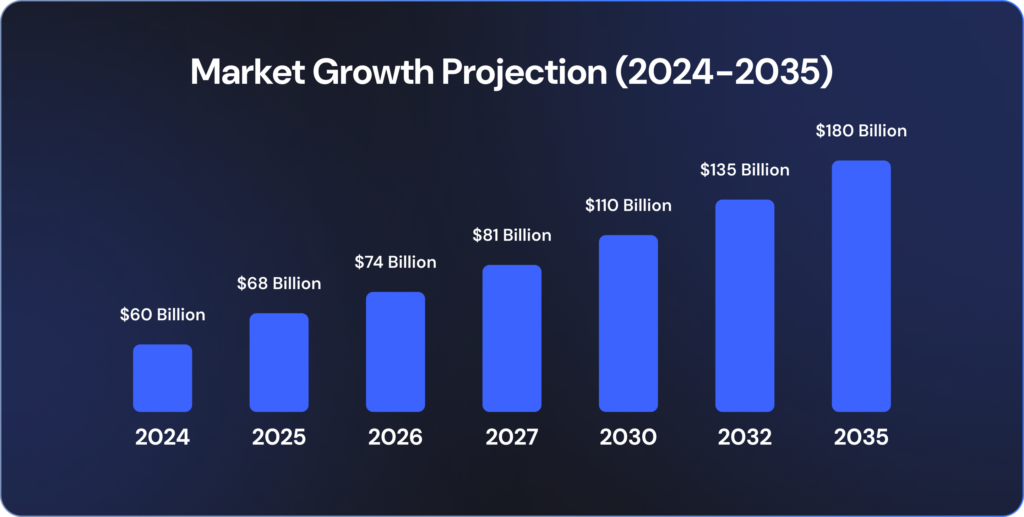
The global travel application market is starting at USD 16.23 Billion in 2026 and projected to reach USD 63.87 Billion by 2035 with a CAGR of 15.6%. Business Research Insights This unprecedented growth creates a unique window of opportunity for businesses to enter the market.
Key Investment Triggers in 2026:
- 90% of travelers are aware AI can help plan or book travel; among those who’ve tried it, 63% rely on it for most or every trip, and 96% say they’ll use it again.
- 94% of AI users trust AI travel recommendations at least as much as other sources, and 35% say AI is most useful for comparing prices across flights, hotels, and activities.
- US-specific: about 33% of US-based travelers have used AI to plan a trip, with another 31% interested but not yet trying it.
| Metric | Value | Growth Rate |
|---|---|---|
| Global Market Size | $67-70 Billion | 11-14% CAGR |
| Mobile Traffic Share | 70.5% | +7.3% YoY |
| AI Adoption Rate | 40% | +15% YoY |
| Active App Users | 850M+ | +12% annually |
| Average Session Time | 6.3 minutes | +8% YoY |
Benefits of Investing in Modern Travel App Development Services
1. Customised Travel Experience with AI:
Modern travel apps use AI and machine learning to understand traveler’s behaviour, preferences, and budgets. AI features include:
- Smart itinerary generation
- Destination recommendations
- Dynamic pricing suggestions
- Preference-based hotel and activity matching
- Predictive travel planning
2. High Customer Retention:
Before, during, and after a journey, travel apps are effective channels for interaction. Through clever interactions, consumers maintain a connection with the brand all along the way. Modern travel apps integrate:
- Real-time travel alerts
- AI-powered push alerts
- Customised offers and promotions
- Reward and loyalty schemes
- Booking with just one touch
This effectively draws tourists and keeps them for further reservations.
3. Lower Operating Expenses with Automation:
Automation increases service speed and accuracy while reducing manual labour for travel agencies.
Automations include:
- AI chatbots for customer support
- Auto booking confirmations
- Dynamic price updates
- Smart scheduling
- Real-time travel notifications
This lowers support costs, reduces errors, and improves operational efficiency.
4. New Revenue Streams for Travel Businesses
Modern travel apps go beyond bookings and open new monetisation opportunities.
Through in-app:
- Hotel and experience marketplaces
- Subscription travel plans
- Premium itinerary services
- Partner promotions
- AI-powered upselling
Travel businesses can generate steady income and increase average booking value.
5. Stronger Brand Loyalty & Trust
A professional travel app builds a strong emotional connection with travellers. Users trust brands that deliver consistent and secure experiences.
Modern travel apps provide:
- High visibility on user devices
- Direct communication channels
- Secure payment systems
- Reliable trip management
- Consistent user experiences
This strengthens brand reputation and builds long-term customer loyalty in the travel market.
Travel App Tech Stack Table (2026)
| Layer | Technology Options | Notes for Travel Apps |
|---|---|---|
| Mobile Framework | React Native / Flutter / Swift (iOS) / Kotlin (Android) | React Native preferred for cost efficiency; native for high-performance booking flows |
| Backend | Node.js, Python (Django/FastAPI), Ruby on Rails | Node.js handles concurrent booking requests best; Python ideal if using ML features |
| Database | PostgreSQL + MongoDB + Redis | PostgreSQL for bookings/users; MongoDB for itinerary content; Redis for session caching |
| Flight/Hotel APIs | Amadeus GDS, Sabre, Expedia Rapid API, Booking.com API | Amadeus is the industry standard for flight search; Expedia Rapid for 700,000+ properties |
| Maps & Navigation | Google Maps Platform, Mapbox, Apple MapKit | Google Maps for global coverage; Mapbox for custom styling |
| Payments | Stripe, Braintree, PayPal, Adyen (multi-currency) | Stripe recommended for US market; Adyen for multi-currency international |
| AI Features | OpenAI API, Anthropic Claude API, TensorFlow | Powers itinerary recommendations, chatbots, price predictions |
| Cloud Hosting | AWS (EC2, RDS, S3, CloudFront), Google Cloud | AWS recommended: global CDN for fast image loading, auto-scaling for seasonal peaks |
Travel App Development Strategies for Business
Here are some of the best strategies that a travel-based company can adopt, though the travel app development cost can also increase with it.
-
Use AI- Strategies:
AI should power destination recommendations, itinerary planning, dynamic pricing, traveler analytics, fraud detection, and customer support.
-
Prioritize Cross-Platform App Development:
Use Flutter, React Native, .NET MAUI, or Kotlin multi platform to build a travel app with a fast and consistent travel experience.
-
Focus on Modular Architecture:
The modular architecture allows easy integration of the booking engine, third-party services, and independent service deployment.
Build Your Travel App — Get a Free Cost Estimate
See real pricing for booking, itinerary & AI travel apps — then get a custom quote backed by GDS integration expertise.-
Implement Strong Cybersecurity Protocols:
Use encryption, secure authentication, threat monitoring, and zero-trust frameworks to protect the traveler’s data.
-
Building Lightweight Apps:
Reducing the app size, simplifying navigation, optimising booking flows, and following modern UI/UX standards to ensure smooth trip planning and exploration.
-
Testing & Performance Optimisation:
Good performance is essential in this era, as the market is highly competitive. The app should have real-time updates, network variability, and a multi-device usage facility.
3 Year Maintenance Cost Table
| Cost Item | Year 1 | Year 2 | Year 3 |
|---|---|---|---|
| Cloud Hosting (AWS) | $6,000–$24,000 | $12,000–$36,000 | $18,000–$60,000 |
| Third-Party API Costs | $3,000–$12,000 | $6,000–$20,000 | $8,000–$30,000 |
| Bug Fixes & OS Updates | $5,000–$15,000 | $8,000–$20,000 | $10,000–$25,000 |
| New Feature Development | $0–$30,000 | $20,000–$80,000 | $30,000–$100,000 |
| Security Audits | $2,000–$8,000 | $3,000–$10,000 | $3,000–$12,000 |
| Total Annual Estimate | $16,000–$89,000 | $49,000–$166,000 | $69,000–$227,000 |
How Much Does Travel App Development Cost in 2026?
Travel app development cost in 2026 depends on four variables: platform choice, feature complexity, third-party integrations, and the development team’s location and experience. Here is a realistic breakdown:
| App Type | Features Included | Estimated Cost |
|---|---|---|
| Basic MVP | Booking, search, user profiles, payments | $25,000 – $50,000 |
| Mid-Complexity | AI recommendations, maps, reviews, push alerts | $50,000 – $120,000 |
| Full-Featured Platform | AR/VR previews, blockchain payments, real-time tracking, loyalty engine | $120,000 – $300,000+ |
| Enterprise / OTA Platform | Multi-vendor, custom CMS, analytics dashboard, global scaling | $300,000+ |
Key cost factors:
- Native iOS + Android costs 40–60% more than a cross-platform Flutter or React Native build
- Third-party API integrations (Amadeus, Skyscanner, Google Maps) add $5,000–$20,000
- Post-launch maintenance typically runs $2,000–$8,000/month
- US-based agencies charge $100–$200/hr; Auspicious Soft delivers US-quality at significantly lower rates
Development Team Composition
| Role | USA Hourly Rate | Hours Needed | Responsibility |
|---|---|---|---|
| Project Manager | $80–$150/hr | 100–200 hrs | Requirements, timeline, stakeholder communication |
| UI/UX Designer | $75–$140/hr | 150–300 hrs | Wireframes, prototypes, design system |
| iOS Developer | $100–$180/hr | 300–600 hrs | Native iPhone app or React Native iOS |
| Android Developer | $90–$170/hr | 300–600 hrs | Native Android or React Native Android |
| Backend Developer | $100–$200/hr | 400–800 hrs | API, database, booking engine, integrations |
| QA Engineer | $60–$120/hr | 150–300 hrs | Test cases, automation, device testing |
| DevOps Engineer | $90–$160/hr | 80–160 hrs | CI/CD, cloud setup, scaling infrastructure |
Global Travel App Market Size and Revenue Breakdown
The travel app industry had a market size of over $1 trillion in 2024. The accommodation sector was responsible for close to $500 billion of this revenue, with OTAs bringing in close to $100 billion.
| Segment | 2024 Revenue | 2026 Projection | Market Share |
|---|---|---|---|
| Accommodation | $500B | $580B | 46% |
| OTA Platforms | $100B | $125B | 12% |
| Flight Booking | $280B | $340B | 31% |
| Transportation | $120B | $155B | 11% |
Conclusion
Building a travel app in 2026 requires more than good design — it requires the right technology partner who understands both traveler expectations and business scalability. At Auspicious Soft Pvt Ltd, we combine 8+ years of mobile development experience with deep expertise in AI, AR/VR, geolocation, and blockchain to deliver travel platforms that perform. If you’re ready to start, Our mobile app development team is available for a free consultation.

FAQs
Q1: How much does it cost to build a travel app in 2026?
Travel app development costs range from $35,000 to $250,000+ in 2026 depending on the app type. A basic travel guide app starts at $35,000–$80,000. A hotel or flight booking platform costs $60,000–$150,000. An AI-powered trip planner or full-featured OTA (Online Travel Agency) platform can cost $150,000–$300,000+. The global travel app market is projected to exceed $1.7 trillion by 2030.
Q2: How do travel apps like Expedia or Booking.com make money?
Travel apps primarily earn through commission-based models: flight booking commissions average 3–7% per ticket, hotel commissions average 10–25% per booking, and activity/experience bookings yield 15–30%. Additional revenue streams include premium listing fees for hotels and airlines, subscription plans for business travelers, and advertising placements within the app.
Q3: What APIs are needed to build a travel booking app?
A travel booking app typically needs: Amadeus GDS or Sabre for flight search and booking, Expedia Rapid API or Booking.com API for hotel inventory (700,000+ properties), Google Maps Platform for navigation and location search, Stripe or Braintree for multi-currency payments, and a weather API for destination-based alerts. Budget $500–$5,000/month for API costs at scale.
Q4: How long does travel app development take?
A simple travel guide or discovery app takes 3–4 months. A hotel booking or flight search app takes 4–6 months. A full-featured itinerary planner with AI recommendations takes 5–8 months. A corporate travel management platform with multi-user dashboards and expense integration takes 6–12 months.
Q5: What is the best tech stack for a travel app in 2026?
The recommended 2026 tech stack is: React Native or Flutter for cross-platform mobile development, Node.js or Python for the backend API, PostgreSQL for relational data, Redis for caching, Amadeus GDS for flight data, Expedia Rapid API for hotel inventory, Stripe for payments, and AWS for cloud hosting with auto-scaling for seasonal traffic peaks.
Do not Miss Our Latest Tech Insights
Stay one step ahead in the fast-moving world of AI and technology. Add us as a Preferred Source on Google and get our latest articles, guides, and industry insights delivered straight to your search feed.