+1 740 762 6496
 +91 70189 46603

Contact Us
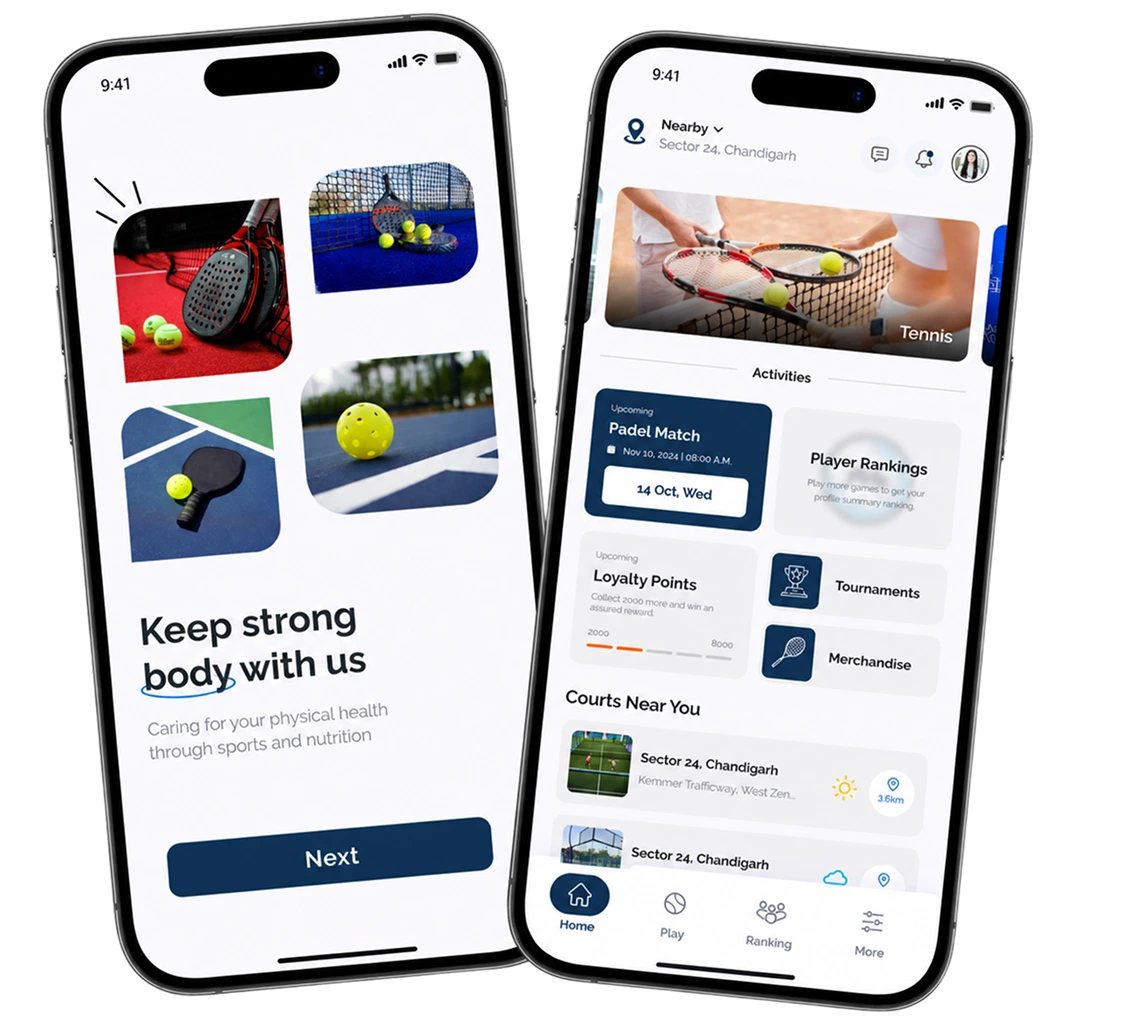
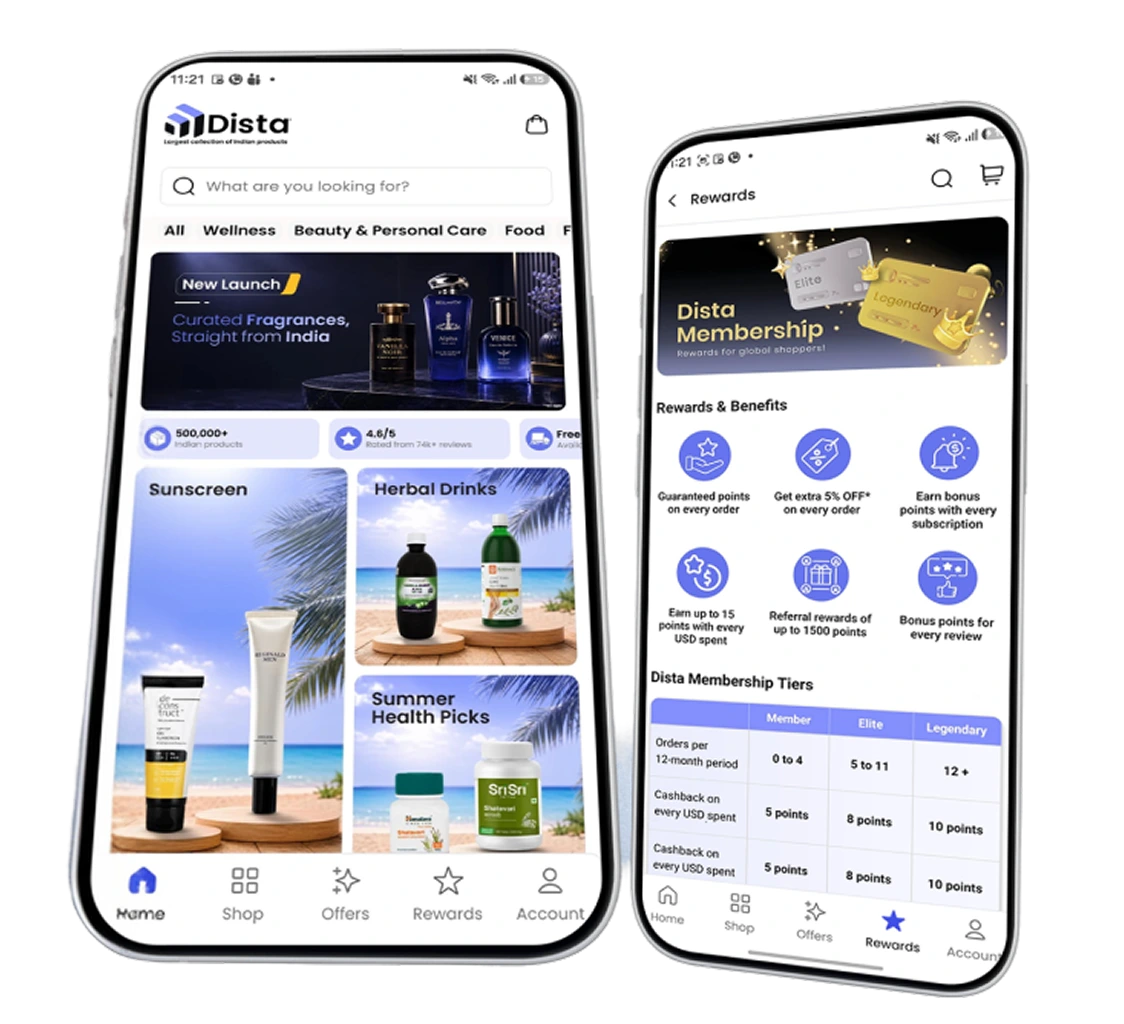
Since 2018 we've shipped 200+ mobile apps for US startups and enterprises — real products on the App Store and Google Play with real download counts. Padel-court booking that cut cold-start load from 4.2s to 1.8s and lifted bookings by 53% (Project Play). Cross-border e-commerce moving 500K+ SKUs across 40 currencies (Distacart, 4.6★ from 72,000+ reviews). HIPAA-ready telehealth. IoT turbine monitoring with zero duplicate alerts. If your app has to work on day one and scale to a million users on day 400, this is what we do every week.
From native mobile apps to cross-platform products and legacy system modernization, we help businesses choose the right technology for their goals, users, and budget. Our team builds new digital experiences and modernizes existing applications to improve performance, simplify maintenance, and support future growth.
Native Android in Kotlin, built for phones your users actually own — mid-tier Samsungs and Xiaomis, not just flagship Pixels. We ship POS systems, offline-first logistics apps, and media apps with background audio.
Native iOS in Swift & SwiftUI — approved by Apple on the first submission, not the third. Strong track record on rich-media builds: video streaming, live audio, ARKit for retail and real estate.
Launch on iOS and Android with a shared codebase and a consistent product experience. React Native helps reduce duplicated development work while giving your team more room to iterate, add features, and scale.
One Dart codebase, pixel-identical UI on iOS and Android. Best for design-forward apps where brand consistency matters — our Project Play app hits a 1.8s cold start on mid-tier Android.
A custom mobile solution is an app built around how your business actually works, rather than a template you bend to fit. For most US companies that means one of three things: a customer-facing app that replaces a clunky mobile website, an internal app that removes paperwork from a field team, or a platform app that becomes the product itself.
The difference shows up in the parts you cannot buy off the shelf. Custom mobile solutions integrate with the systems you already run — your ERP, your EHR, your warehouse software, your payment processor — instead of forcing your team to key data in twice. They enforce your own business rules rather than a vendor’s defaults. And they stay yours: you own the source code, the data and the App Store listing, which matters the day you want to change partners.
Off-the-shelf makes sense when your process is genuinely standard and speed matters more than fit. Custom makes sense when the process is your competitive advantage, when compliance requirements (HIPAA, SOC 2, ADA) rule out generic tools, or when per-seat licensing stops making sense as you grow. We will tell you honestly which side your project falls on — including when the answer is that you do not need custom development.
Typical custom mobile solutions start at $40,000 for a focused single-platform app and run to $200,000+ for a multi-role enterprise platform. Get a fixed-price scope for your project in 2 hours.
Our mobile app development solutions are being used by businesses in the healthcare, retail, financial technology, logistics, education, and manufacturing sectors. Every application that we create is personal to your workflow, compliance requirements, and user demands of the industry.

Workout tracking, wearable integration (Apple Watch, Fitbit, Whoop, Oura), live-class streaming, and in-app subscription flows with server-side receipt validation to stop revenue leakage. We build for the metric that actually funds a fitness business: month-12 retention. Common integrations we ship weekly — HealthKit, Google Fit, Strava OAuth, Stripe Billing, RevenueCat.

Booking apps with real-time flight and hotel availability, offline itinerary access, and integrations with Amadeus, Sabre, and Viator. The rule for travel apps: they have to work at zero bars in a foreign airport. That's how we architect them — offline-first, sync on reconnect, never lose a booking to a network drop.

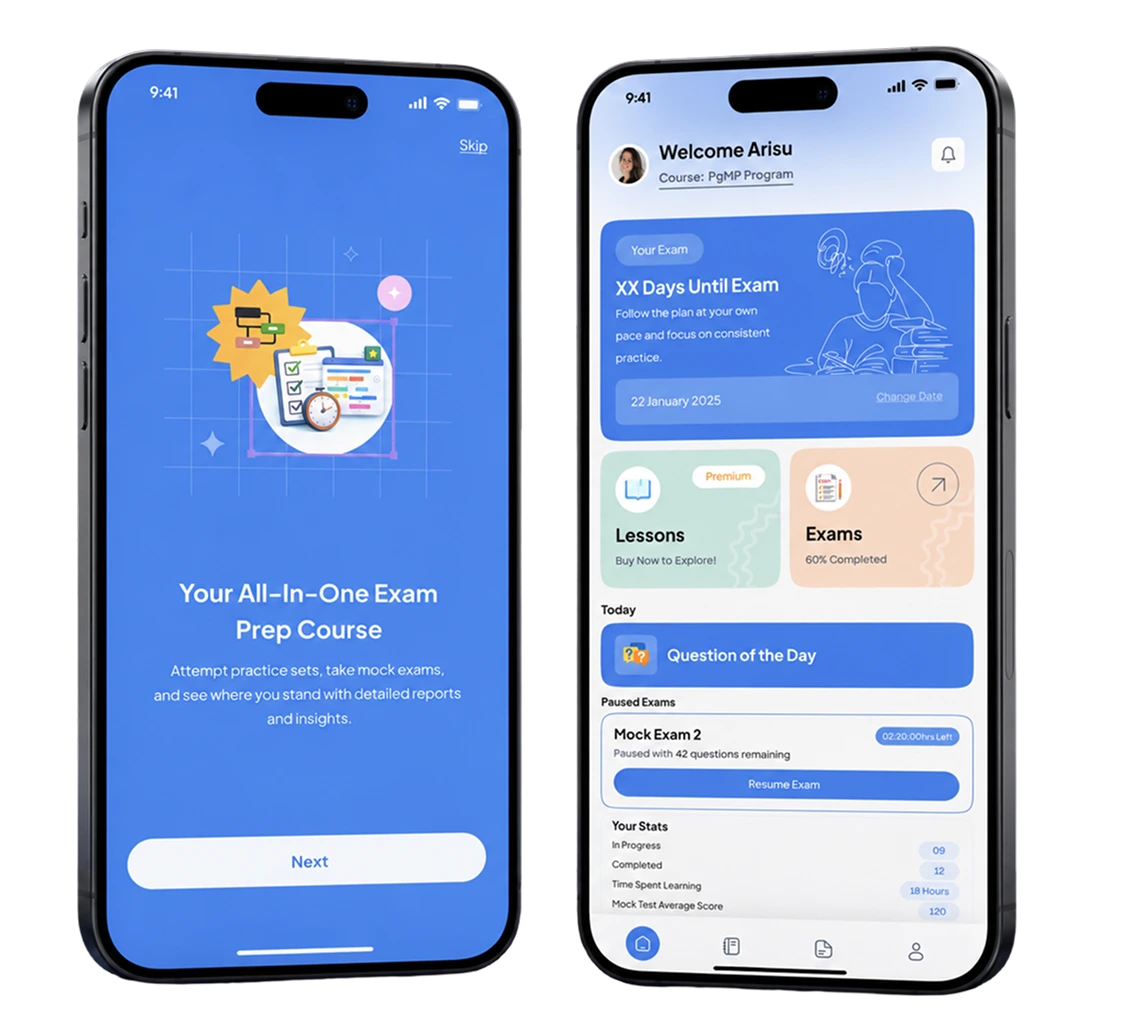
E-learning apps, student portals, and exam-prep platforms with adaptive quizzes, resumable video downloads, and progress analytics that predict pass rates rather than just displaying percentages. Our PMI/PMP prep app (vCare Project Management) ships 10,000+ practice questions, cut average study time by 3×, and lifted user-reported pass confidence by 85%.

Property search with map-based listings, 360° virtual tours, ARKit walk-throughs, mortgage calculators with live rate feeds, and MLS integration through Bridge or Trestle. Built for the reality of the market: agents need lead capture, buyers need trust signals, and both need the app to open faster than the browser tab they just closed.

HIPAA-ready telemedicine, patient portals, remote patient monitoring, and mHealth apps with encrypted video (Twilio or Vonage), EHR sync via FHIR R4, and wearable integration. We handle the BAA paperwork, the audit-log architecture, and the security posture your compliance officer will actually sign off on — not the checkbox version.
Every project runs through the same six stages — and you approve the scope, price, and design before we touch the codebase. No surprises mid-build. No final invoices that balloon 40%.

The two most expensive founder decisions happen here. We take your 22-item wishlist and cut it to the 9 features that will actually ship — and nothing enters development without a line on the invoice. Discovery call, user interviews where they add signal, competitor teardown, and a written scope document with a fixed feature list and a fixed price.

High-fidelity Figma designs and a clickable prototype before a single line of app code. You approve the flow you're paying for, then we build. This is what eliminates the two most expensive words in software: "actually, can we…"

Two-week sprints. Working demo at the end of every sprint. Frontend and backend built in parallel. React Native + Node.js + PostgreSQL is our most common 2026 stack, but not the only one — the right answer depends on your app.

Functional testing, performance benchmarking, and security review across 40+ device and OS combinations. We test with the New Architecture enabled, on the OS versions your users actually run, on the network speeds they actually have.

We handle the full submission — App Store Connect metadata, Google Play console setup, screenshots, review responses. We know why apps get rejected because we've been rejected and learned from every reason. You launch once, not three times.

Ongoing SLA plans covering OS-version updates, security patches, crash monitoring (Sentry or Firebase Crashlytics), and feature roadmapping. Budget 15–25% of build cost per year — Apple and Google ship new versions annually, and apps that ignore them get removed.
Each of these earns its place by solving a specific problem for a specific type of app. If your build doesn't need one, we won't sell it.

Recommendation engines that lift session length. NLP-driven in-app support that deflects a large chunk of tier-1 tickets. Predictive analytics for churn risk. Computer vision for photo-driven features like receipt scanning or product identification. We integrate with OpenAI, Anthropic, and open-source models — the choice depends on where your data has to live and what your compliance officer will sign.

Real-time device connectivity — sensors, wearables, industrial equipment. Our Werover build (wind-turbine health monitoring) hit 100% live-data accuracy and eliminated duplicate alerts entirely through a custom event-deduplication layer. IoT apps live or die on the last mile of connectivity, so that’s where we spend the engineering time.

Smart-contract-backed apps for fintech, supply-chain provenance, and identity verification. Immutable audit logs for healthcare and compliance-heavy use cases. Wallet integration through WalletConnect or Coinbase Wallet. We build on-chain when the chain is actually necessary — not as marketing decoration.

AWS, Google Cloud, or Azure — chosen based on where your data has to live and what systems you already integrate with. Containerized microservices (Docker + Kubernetes), serverless functions for spiky workloads, CDN-backed media through CloudFront or Cloudflare. Your app scales because the backend is architected to scale, not because a marketing page promised it would.

ARKit and ARCore for the phone. Virtual product try-ons for retail, in-store navigation, real-estate walk-throughs. VR for training simulations and virtual showrooms. AR adds 4–8 weeks to a build — worth it when it drives conversion, expensive when it’s a demo for the pitch deck.

Persistent 3D environments accessible from mobile, wallet connectivity, NFT-gated content, decentralized identity (DID). We build Web3 when the token model is core to the product — not to add a floor price to the marketing.
Fifteen frameworks, forty-plus tools. We pick what fits. React Native + Node.js + PostgreSQL is our most common combination in 2026, but the right stack for your app might be Swift + Vapor + Firebase, or Kotlin + Ktor + MongoDB. The stack should serve the product — not the other way around.
We build engaging, responsive interfaces using frontend languages like JavaScript, TypeScript, HTML, and CSS, ensuring smooth interactions and visually polished experiences across every screen.
CSS
HTML
Javascript
Angular
React
Vue.js
ember
Meteor
Nextjs
Our backend expertise spans Node.js, Python, Java, PHP, and Ruby, powering secure, scalable server logic, APIs, and integrations that keep your applications running reliably.
.NET
Java
Python
php
node.js
GO
We develop high-performance native and cross-platform mobile apps for iOS and Android using Swift, Kotlin, Flutter, and React Native, delivering seamless on-the-go experiences.
Android
Flutter
Cordova
iOS
Xamarin
PWA
Ionic
React Native
We create powerful, feature-rich desktop applications for Windows, macOS, and Linux using technologies like Electron, .NET, and Java, ensuring reliable performance and intuitive usability.
C++
Qt
C-sharp
Microsoft WPF
OBJ-C
python
Swift
We deploy and manage scalable cloud database solutions using AWS RDS, Azure SQL, Google Cloud, and Firebase, ensuring secure storage, high availability, and effortless data access anywhere.
Amazon S3
Amazon DocumentDB
Amazon DynamoDB
Amazon RDS
Amazon REDSHIFT
Aws Elasticache
Azure Blob Storage
Azure cosmos DB
Azure Data Lake
Azure SQL Database
Azure Kinect Dk
Azure RTOS
Azure Synapse Analytics
Google Cloud Datastore
Google Cloud SQL
Every agency claims quality, speed, and security. Here's what we can actually claim that a copy-paste template can't.
Industry average sits around 40–50%. Ours is 70%, measured across 47 React Native builds delivered. This isn't because we sandbag estimates — it's because we lock scope in writing before development, and every feature added mid-project carries a written change-order and a new invoice line. No surprise final invoices.
Same 47-project dataset. Timeline reliability comes from three habits we don't skip: two-week sprints so slippage shows up early, a working demo at every checkpoint, and written change-orders so scope creep doesn't quietly extend the calendar. When a delay is unavoidable, we flag it the day it happens — not the week before launch. Delays cost us margin, not you.

You'll know your project manager's name before you sign. You'll know your lead developer's name before week one. Our team is 30+ engineers — small enough that our CEO (Anil Kumar) still reviews every scope document, big enough to staff a full team without pulling from three other projects.

Our sales office is at 3863 Grand View Blvd, Los Angeles. Discovery calls and weekly demos run on PT or ET. Your Slack ping at 10am California time gets a response, not an "our office is closed" auto-reply. We overlap the US business day intentionally, not accidentally.
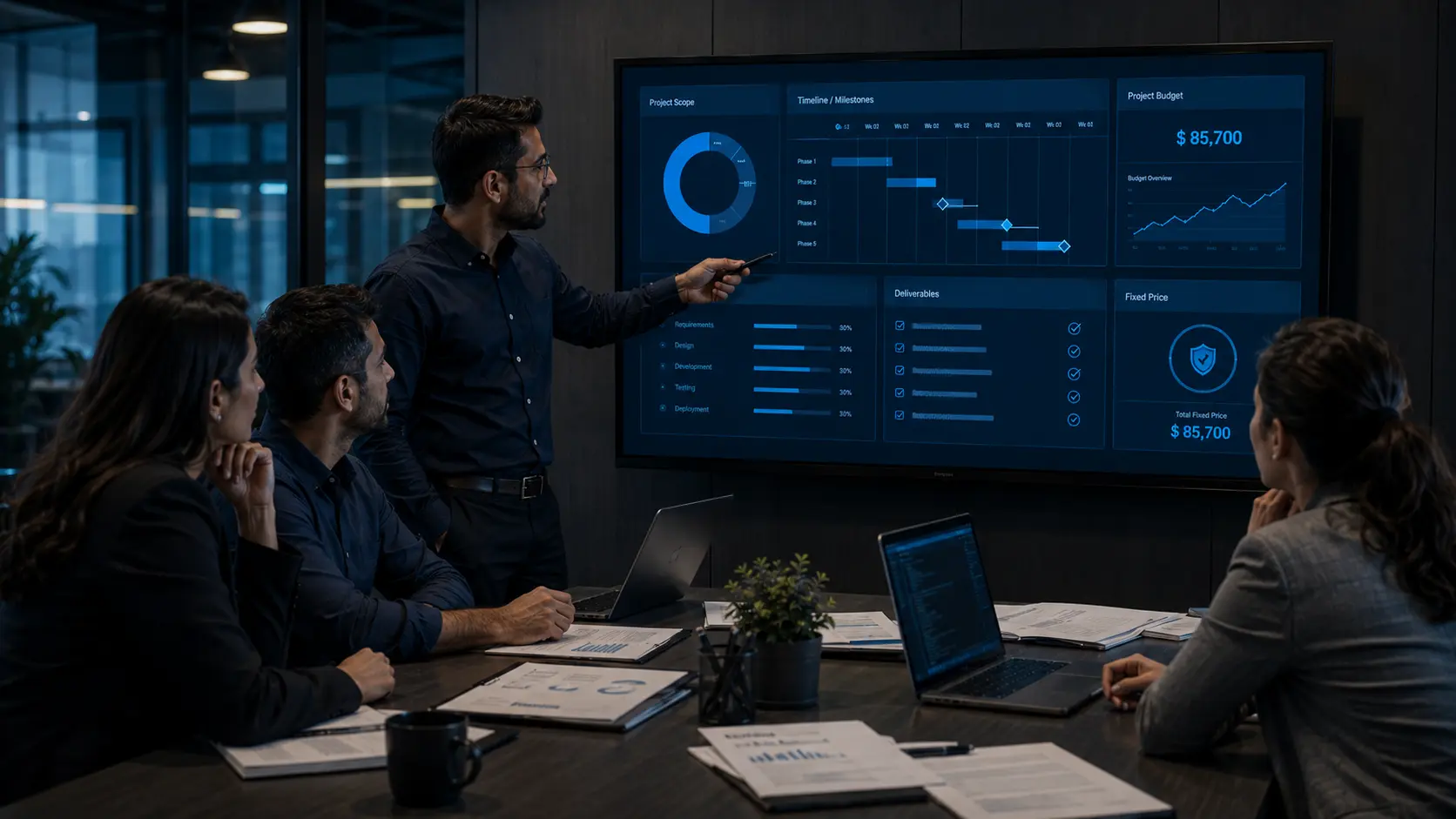
If your scope is clear, we'll quote a fixed price and stick to it. If it's exploratory, we'll quote T&M with a weekly cap. Both come with a written change-order process. What you won't get: a low quote that quietly balloons 40% by launch.

Every project starts under NDA — signed before the discovery call, not after the contract. Your idea doesn't get shared with the sales team, the engineering team, or a "we'll refer you to a friend" network.
Real project pricing, built from apps we've actually shipped and delivered on budget.
Real app costs, timelines, and platform picks, written by the developers who launch apps every week.
Custom mobile app development is building an app from scratch to fit your specific workflows, brand, and users — instead of forcing your business into an off-the-shelf template. It covers iOS, Android, cross-platform, and enterprise apps, plus post-launch support. The alternative (a templated app) is cheaper on day one and more expensive by day 400.
iOS (Swift, SwiftUI), Android (Kotlin), Flutter (Dart), and React Native (JavaScript/TypeScript). We recommend cross-platform when speed-to-market and budget matter more than platform-specific polish, and native when the app needs deep hardware access or is shipping to only one platform. We’ll tell you which is right for you during discovery — even when the answer is “not us for this one.”
Based on 47 React Native and 30+ native projects we shipped in 2025:
Feature depth, backend complexity, and compliance requirements (HIPAA, PCI-DSS, SOC 2) move the number more than the framework you pick.
Android has the larger global user base and skews toward mass-market products. iOS users spend more per user in the US — better for premium and subscription apps. Cross-platform (Flutter or React Native) is the fastest way to hit both at once when your app doesn’t need deep native features. During discovery we ask three questions — where your revenue comes from, where your users are, and how fast you need to ship — and recommend from there.
Our average across React Native builds: 19 weeks. 74% shipped on the original target date.
Five questions that separate real agencies from sales pitches:
Any hesitation on those questions is data.
Yes. Roughly a third of our work was taking over apps from prior developers — bug fixes, security patches, feature additions, OS updates. We do a fixed-fee code audit first, then quote maintenance. If the codebase is unsalvageable, we tell you before you spend more.
Yes — every project runs through our design team before development starts. High-fidelity Figma designs, clickable prototype, your sign-off in writing. Design-and-build is the default. If you already have finished designs from another team, we can start from those.
Yes, we do provide end-to-end mobile app development services, which include UI/UX design. Our design team will work closely with you to create an intuitive and visually appealing interface that aligns with your brand and provides a seamless user experience.
Your app doesn’t stop earning our attention when it goes live. Ongoing support covers OS-version updates, security patches, crash monitoring, and feature additions. Most clients budget 15–25% of build cost per year — Apple and Google ship new versions annually, and apps that ignore them get removed.
Continuous post-launch support can be availed for any sort of updates and changes that are required. Addition of new features, performance improvement, or bug rectification – be assured that all this is our job to help your app always stay in synchronization with the evolving technologies and customer expectation.
Getting started is not that difficult either. All one needs to do is reach us with an idea for a project or specifications and we can schedule a discussion of your business goals. Our team will further take you through the discovery process and provide a detailed plan about mobile application development.
Send us your project brief, or your rough idea in an email. We reply within 2 hours during US business hours. If it’s a fit, we schedule a 30-minute discovery call — no sales pitch, honest scope and timeline. If it’s not a fit, we tell you, and when we can, point you to someone who does that specific thing well.