 +1 740 762 6496
 +91 70189 46603

Contact Us
Your application handles requests, stores data, runs workflows, and serves customers. But it cannot understand a question, read a document, make a judgment call, or learn from what happened yesterday. That is the gap AI fills — not by replacing your software, but by adding an intelligence layer on top of it.
Here is where most businesses get stuck.
Here is where most businesses get stuck.
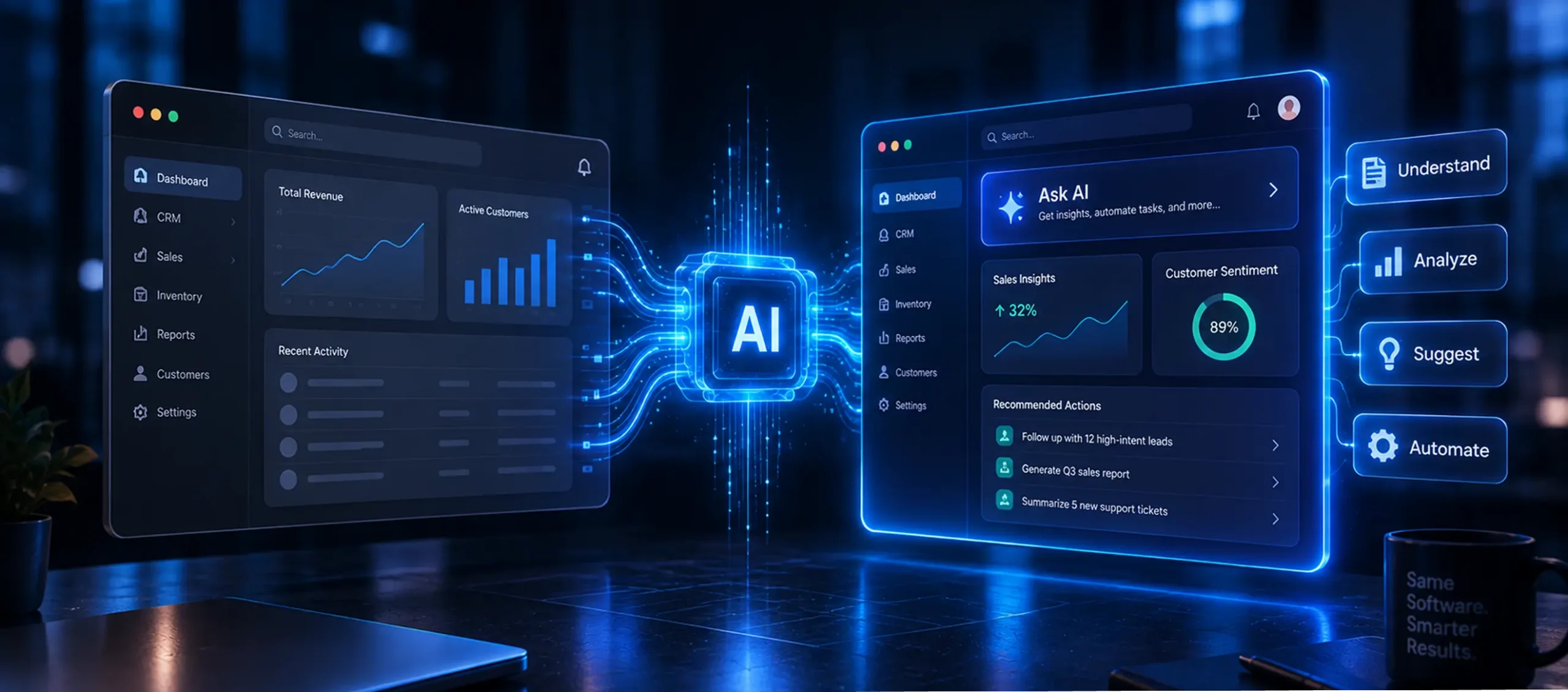
A chatbot that cannot access your customer data. An AI assistant that does not know your product catalog. A document processor that cannot write back to your system of record. The tool works in isolation. The team copies and pastes between the AI and their real tools. Six weeks later, nobody uses it.
A developer spends two weeks getting the API calls working. Nobody designs the permission model. Nobody sets up monitoring. Nobody handles the edge cases. It breaks under production load. The CTO pulls the plug and says "AI is not ready for us.
The demo uses sample data. It looks incredible. The moment they connect real data — with messy formatting, missing fields, permission boundaries, and edge cases — the system falls apart.
Here is a project that shows what production RAG actually looks like inside a business.
A mid-size US real estate company had a five-person operations team drowning in repetitive work — pulling listing data from the MLS feed, updating property descriptions, answering tenant inquiries from a 200-page policy manual, and formatting market reports for agents. Every task required toggling between four different systems. The data existed. The intelligence did not.
We integrated a generative AI layer across their existing stack — CRM, MLS feed, document management system, and tenant portal. The AI reads listing data and generates property descriptions in their brand voice. A RAG-powered assistant connected to their policy documents answers tenant questions through the portal with source-cited responses. An automated pipeline pulls MLS data, generates weekly market reports, and drops them into the agents' inboxes every Monday morning.
Operations time recovered every week.
Tenant inquiry response time, down from 4 hours.
Property listing turnaround, down from 45 minutes.
Full payback on the AI integration.
During integration — existing workflows never stopped.
We do not sell a platform. We build the connection layer between AI and your business. Every integration is scoped around your specific systems, your data, and your workflows.
We connect AI to Salesforce, HubSpot, Pipedrive, and custom CRMs — enabling lead scoring, conversation summarization, automated follow-ups, contact enrichment, and intelligent routing. Your sales team stops doing data entry and starts closing.
We wire AI into NetSuite, SAP, custom ERPs, and operations platforms — automating purchase orders, flagging exceptions, generating reports, and surfacing operational insights your team would otherwise spend hours compiling.
We embed AI into Zendesk, Freshdesk, Intercom, and custom support tools — enabling intelligent ticket triage, auto-response for routine queries, knowledge base retrieval, and agent-assist that surfaces the right answer before the agent even types. This works hand-in-hand with our AI chatbot development services.
We connect AI to your SharePoint, Confluence, Google Drive, Notion, or internal wiki through RAG pipelines that respect document permissions. Your team asks questions in natural language and gets source-cited answers from your own documents.
We connect AI to your PostgreSQL, MySQL, MongoDB, Snowflake, BigQuery, or data warehouse — enabling natural language queries, automated reporting, anomaly detection, and data-driven recommendations without your team writing SQL.
If it has an API, we can connect AI to it. Payment processors, shipping platforms, marketing tools, compliance systems, IoT feeds — we build the middleware that lets AI read from and write to the tools your business runs on, through secure API integrations.
We deploy AI agents inside your existing workflows — agents that triage tickets, route requests, process documents, update records, and coordinate multi-step tasks across your systems. Every agent runs with scoped permissions and human-in-the-loop controls where they matter.
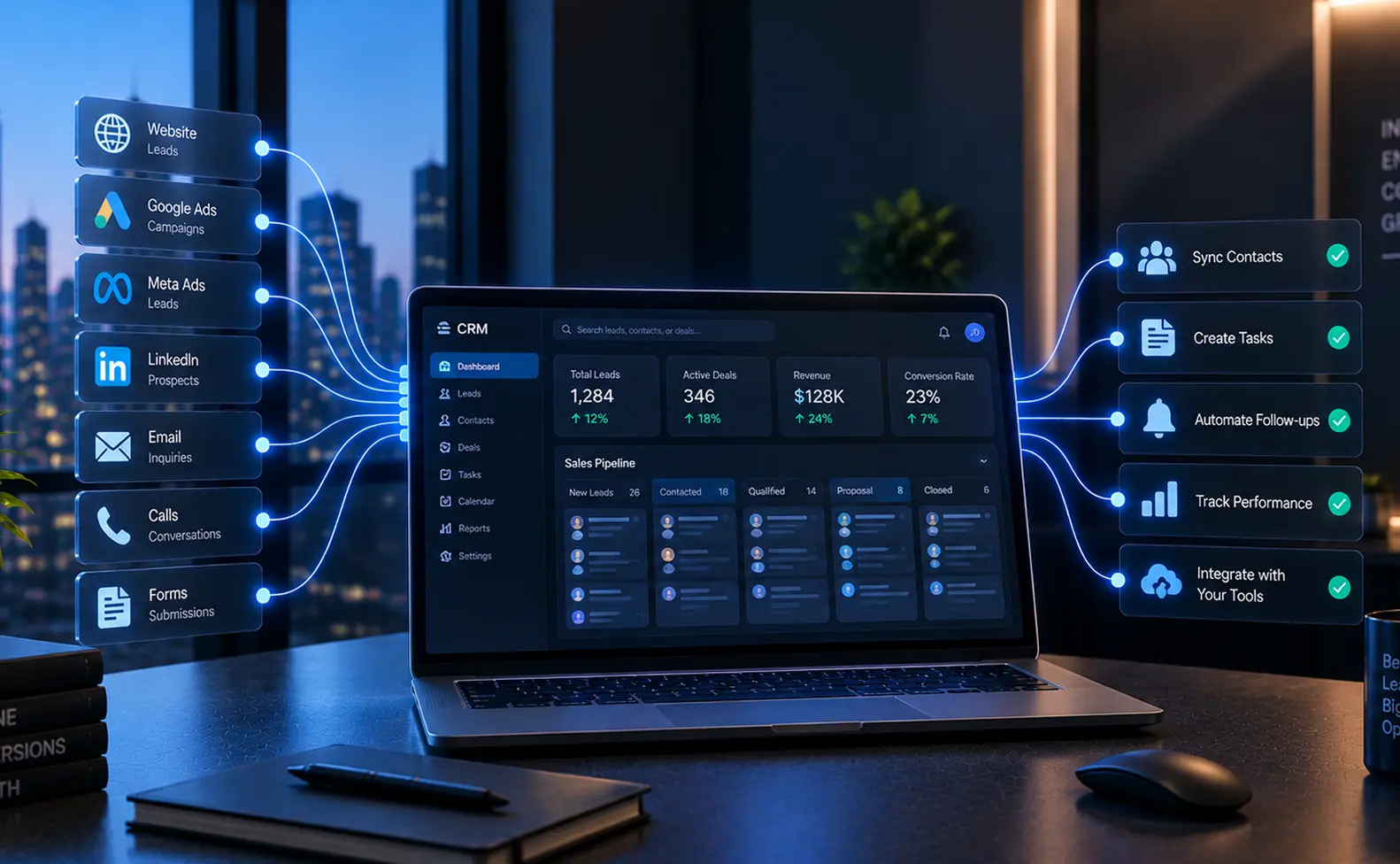
We connect AI to Salesforce, HubSpot, Pipedrive, and custom CRMs — enabling lead scoring, conversation summarization, automated follow-ups, contact enrichment, and intelligent routing. Your sales team stops doing data entry and starts closing.
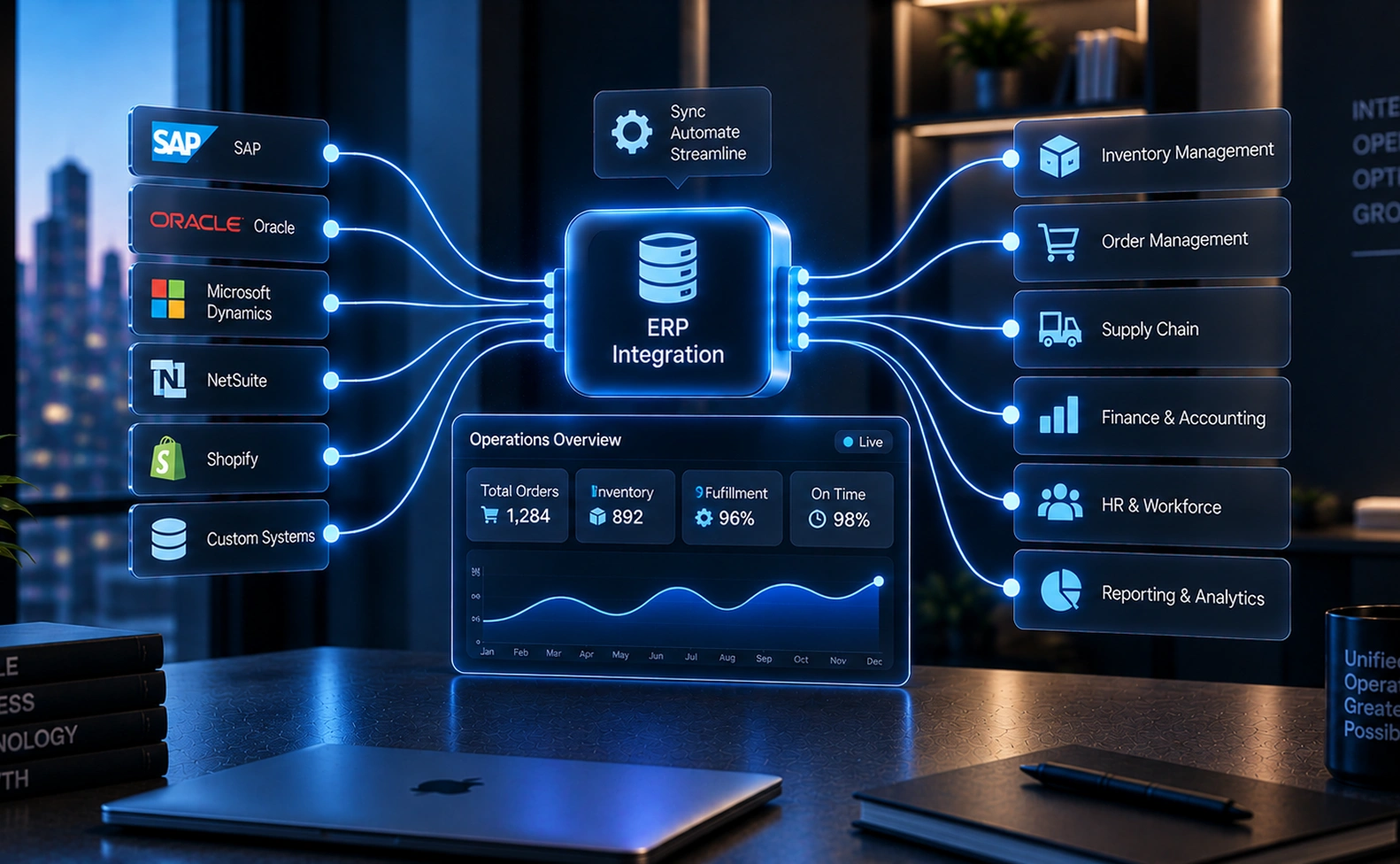
We wire AI into NetSuite, SAP, custom ERPs, and operations platforms — automating purchase orders, flagging exceptions, generating reports, and surfacing operational insights your team would otherwise spend hours compiling.
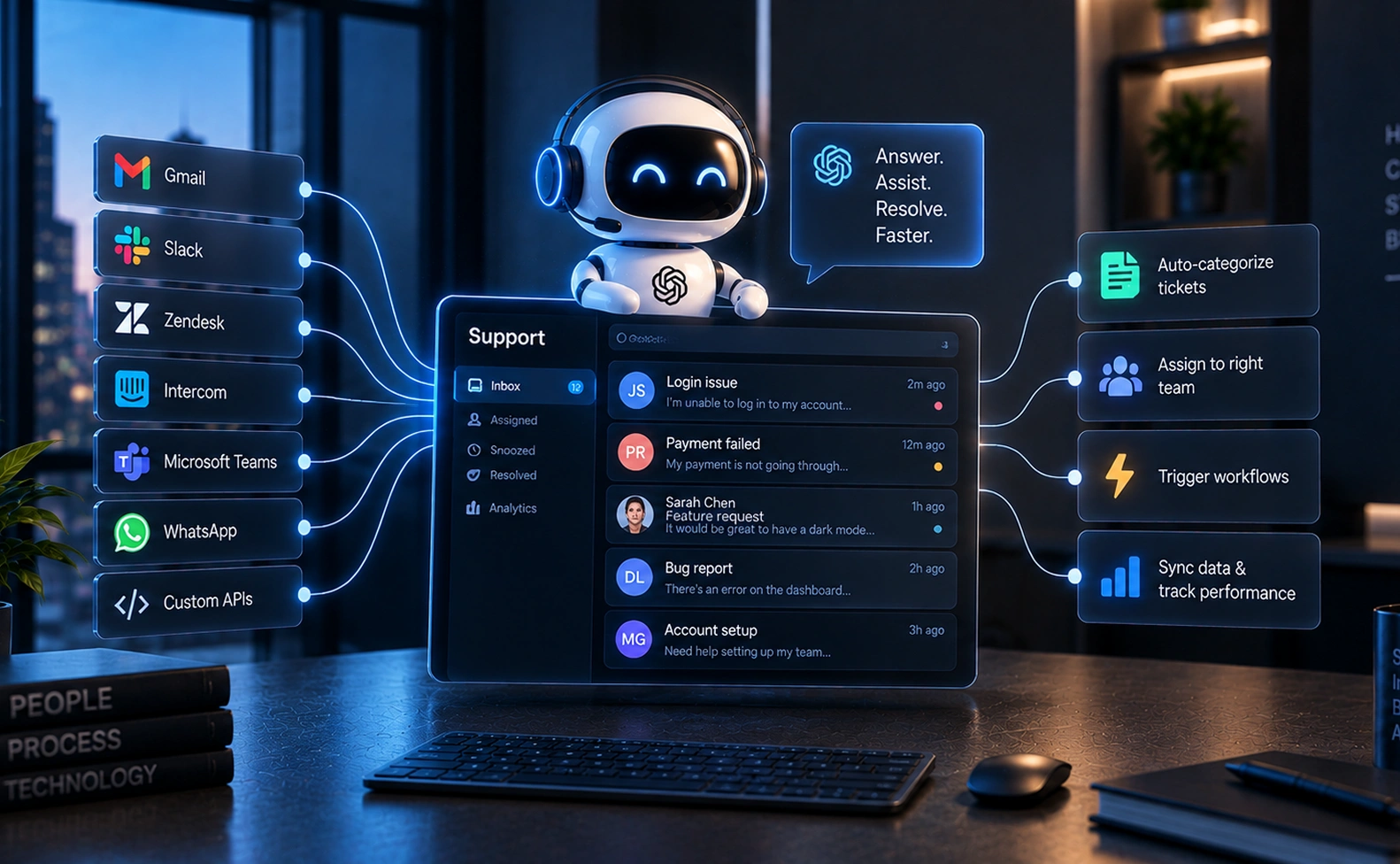
We embed AI into Zendesk, Freshdesk, Intercom, and custom support tools — enabling intelligent ticket triage, auto-response for routine queries, knowledge base retrieval, and agent-assist that surfaces the right answer before the agent even types. This works hand-in-hand with our AI chatbot development services.
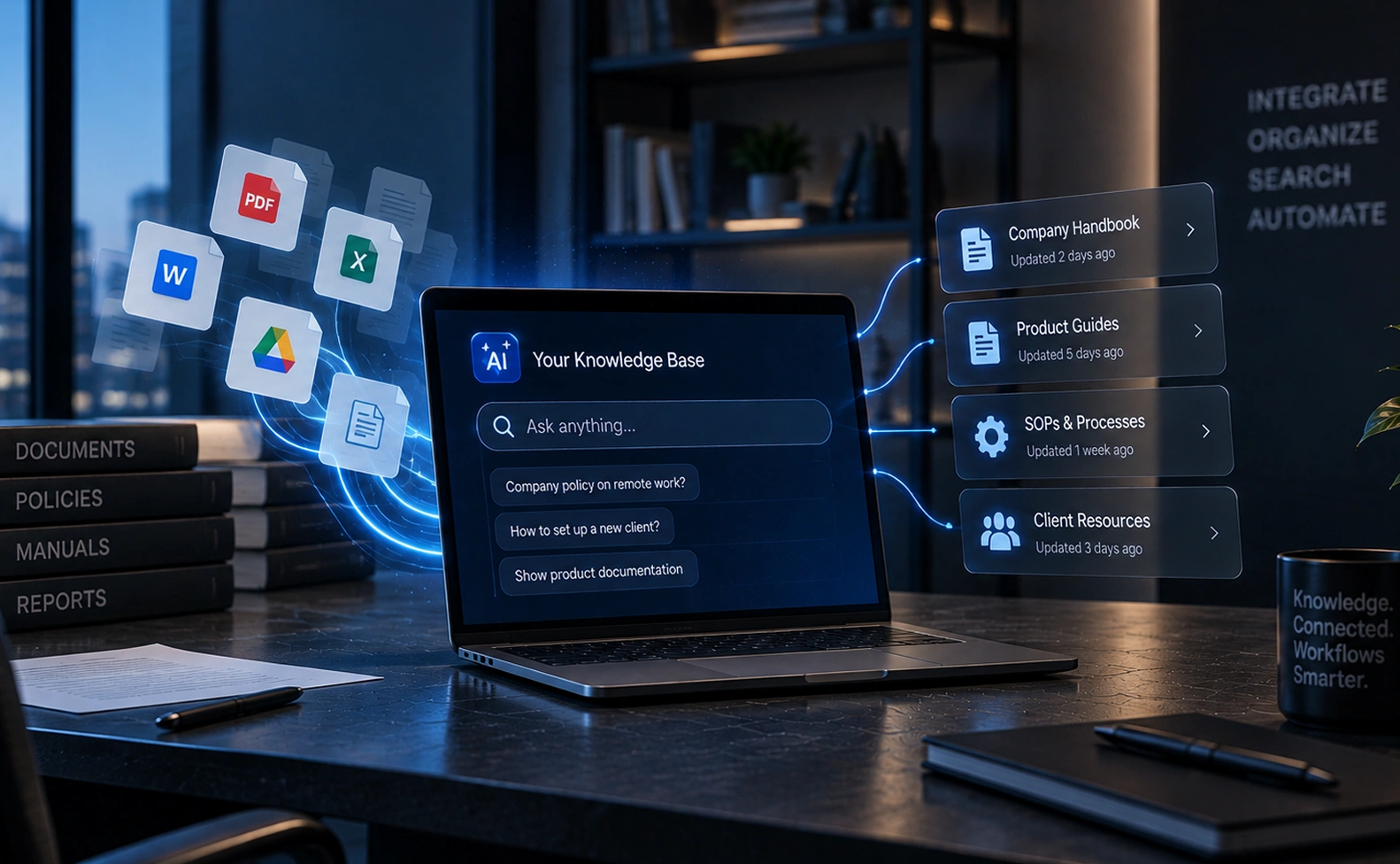
We connect AI to your SharePoint, Confluence, Google Drive, Notion, or internal wiki through RAG pipelines that respect document permissions. Your team asks questions in natural language and gets source-cited answers from your own documents.
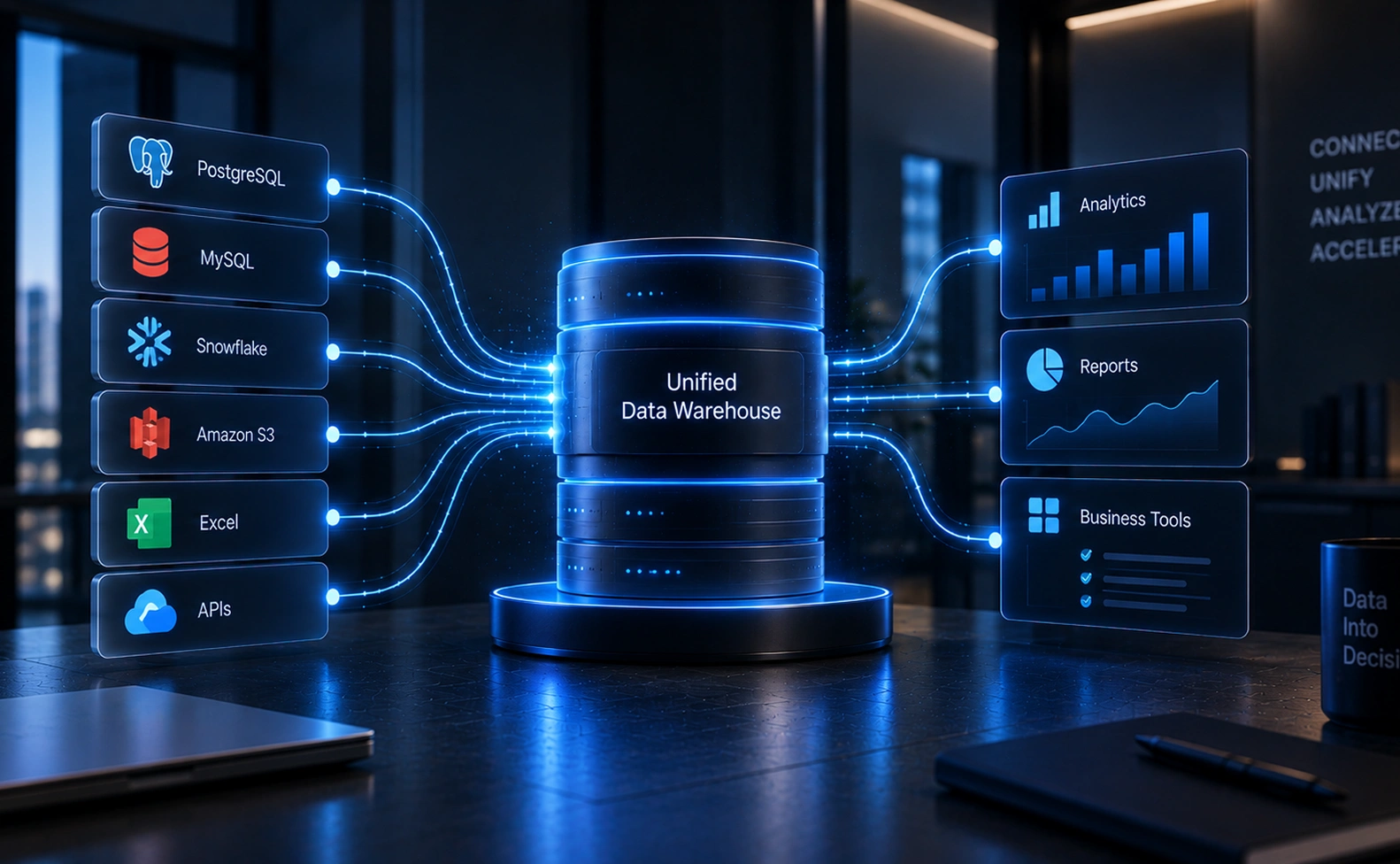
We connect AI to your PostgreSQL, MySQL, MongoDB, Snowflake, BigQuery, or data warehouse — enabling natural language queries, automated reporting, anomaly detection, and data-driven recommendations without your team writing SQL.
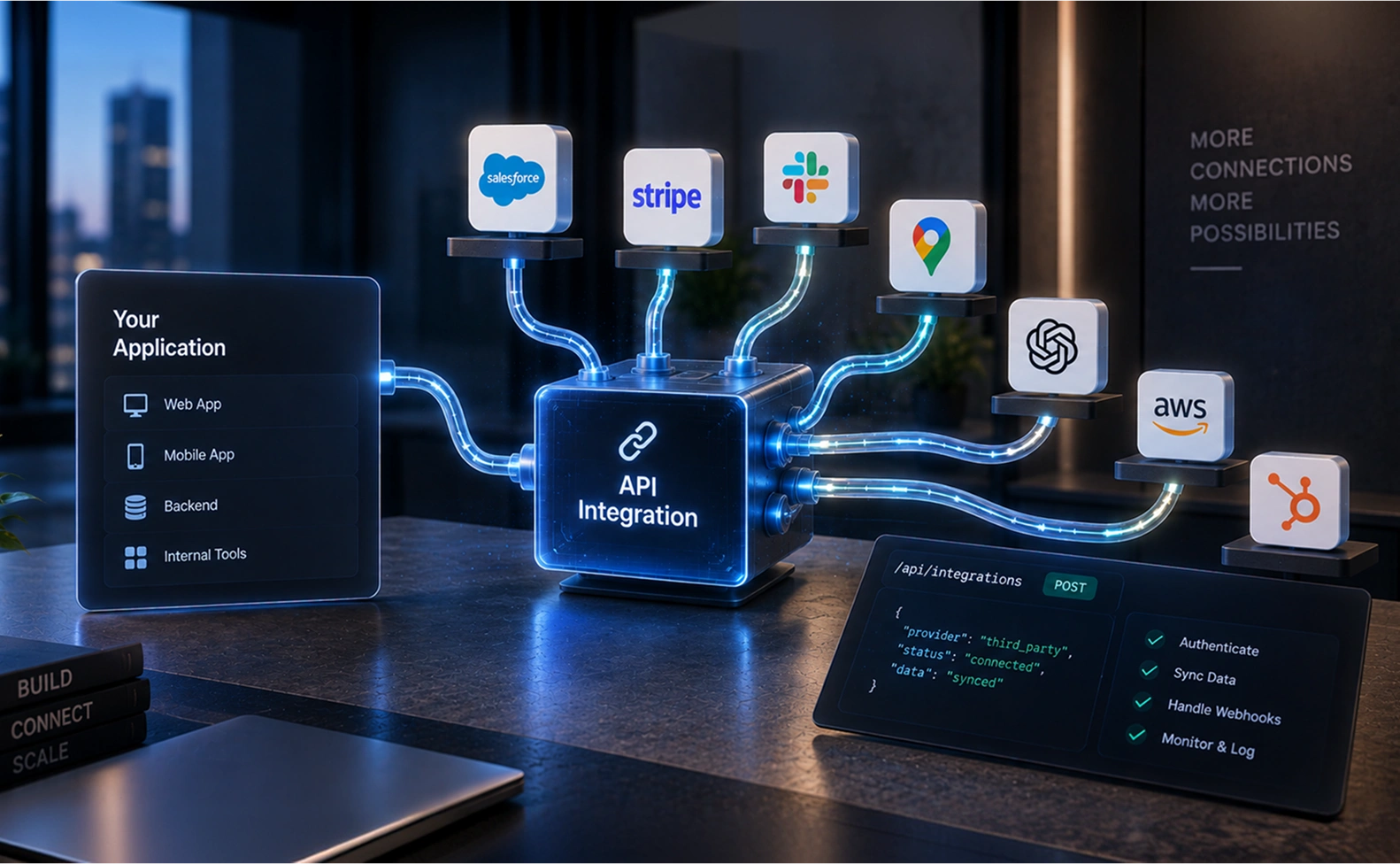
If it has an API, we can connect AI to it. Payment processors, shipping platforms, marketing tools, compliance systems, IoT feeds — we build the middleware that lets AI read from and write to the tools your business runs on, through secure API integrations.
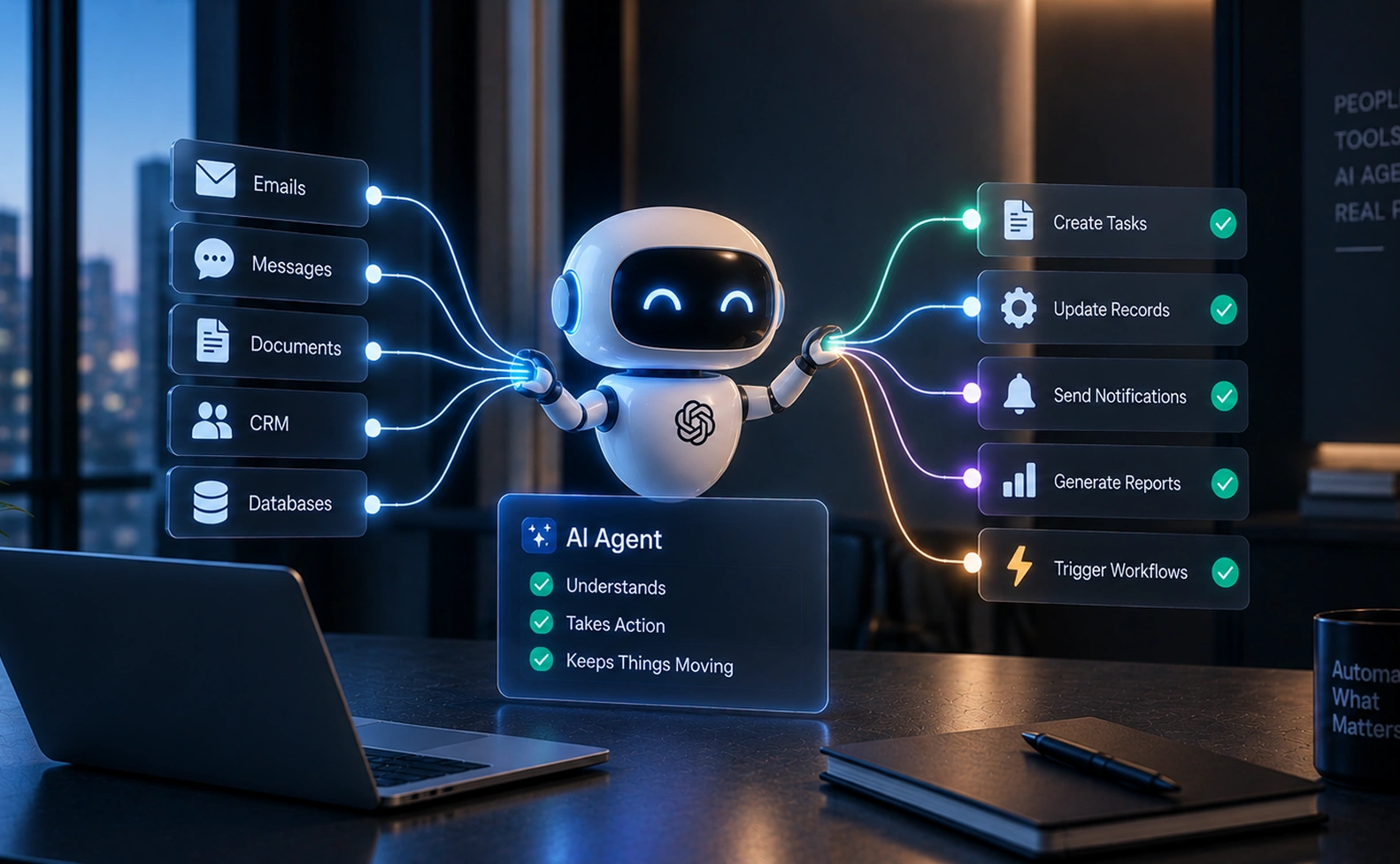
We deploy AI agents inside your existing workflows — agents that triage tickets, route requests, process documents, update records, and coordinate multi-step tasks across your systems. Every agent runs with scoped permissions and human-in-the-loop controls where they matter.
This is the question most vendors skip because they want to sell you the bigger project. Here is the honest framework.
Take a real workflow — weekly sales reporting.
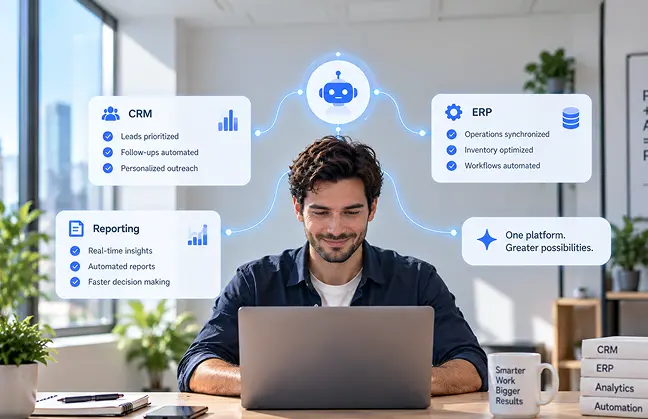

Every Friday, your operations manager opens the CRM, exports deal data to a spreadsheet, manually cross-references it with the ERP for revenue numbers, formats a report in Google Slides, writes commentary on each region's performance, and emails it to the leadership team. Five hours every week, fifty weeks a year. The report is always two days late because assembling it takes all of Friday.
The AI pulls deal data from the CRM and revenue data from the ERP on Thursday night. By Friday morning, it has generated a formatted report with regional breakdowns, trend analysis, and written commentary — in the same format and tone leadership expects. The operations manager reviews it in 15 minutes, makes minor edits, and sends it before 9 AM. Five hours reduced to 15 minutes. Every week.
The cost of AI integration varies by scope and complexity. But the math almost always works when you are replacing hours of manual work with seconds of automated processing. Our strategy call quantifies that before you commit.






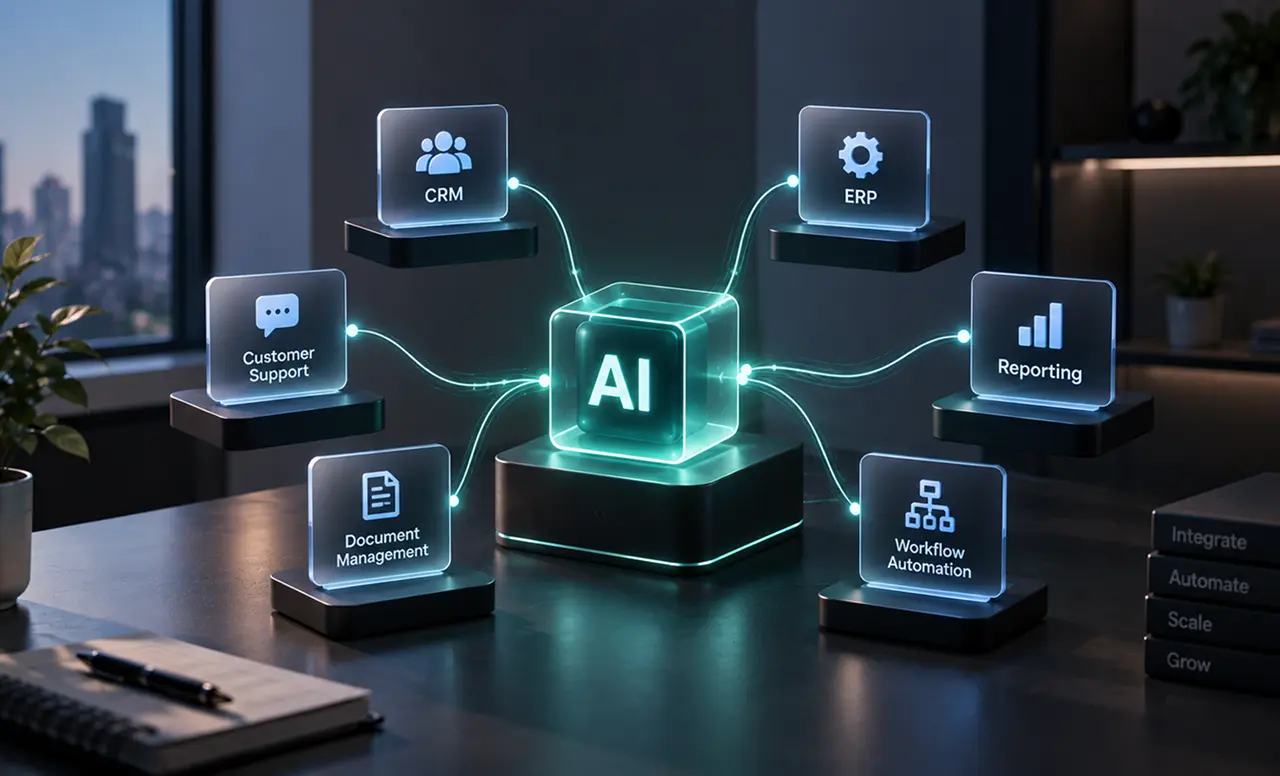
Your systems stay. AI connects to them. No migrations, no rip-and-replace, no six-month rebuilds.
Every AI connection gets scoped permissions, access controls, encryption, and audit trails. If you need HIPAA-compliant AI, we design for it before the first API call.
GPT, Claude, Gemini, Mistral, LLaMA, or open-weight models. We connect the one that fits your use case, not the one we have a deal with.
US office, US time zones. We have delivered AI and ML solutions for American companies for years.
Code, middleware, pipelines, configurations. Full ownership, zero lock-in.
If you need a new build, a custom software solution, or a simpler tool, we say so.
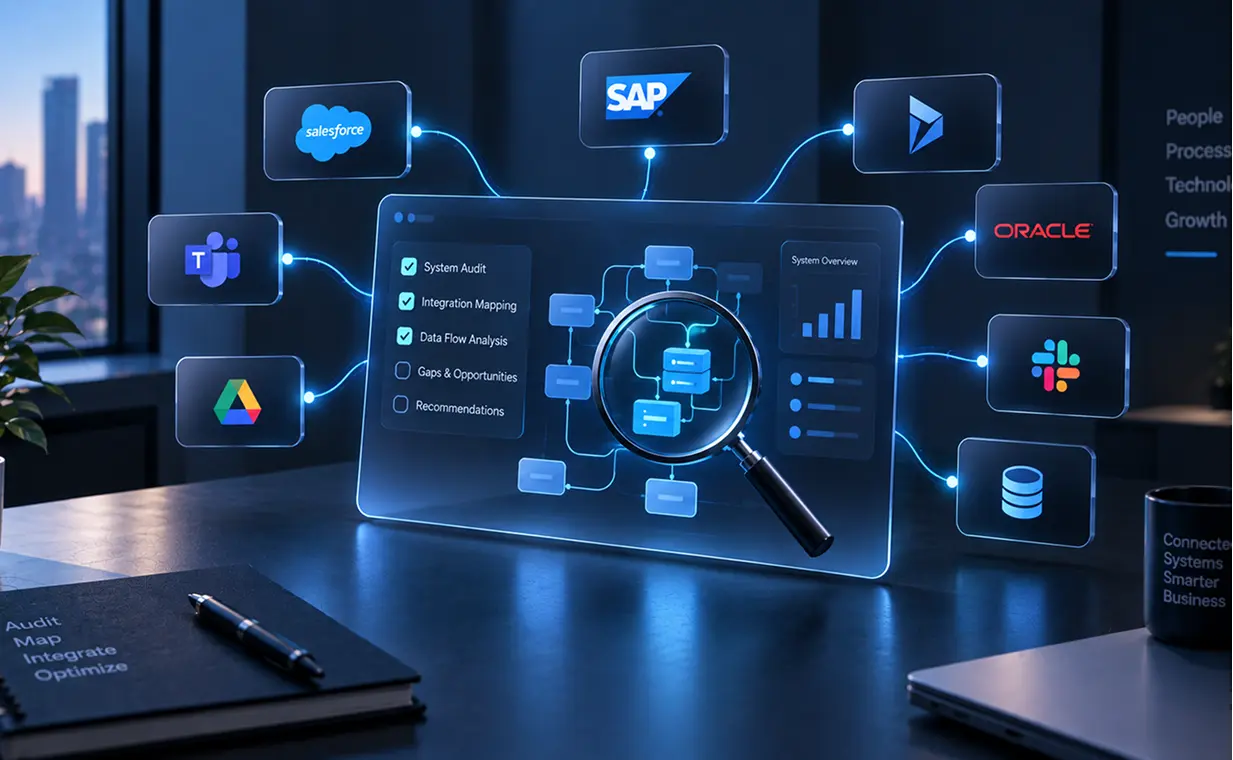
We map your current stack — every CRM, ERP, database, API, and internal tool. We identify where AI adds the most value, what data it needs, and where the integration points are. We define scope, set success metrics, and flag data quality issues before we connect anything.
Output: Integration map, data audit report, prioritized use case brief.
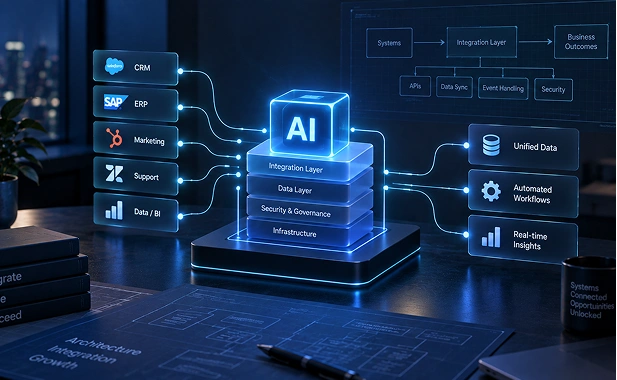
We design the middleware — API connections, authentication, permission scoping, retry logic, fallback paths, and monitoring. Every AI connection is treated as a security boundary with defined read/write access.
Output: Architecture document, security scope, integration specifications.
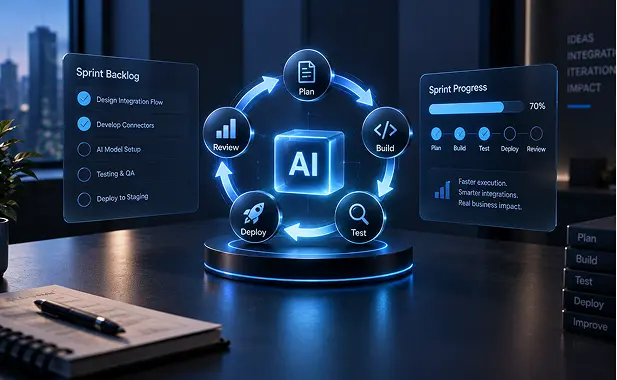
Short cycles. Working integrations at the end of every sprint. You test AI capabilities inside your actual tools with real data. Your feedback shapes the behavior, the permissions, and the outputs before anything goes to production.
Output: Functional integration iterations with documented progress.
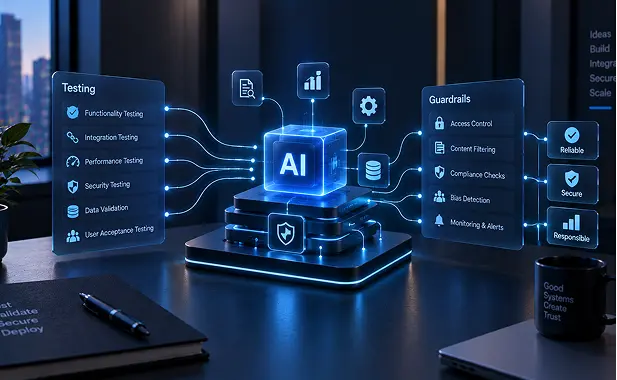
We test against real scenarios, edge cases, API failures, and data inconsistencies. We measure accuracy, latency, and system performance. Guardrails prevent hallucination, unauthorized access, and unintended actions.
Output: Test reports, guardrail configurations, performance benchmarks.
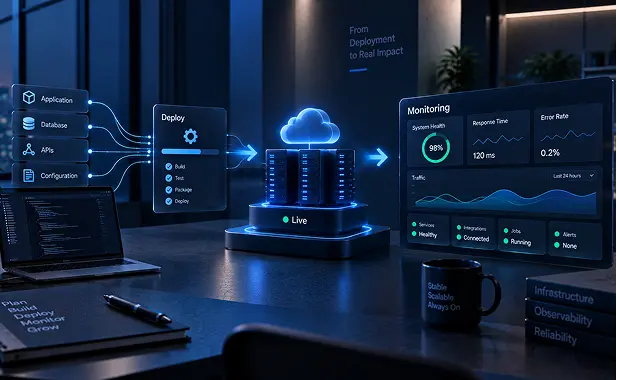
We deploy to your environment — zero downtime, no workflow disruption. We connect monitoring dashboards that track what the AI reads, what it generates, and how well it performs. Post-launch, we optimize and adapt as your systems evolve.
Output: Live deployment with monitoring dashboards and monthly performance reports.
Integrating AI with EHR systems, patient portals, scheduling platforms, and clinical databases — all under HIPAA-compliant architecture. Automating patient intake, clinical summarization, prior authorization research, and policy-based responses across your healthcare software.
Connecting AI to MLS feeds, CRMs, document management systems, and tenant portals. Automating listing descriptions, tenant inquiries, market reporting, and lead qualification inside your existing real estate platform.
Integrating AI with LMS platforms, student portals, and enrollment systems. Enabling AI-powered tutoring, automated grading, admissions support, and curriculum-grounded Q&A across your education software.
Connecting AI to booking engines, itinerary databases, fare systems, and customer service platforms. Automating booking changes, traveler support, itinerary generation, and real-time travel updates inside your travel software.
Integrating AI with membership platforms, scheduling systems, and payment tools. Automating class bookings, member engagement, workout personalization, and operational inquiries across your fitness software.


GPT

Claude

Gemini

Mistral

LLaMA

LangChain
LangGraph

Semantic Kernel
LlamaIndex

MCP

Pinecone

Weaviate

ChromaDB

Qdrant

Redis

Elasticsearch

HubSpot

Zendesk

Freshdesk

Intercom

NetSuite

SAP

Salesforce

Shopify

Slack

Teams

Webhooks

GraphQL

OAuth 2.1

gRPC

AWS

Google Cloud

Microsoft Azure

Docker

Kubernetes

LangSmith
Most of our integration clients invest between $20,000 and $70,000 and see payback within the first two months. Here are real ranges. For a deeper cost breakdown, read our AI agent integration cost guide.
AI integration services connect artificial intelligence — language models, RAG systems, AI agents, chatbots — to the software your business already uses. Instead of building a new AI product from scratch, integration adds AI capabilities to your existing CRM, ERP, helpdesk, databases, and internal tools through secure APIs and middleware.
No. We integrate through supported APIs and purpose-built middleware that sit alongside your systems, not inside them. Your existing software keeps running exactly as it does today. AI capabilities are added on top, not embedded into your core codebase. We deploy with zero downtime.
Salesforce, HubSpot, Zendesk, Freshdesk, Intercom, NetSuite, SAP, Shopify, Slack, Microsoft Teams, SharePoint, Confluence, Google Drive, PostgreSQL, MongoDB, Snowflake, BigQuery — and virtually any system with a documented API.
Integration connects AI to systems you already have. A new build creates an AI application from scratch. Most businesses do not need a new system — they need the systems they already run to become smarter. Integration is faster, cheaper, and less disruptive. We help you decide which approach fits during the strategy call.
A single-system integration can go live in two to four weeks. Multi-system integrations take four to eight weeks. Enterprise-wide deployments run two to five months. Read more about how long AI development takes.
Projects range from $10,000 for a single-system integration to $200,000+ for enterprise platforms. Most clients invest between $30,000 and $75,000 for multi-system integration. Check our AI agent integration cost guide for detailed breakdowns.
Every AI connection gets scoped permissions. We define exactly what the model can read and what it can write, per system, per use case. Sensitive data is excluded at the architecture level. Every read and write is logged for audit.
In many cases, yes. We can build adapter layers, custom connectors, or data extraction pipelines that connect AI to older systems. If the integration cost exceeds the value, we tell you — and may recommend modernizing the system first.
Generative AI integration specifically connects large language models (GPT, Claude, Gemini, etc.) to your business systems so they can generate text, summarize documents, answer questions, draft content, and automate communication — using your actual data, not generic training data.
Yes. You own the middleware, the configurations, the pipelines, and the code. No vendor lock-in. No recurring platform fees.
Encryption, access controls, audit logging, and permission scoping are built into every integration. For regulated industries, we design for HIPAA, SOC 2, GDPR, and PCI compliance from the architecture phase.
We monitor performance — accuracy, latency, error rates, and usage patterns. We optimize, retrain retrieval pipelines, and adapt as your systems evolve. Your integration improves continuously.


