+1 740 762 6496
 +91 70189 46603

TABLE OF CONTENT
- Businesses Need Software Development Solutions
- Key Market Trends in Logistics Software Development
- Logistics Software Development Major Market Changes
- An Overview of Features that Logistics Software Development Should Offer
- Importance of Android Mobile Apps in Logistics Software Development
- Wrapping It Up!
Overview
- Companies using outdated logistics systems lose an average of $127,000 annually to operational inefficiencies.
- Manual route planning increases fuel costs by 15-20% compared to AI-optimized systems.
- Real-time tracking gaps cause 32% more customer service complaints.
- Paper-based documentation adds 3-5 days to cross-border shipment processing.
AI Summary:
The e-commerce boom has amplified these challenges. With online orders growing 23% year-over-year and same-day delivery becoming the baseline expectation, logistics operations can no longer afford to operate blindly. Modern customers demand transparency: 86% want real-time shipment tracking, and 74% will abandon a brand after just one poor delivery experience.
This is why logistics software development has evolved from a competitive advantage to a business necessity. The right logistics management system doesn’t just automate tasks—it transforms your entire supply chain into a data-driven, predictive operation that reduces costs, accelerates delivery times, and creates exceptional customer experiences.
The logistics industry is at a critical inflection point. With global supply chains managing over $9.6 trillion in freight annually, even a 1% efficiency improvement translates to $96 billion in savings. Yet, 68% of logistics companies still rely on spreadsheets and legacy systems that can’t keep pace with modern demands.
In this comprehensive guide, we’ll explore:
- Critical market trends reshaping logistics software.
- Essential features your logistics platform must include.
- Technology integrations that deliver measurable ROI.
- Real-world cost breakdowns and development timelines.
- How to choose between custom development and off-the-shelf solutions.
Whether you’re managing a fleet of 10 trucks or orchestrating a global supply chain network, this guide will help you navigate the logistics software landscape and make informed investment decisions.
Why Modern Businesses Can’t Survive Without Logistics Software
The logistics landscape has fundamentally changed. What worked five years ago—manual dispatch, phone-based driver communication, spreadsheet inventory tracking—now creates competitive disadvantages that directly impact your bottom line.
The Real Cost of Manual Logistics Operations
Before investing in software development, businesses face these measurable inefficiencies:
1. Route Planning & Fuel Waste
Manual route planning relies on driver experience and static maps. Result: 15-20% higher fuel consumption, 25% more vehicle wear, and an average of 2.3 unnecessary stops per route. For a fleet of 50 vehicles, this translates to $180,000 in wasted fuel annually.
2. Inventory Blind Spots
Without real-time warehouse management systems, businesses experience:
- 8-12% inventory shrinkage from misplaced stock.
- 3-5 day delays in locating specific items.
- 23% higher carrying costs from overstocking.
- Lost sales from stock-outs (average: 4% of revenue).
3. Customer Service Bottlenecks
When customers call asking “Where’s my order?”, manual tracking means:
- Average 8-minute call duration (vs. 30 seconds with automated tracking).
- 40% of calls require follow-up after initial contact.
- Customer service teams spending 60% of time on status inquiries instead of problem-solving.
4. Compliance & Documentation Risks
Paper-based proof of delivery and customs documentation creates:
- 3-7 day processing delays for international shipments.
- 15% error rate in manual data entry.
- Compliance violations averaging $45,000 in fines annually.
- No audit trail for dispute resolution.
| Software Type | Development Cost Range | Timeline | Best For |
|---|---|---|---|
| Basic Fleet Tracking | $25,000 - $50,000 | 2-3 Months | Small Carriers, 10-50 Vehicles |
| WMS (Warehouse Management) | $50,000 - $150,000 | 3-6 Months | Mid-Size Warehouses, Inventory Control |
| TMS (Transportation Management) | $75,000 - $200,000 | 4-7 Months | Multi-Modal Shipping, Route Optimization |
| Full Logistics Platform | $150,000 - $500,000+ | 8-12 Months | Enterprise Operations, end-to-end Visibility |
| Custom AI/ML Integration | +$30,000 - $100,000 | +2-4 Months | Predictive Analytics, Demand Forecasting |
What Logistics Software Development Delivers
Modern logistics platforms solve these challenges through intelligent automation:
Real-Time Visibility Across Operations
- GPS tracking shows exact location of every vehicle, shipment, and asset.
- IoT sensors monitor temperature, humidity, and shock for sensitive cargo.
- Automated alerts for delays, route deviations, or maintenance needs.
- Dashboard consolidates data from warehouses, vehicles, and third-party carriers.
Predictive Intelligence
- AI analyzes historical data to forecast demand patterns.
- Machine learning optimizes routes based on traffic, weather, and delivery windows.
- Predictive maintenance reduces vehicle downtime by 35%.
- Automated demand forecasting reduces stockouts by 40%.
Operational Efficiency
- Automated dispatch reduces planning time from 2 hours to 15 minutes.
- Electronic proof of delivery eliminates paperwork processing delays.
- Barcode/RFID scanning achieves 99.9% inventory accuracy.
- Cloud-based access enables remote management and instant updates.
Measurable ROI Within 12-18 Months
- 18-30% reduction in operational costs.
- 25% faster delivery times.
- 40% improvement in fleet utilization.
- 50% reduction in customer service inquiries.
- 95%+ on-time delivery rates (up from 75-85%).
Who Needs Logistics Software Development?
This technology isn’t just for large enterprises. Here’s how different business types benefit:
Small Fleets (5-25 Vehicles)
- Basic GPS tracking with route optimization.
- Mobile apps for driver communication and POD.
- Simple integration with accounting systems.
- Investment: $25,000-$50,000.
Regional Distributors (25-100 Vehicles)
- Warehouse management with inventory tracking.
- Multi-stop route optimization.
- Customer portal for shipment visibility.
- Investment: $75,000-$150,000.
Enterprise Operations (100+ Vehicles)
- Full TMS/WMS integration.
- AI-powered predictive analytics.
- Multi-modal transportation management.
- Custom API integrations with ERP/CRM.
- Investment: $200,000-$500,000+.
Integration Creates Compound Value
The true power emerges when logistics software connects your entire ecosystem:
E-commerce Integration: Orders flow directly from Shopify/WooCommerce to warehouse systems.
ERP Connectivity: Inventory, financials, and logistics data sync in real-time.
Customer Communication: Automated SMS/email notifications reduce support tickets by 60%.
Analytics & BI: Executive dashboards reveal optimization opportunities worth millions.
Modern logistics software development isn’t just about digitizing existing processes—it’s about reimagining how your supply chain operates to deliver speed, accuracy, and customer satisfaction that were impossible with manual systems.
Logistics Software Development Major Market Changes
The market of logistics software is changing quickly thanks to evolving technologies that change how companies run their supply chains. This list covers new primary changes influencing logistics software development.
1. Inclusion of AI and ML
AI-powered logistics software is changing supply chain operations for the better with improved predictive analytics, demand forecasting and route optimisation. Machine learning algorithms will allow them to anticipate delays and resource overuse and make better decisions.
2. IoT for Monitoring
These IoT logistics solutions increase real-time visibility by enabling the tracking of vehicles, shipments and even inventory. These innovations in technology allow the use of sensors and GPS devices that can provide real-time updates, allowing companies to keep track of the conditions under which goods are delivered.
3. Blockchain for Supply Chain Transparency
Blockchain is becoming increasingly popular with logistics software developers as it supports security, transparency, and data integrity. Companies can implement blockchain-based tracking systems that reduce fraud, increase accountability, and ease cross-border trade.
4. Automation & Robotics in Warehousing
The use of Automated warehouses and robotic picking systems is becoming a prerequisite for logistics companies these days. Robotic-powered logistics software incorporates Warehouse Management Systems (WMS) to enhance storage space utilisation, inventory control, and order processing.
5. Android App Development for Logistics Operations
The mobile revolution has made Android applications an indispensable tool for enhancing logistics operations. Mobile applications allow for tracking in real-time, fleet management, electronic proof of delivery (ePOD), and issues of communication with drivers. Logistics apps help businesses become more productive by providing real-time information and instant instructions for coordinated activities.
6. Cloud Based Logistics Solutions
Remote cloud servers are an absolutely vital part of new-age logistics software because they provide scalability, security, and remote access to data. Cloud-based logistics platforms have centralised dashboards and enable seamless integration as well as tracking across multiple locations, making it easy to manage business operations.
7. Making The Most Out of Last-Mile Delivery
Among the many challenges that logistics faces, last-mile delivery optimisation is at the top. Advanced logistics software uses drone delivery systems, AI-based route optimisation and self-driving vehicles to improve delivery speed and overall customer experience.
An Overview of Features that Logistics Software Development Should Offer
Businesses that operate in the logistics industry need well-rounded logistics software to ensure their operations are efficient. Here are some of the key features that are required:
1. Fleet Management & GPS Tracking
-Vehicles can be monitored through GPS, including their current location.
-Optimisation of the route to save on fuel.
-Dispatching and scheduling of vehicles for trips is done automatically.
2. Warehouse Management System (WMS)
-Keeping an eye on inventory and its movement.
-Automated processing of orders received.
-Using Barcode and RFID Technology for scanning.
3. Transportation Management System (TMS)
-Planning and tracking of logistics for the freight.
-Selecting carriers at a low price.
-Scheduling shipping and notifying in real-time.
4. Artificial Intelligence & Predictive Analytics
-Automated demand estimation by AI technologies.
-Automatic decision-making from data supplied in real-time.
-Predictions for routes and timings for delivery.
5. Mobile Applications for Logistics
-App development on Android for communications and fleet management.
-Confirming deliveries through electronic signatures.
-Monitoring of drivers for performance.
6. Cloud-Based Access & Security
-Allowing real-time collaboration through multi-user access.
-Encryption of data and security measures.
-Architecture with the ability to scale out for business expansion.
7. Customer Portal & Real-Time Notifications
-Allows tracking systems without restrictions.
-Alerts concerning UK time of arrival (ETA).
-Emails automatically update.
A streamlined logistics software ensures different aspects of a business can be optimised while improving the visibility, security, and cost-effectiveness of the company.
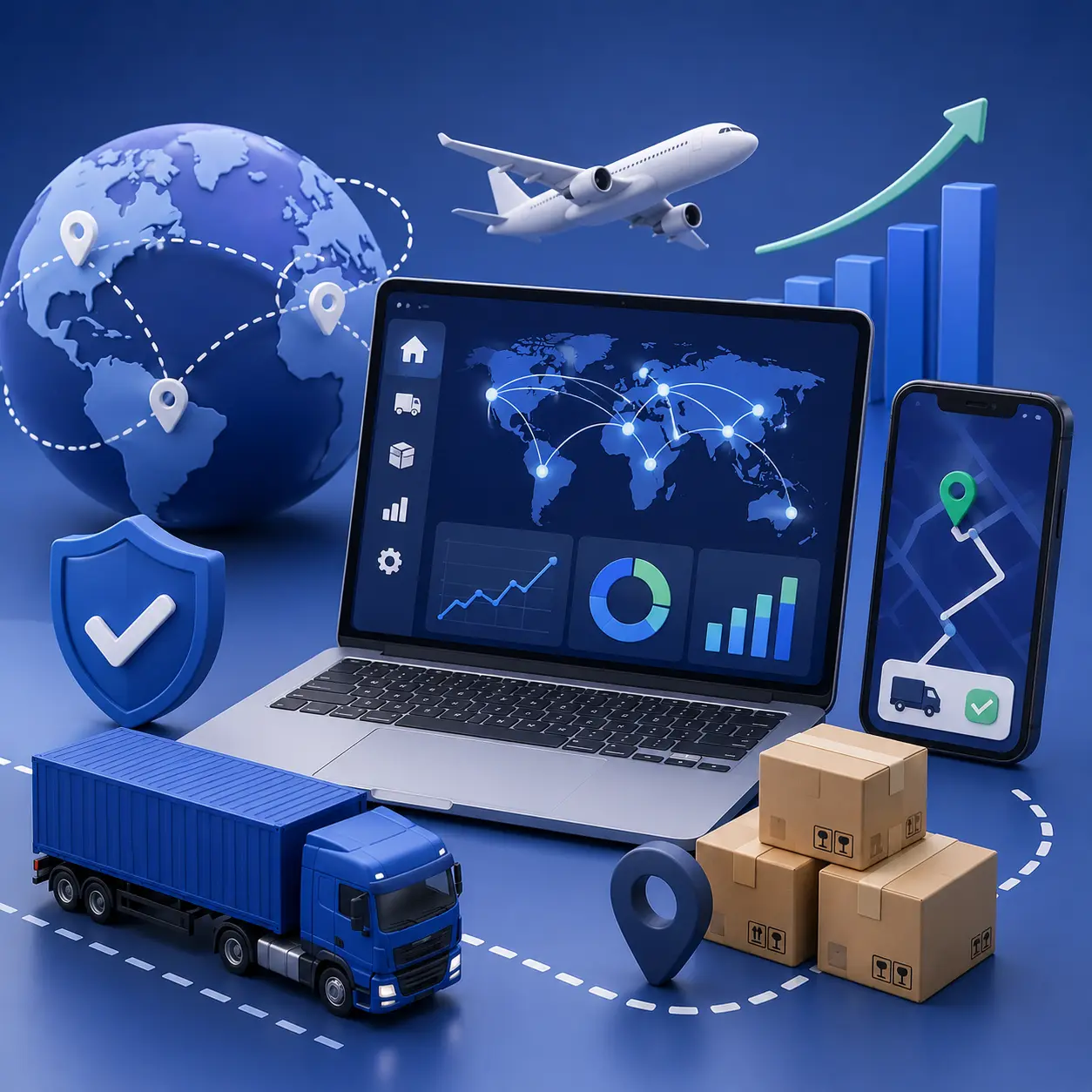
Modernize Your Logistics Operations — Get a Free Software Consultation
Stop losing $127K+ a year to outdated systems — see what modern logistics software can do, then get a free project estimate.Importance of Android Mobile Apps in Logistics Software Development
Android app development is very important for logistics software because it provides users with mobile access and communication features. More and more logistics companies are using custom Android apps for:
-Monitoring Drivers and Fleets – Route and fuel tracking, as well as vehicle performance.
-Warehouse Management – Worn-out stock harvesting, order barcode scanning, and order automation processes.
-Delivery Tracking – Updating and forwarding ‘proof of delivery’ forms.
-Client Interaction – Customers can monitor their orders, and notifications can be sent to customers.
Apps on mobile devices enhance productivity, efficiency, and the experience of the user. Thus, they have become an indispensable part of modern logistics software design and Android app development.
Wrapping up
The world has moved on from traditional processes to more elaborate ones. This world of complexities and advanced human interactions is driven by a logistics software development company that seeks to provide better optimisation and enhanced customer service. Add-ons such as Android app development, Artificial Intelligence, the Internet of Things, Blockchain technology, and automation are transforming the world of logistics for good and enabling companies to live without the fear of lagging behind the competition.
Cloud computing is here, and the logistics industry will be forever changed. With the invention of mobile applications and predictive analytics, logistics will soon be easier, smarter, and far more automated. Companies that apply these advancements will have a great competitive advantage with faster delivery speeds, lower operational costs, and high levels of customer satisfaction.
FAQs
Q: How long does it take to develop logistics software?
A: Basic logistics software takes 2-4 months, while comprehensive platforms require 8-12 months. Timeline depends on features, integrations, and customization level.
Q: What’s the average cost of logistics software development?
A: Costs range from $25,000 for basic fleet tracking to $500,000+ for enterprise-grade platforms with AI, IoT integration, and multi-tenant architecture.
Q: Can logistics software integrate with existing ERP systems?
A: Yes, modern logistics solutions offer API integrations with SAP, Oracle, Microsoft Dynamics, and custom ERPs through REST/SOAP protocols.
Q: What ROI can I expect from logistics software?
A: Companies typically see 15-30% reduction in operational costs, 25% faster delivery times, and 40% improvement in resource utilization within 12-18 months.
Q: Do I need custom development or off-the-shelf software?
A: Off-the-shelf works for standard operations (~30% cheaper), but custom development is essential for unique workflows, competitive advantages, or specialized industry requirements.
Q: What technologies are essential for modern logistics software?
A: Core technologies include GPS/IoT for tracking, AI/ML for route optimization, cloud infrastructure for scalability, mobile apps for field operations, and API integrations for ecosystem connectivity.
Q: How secure is logistics software for sensitive shipment data?
A: Enterprise-grade logistics platforms use AES-256 encryption, role-based access control, audit trails, SOC 2 compliance, and regular penetration testing.
Q: Can logistics software scale as my business grows?
A: Cloud-based solutions offer elastic scaling to handle 10x traffic spikes. Architecture should support microservices for modular expansion.
Do not Miss Our Latest Tech Insights
Stay one step ahead in the fast-moving world of AI and technology. Add us as a Preferred Source on Google and get our latest articles, guides, and industry insights delivered straight to your search feed.