+1 740 762 6496
 +91 70189 46603

Overview
- Home services apps like Handy connect customers with vetted providers for cleaning, plumbing, electrical, and repair services.
- Core components: vendor panel (bookings, payments, reviews) and admin panel (user/service management, pricing).
- Cost breakdown: UI/UX design $5,000-$20,000, development $20,000-$50,000, admin panel $10,000-$30,000, vendor panel $10,000-$25,000.
- Additional costs: third-party integrations $5,000-$20,000, and testing/QA $5,000-$15,000.
- Total development cost typically ranges from $65,000 to $160,000 or more.
- Annual maintenance costs run 15-20% of the total development cost.
AI Summary:
A home services app like Handy connects customers with service providers for cleaning, plumbing, electrical, painting, and repair tasks via vendor and admin panels. Key features include booking management, in-app payments, and ratings/reviews. Development costs break down as: UI/UX design $5,000-$20,000, front-end/back-end development $20,000-$50,000, admin panel $10,000-$30,000, vendor panel $10,000-$25,000, and integrations $5,000-$20,000. Total cost typically ranges from $65,000 to $160,000 or more.
The home services market — cleaning, plumbing, electrical, carpentry, and more — has become one of the fastest-growing on-demand sectors globally. Apps like Handy, TaskRabbit, and UrbanClap (Urban Company) have proven that connecting customers with vetted service providers through a mobile app is a scalable and profitable business model.
If you are planning to build a home services app like Handy in 2026, this guide by Auspicious Soft — based on our team’s experience building similar platforms — covers features, real development costs updated for 2026, the best technology stack, and a step-by-step approach to launching successfully.
Quick Answer: The cost to build a home services app like Handy in 2026 ranges from $25,000 for a basic MVP (single service category, one region) to $120,000+ for a full multi-service marketplace with customer, provider, and admin apps.
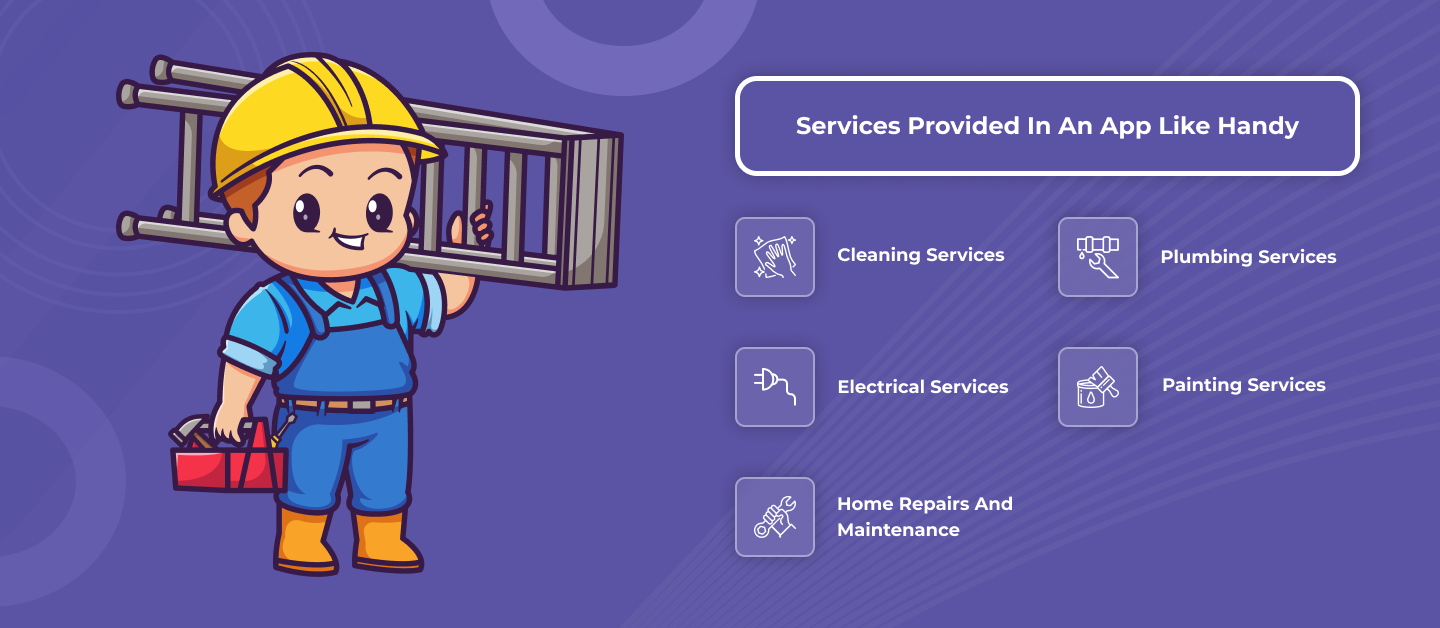
Nature of Services Provided in an App like Handy:
An app like Handy typically acts as a platform that connects service providers with customers looking for professional assistance. The services offered through this type of app can include:
1. Cleaning Services:
This includes general house cleaning, deep cleaning, carpet cleaning, window cleaning, and more.
2. Plumbing Services:
Plumbing professionals are available for fixing leaks, unclogging drains, installing fixtures, and handling other plumbing-related issues.
Ready to Build Your Home Services App?
Get a detailed cost breakdown and free consultation tailored to your Handy-like app idea — no obligation.3. Electrical Services:
Electricians can be hired for tasks such as repairing faulty wiring, installing new electrical outlets, or fixing electrical appliances.
4. Painting Services:
Professional painters can be hired for interior and exterior painting, wall repairs, and other related services.
5. Home Repairs and Maintenance:
This category includes services like furniture assembly, fixing broken appliances, HVAC maintenance, and general handyman tasks.
Types of On-Demand Home Services:
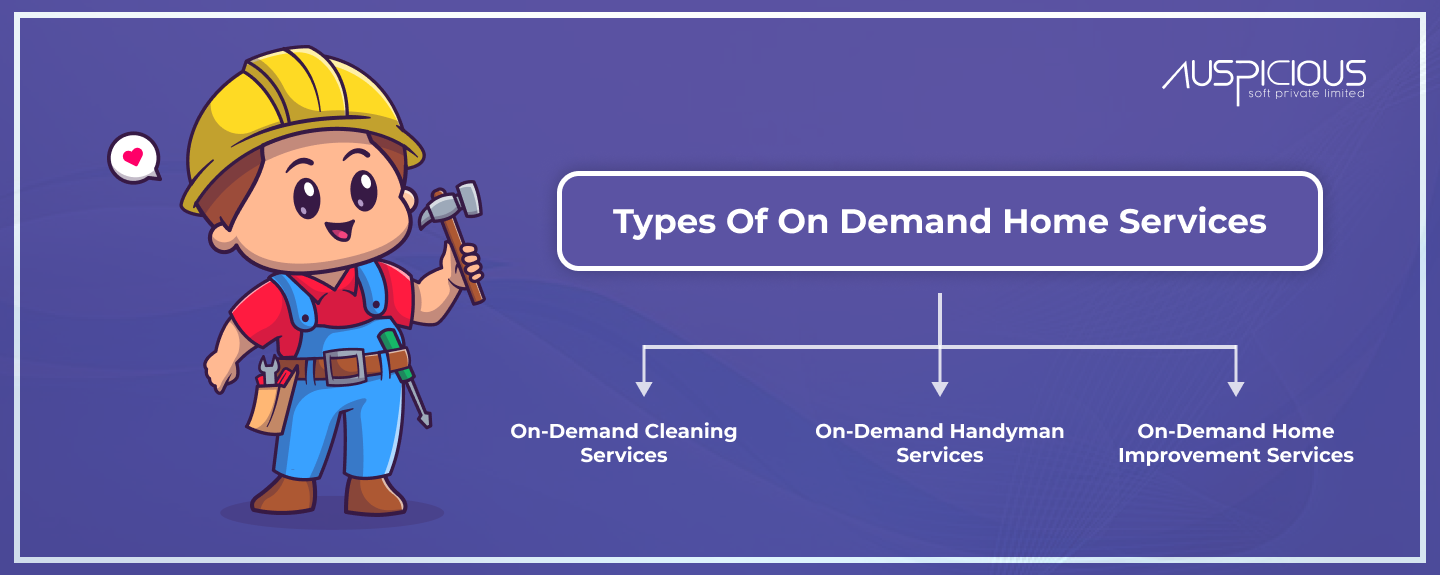
On-demand home services can be classified into various categories, such as:
1. On-Demand Cleaning Services:
This includes residential cleaning, office cleaning, post-construction cleaning, and specialized cleaning services like carpet or upholstery cleaning.
2. On-Demand Handyman Services:
This covers a wide range of general home repairs and maintenance tasks like plumbing, electrical work, carpentry, furniture assembly, and more.
3. On-Demand Home Improvement Services:
These services involve more extensive home improvement projects like renovation, remodeling, painting, and flooring installation.
Why Go for Home Services App Development?
Investing in home services app development offers several benefits:
1. Convenience:
Users can easily book professional services with just a few taps on their smartphones, eliminating the need for extensive research or phone calls.
2. Time-Saving:
Customers can save time by quickly finding service providers and scheduling appointments based on their availability.
3. Quality Assurance:
Home service apps usually vet and verify service providers, ensuring that customers can expect reliable and high-quality services.
4. Ratings and Reviews:
Users can refer to ratings and reviews left by previous customers to make informed decisions and choose the best service providers.
What Features Does a Home Services App Like Handy Need?
For Vendor Panel:
| Feature | Description | Priority |
|---|---|---|
| Service Search & Booking | Browse Categories, Select Service, Pick Date/Time Slot. | Essential |
| Provider Profiles | Photo, Rating, Experience, Services Offered, Availability. | Essential |
| Real-Time Tracking | GPS Tracking From Provider Departure To Arrival. | High |
| In-App Payments | Card, UPI, Wallet — With Auto-Invoicing and Receipts. | Essential |
| Ratings & Reviews | Post-Service Feedback With Photo Upload Capability | High |
| Chat with Provider | In-App Messaging Before and After Booking | Medium |
| Booking History & Rebooking | Past Services, One-Tap Rebook With Same Provider | Medium |
For Admin Panel:
User and Vendor Management:
Admins can manage user and vendor profiles, verify their identities, and resolve any disputes that may arise.
Service Categories and Pricing:
Admins can define service categories, set pricing structures, and manage any changes or updates.
Analytics and Reporting: Generating reports on
Cost Estimation of Making an App like Handy
The cost of developing an app like Handy can vary depending on several factors, including the complexity of the app, the platform(s) you choose to develop for (e.g., iOS, Android), the features and functionalities you want to incorporate, the development team’s location and expertise, and the time required for development.
Home Services App Development Cost Breakdown 2026
| Component | Scope | Timeline | Dev Hours | Cost (USD) |
|---|---|---|---|---|
| UI/UX Design | 3-Panel App (Customer, Provider, Admin) Wireframes + Design | 3–4 Weeks | 100–160 Hrs | $3,000–$6,500 |
| Customer App | iOS + Android (React Native) | 6–8 Weeks | 200–280 hrs | $8,000–$14,000 |
| Provider App | iOS + Android (React Native) | 5–7 Weeks | 160–220 Hrs | $6,500–$11,000 |
| Backend API | REST API, Booking Engine, Scheduling, Notifications | 7–10 Weeks | 240–360 Hrs | $9,600–$18,000 |
| Admin Dashboard | Web-Based Management Console | 4–5 Weeks | 100–140 Hrs | $4,000–$7,000 |
| GPS + Maps | Real-Time Provider Tracking | 2 Weeks | 40–60 Hrs | $1,600–$3,000 |
| Payment Integration | Stripe / Razorpay + Automated Payouts | 2 Weeks | 40–60 Hrs | $1,600–$3,000 |
| QA & Testing | Functional, Regression, Device Testing | 2–3 Weeks | 80–120 Hrs | $2,400–$4,800 |
| TOTAL (Standard) | Full 3-Panel App — Cross-Platform | 5–7 Months | 960–1,400 hrs | $36,700–$67,300 |
1. UI/UX Design:
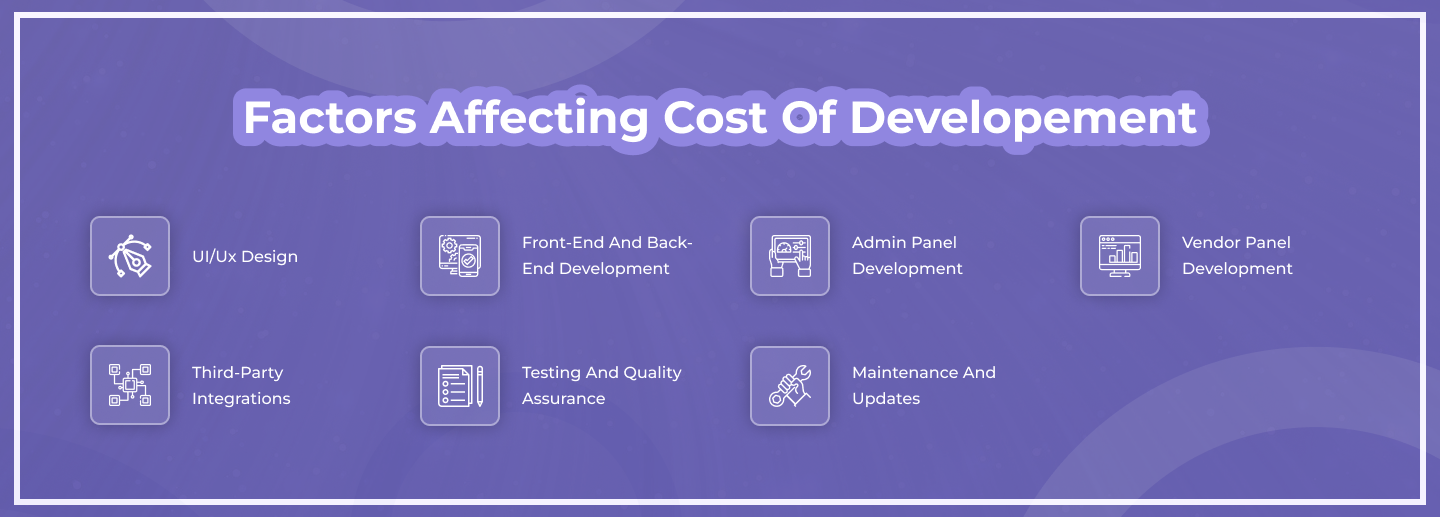
The app’s design is crucial for providing a user-friendly and visually appealing experience. Design costs can range from $5,000 to $20,000, depending on the complexity and customization required.
2. Front-end and Back-end Development:
This involves the actual development of the app’s features, functionalities, and server infrastructure. The cost can vary based on the complexity of the app, but a rough estimate would be between $20,000 to $50,000.
3. Admin Panel Development:
The admin panel allows you to manage users, service providers, bookings, and other crucial aspects of the app. The development cost for an admin panel can range from $10,000 to $30,000.
Ready to Build Your Home Services App?
Get a detailed cost breakdown and free consultation tailored to your Handy-like app idea — no obligation.4. Vendor Panel Development:
The vendor panel allows service providers to manage their profiles, services, appointments, and communications. The development cost for a vendor panel can range from $10,000 to $25,000.
5. Third-Party Integrations:
If you plan to integrate additional features or services into your app, such as payment gateways, map services, or push notifications, the costs will vary based on the specific integrations required. The cost for third-party integrations can range from $5,000 to $20,000.
6. Testing and Quality Assurance:
It’s crucial to thoroughly test your app to ensure it functions properly and provides a seamless user experience. Testing and QA costs can range from $5,000 to $15,000.
7. Maintenance and Updates:
After the initial development, you’ll need to allocate a budget for ongoing maintenance, bug fixes, and future updates. This can be around 15-20% of the total development cost per year.
Conclusion
In conclusion, developing a home services app like Handy can be a promising venture, considering the growing demand for on-demand services. However, it’s important to carefully plan and budget for the development process. The estimated cost for creating an app like Handy can range from $65,000 to $160,000 or more, depending on various factors such as design complexity, platform selection, features, and integrations.
To ensure the success of your app, focus on providing a user-friendly interface, robust functionalities for both users and service providers, and efficient management tools for the admin. Incorporate features like service listings, scheduling, in-app communication, rating and review systems, and secure payment gateways.
Remember to allocate a budget for ongoing maintenance, bug fixes, and future updates, as these are crucial for the app’s long-term success and user satisfaction.
Ultimately, with careful planning, a solid development team, and a well-executed strategy, your home services app can thrive in the competitive market, offering convenience and value to both users and service providers.
FAQs
Q: How much does it cost to build an app like Handy in 2026?
A basic single-service MVP costs $25,000–$40,000. A full three-panel app (customer + provider + admin) with GPS tracking and payment integration costs $60,000–$90,000. Enterprise platforms with AI matching and multi-city support cost $100,000–$120,000+.
Q: How long does it take to build a home services app?
A basic MVP takes 3–4 months. A full-featured three-panel app takes 5–7 months with a team of 4–6 developers. Adding AI scheduling and multi-city support extends the timeline to 8–10 months.
Q: What is the business model for a home services app like Handy?
The primary model is a commission on each completed service booking (typically 15–25%). Secondary revenue comes from featured provider listings, subscription plans for providers, and in-app insurance or background-check upsells.
Q: Do I need to vet service providers before listing them on my app?
Yes — provider vetting is essential for trust and safety. Best practice includes identity verification, background checks, skills assessment, and a probationary period with customer rating monitoring. Handy uses background checks via Checkr. Many platforms also require proof of licence for trade services (plumbing, electrical).
Q: What technology stack does Handy-like app use?
Typical stack: React Native (mobile apps), Node.js (backend), PostgreSQL (database), Google Maps API (GPS tracking), Stripe (payments), Firebase (push notifications), and AWS (cloud hosting). Auspicious Soft builds on this stack with optional AI scheduling using Python ML models.
Do not Miss Our Latest Tech Insights
Stay one step ahead in the fast-moving world of AI and technology. Add us as a Preferred Source on Google and get our latest articles, guides, and industry insights delivered straight to your search feed.