Why LA Fitness Businesses Are Moving Off Mindbody, Glofox, & ClubReady
Los Angeles fitness operators are the most demanding software buyers in the US market. LA fitness businesses collectively serve more than 2 million active members across gyms, boutique studios, and independent trainers — a market with more segmentation, higher pricing, and more competitive intensity than any other US metro. That intensity has broken the off-the-shelf software model for growing operators. Mindbody, Glofox, ClubReady, and Wodify are functional platforms for a single-location studio finding its feet. But three problems compound as an LA fitness brand grows past $1M in annual revenue or a second location. The per-member fee model turns punitive. Mindbody's business tier charges $5-8 per active member per month. For a 3,000-member gym chain, that is $180,000 to $290,000 in annual software fees — money that would fund three engineers on a custom platform. Data ownership becomes a strategic problem. Off-the-shelf platforms make it expensive and slow to export member data, difficult to integrate with proprietary trainer methods, and impossible to build the analytics dashboards that inform real business decisions.


Signs You Have Outgrown Your Current Fitness Software
- Your booking software isn’t compatible with your internal payroll and HR systems.
- You are paying too much ($5 monthly) per member, which is destroying your profit margins.
- Management reporting cannot be customized to include your specific executive KPI’s.
- You use a generic app that isn’t branded with your colors and logo.
- Clients leave because you don’t have Zoom integration on your platform for virtual classes.
- You are forced to step up to a more advanced gym system to satisfy the needs of a rapidly expanding business.
Fitness Software Categories We Build For Los Angeles Operators


Gym Management Systems
Central platforms that handle daily operations: member profiles, check-in kiosks, staff scheduling, equipment maintenance logs, and automated billing. Built for gym chains and franchise operators who have outgrown their off-the-shelf platform.

Fitness CRM & Sales Pipelines
Sales dashboards that track leads from every source, automate follow-up sequences, manage the trial-to-membership conversion funnel, and report on member lifecycle metrics. Built for fitness brands where sales is a real discipline, not an afterthought.

Class & Appointment Scheduling Engines
High-performance booking systems with real-time availability, room and resource booking, waitlist logic, and multi-location scheduling. Built to replace the slow booking flows that off-the-shelf platforms force on your members.

Fitness Analytics & Reporting Dashboards
Custom dashboards that predict member churn, track revenue per member, monitor class utilization rates, and surface the KPIs your leadership team actually uses. Built for franchise operators, boutique chains, and D2C wellness brands where data drives decisions.

Multi-Tenant Fitness SaaS Platforms
White-labeled SaaS platforms that let franchise operators or independent brands sell software to their own network of studios. Secure, multi-tenant, scalable cloud platforms — the same architectural pattern used by Mindbody and Glofox themselves.

Wearable & IoT Integration Software
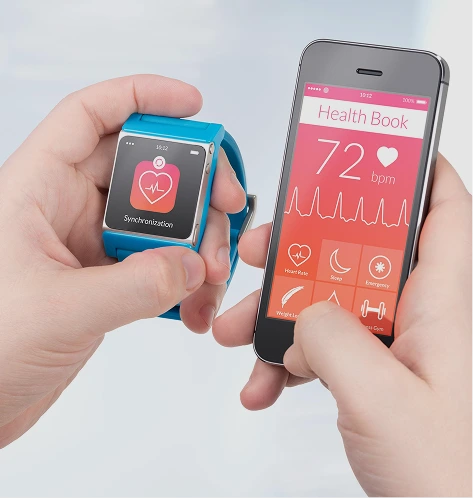
Server-side data pipelines that ingest real-time biometric data from Apple Health, Google Fit, WHOOP, Garmin, Fitbit, Polar, Oura Ring, and Peloton. Built for fitness brands that need to correlate workout data, recovery data, and business outcomes.

Nutrition & Wellness Tracking Software
Backend systems for tracking macronutrient targets, supplement stacks, dietitian input, and long-term behavior change. Built for wellness brands operating in the corporate wellness or medical-adjacent space.

Corporate Wellness Software
Enterprise platforms for LA corporations running employee wellness programs. HIPAA-compliant health tracking, HRIS integration (Rippling, Gusto, Workday), team challenges, and aggregate anonymized reporting for HR leadership.
Our Fitness Software Tech Stack & Architecture
Our Docker & Kubernetes infrastructure ensures that your platform never crashes. Real-time updates for your members are provided via WebSockets and Firebase. Finally, we connect your platform to important external tools through REST/API and GraphQL/API. Stripe is used for payments, Twilio is used for SMS services, and SendGrid is used to send automated emails. Technical precision makes Auspicious Soft the leader in fitness software development in Los Angeles.

Security & Compliance for Fitness Software
User health information is our top priority during development. We are committed to HIPAA compliance, ensuring the utmost security of sensitive medical information. Additionally, we follow PCI-DSS protocols for safe payment processing. Our team also builds designs for big enterprise customers that abide by SOC 2 compliance. The personal information is stored securely using advanced encryption systems. In addition, we have strict role-based access controls in place to safeguard your operational data.

Scalable Architecture for Growing Fitness Brands
Our team creates systems that expand in tandem with your fitness franchise. We use a microservices architecture and horizontally scale to AWS or Google Cloud. Content Delivery Networks allow you to stream your workout videos in high definition without any hitches. We design multi-region setups of servers for national gym chains. For instance, we have created the backend of a 12-location gym chain that processes 50,000 API calls a day with 99.98 percent uptime.
“50,000 API calls a day with 99.98 percent uptime.”
Fitness Software Development Process

Business & Systems Analysis
First, we’ll map out your existing operational processes, software connections, and internal data transfers. We define exactly what user roles your staff members need. All strict compliance requirements are also mapped out.
Architecture Design & Tech Planning
Our technical team designs the best database structure and architectures of API for maximum efficiency. All third-party integration opportunities are carefully planned. We then create a scalable cloud infrastructure that will match the expansion of your business perfectly.
Integration & Data Migration
All the necessary API integration is done, and complex legacy data migration scripts are run safely. We operate parallel testing environments and conduct comprehensive validation testing. This stringent procedure guarantees no data loss whatsoever.
Deployment, Training & Handover
We deploy your thoroughly tested app securely to the live production environment. Thorough staff training and system documentation are provided. Lastly, we create a support plan with an SLA to ensure your team continues to function effectively.
Frequently Asked Questions
How much does custom fitness software development cost in LA?
Custom fitness software development in Los Angeles typically ranges from $40,000 for a single-tenant gym management system to $300,000 or more for a full franchise operations platform with HIPAA compliance and multi-tenant SaaS architecture. Median engagement size across our LA fitness clients is $95,000. Every engagement is scoped and priced in a written SOW before development begins — no hourly billing.
How is custom fitness software different from a fitness app?
Custom fitness software is the operational infrastructure your business runs on — gym management, staff scheduling, billing, CRM, analytics. A fitness app is what your members hold in their hands. Most LA fitness brands need both, but they solve different problems and typically get built as separate (though integrated) products.
When does it make sense to move off Mindbody, Glofox, or ClubReady?
Three signals: you are paying more than $50,000 per year in per-member fees, you have grown to 3+ locations, or your operational workflows have become materially different from what the off-the-shelf platform supports. Below those thresholds, off-the-shelf is usually the right call.
Can custom software integrate with our existing Mindbody or Glofox account?
Yes. Many LA operators keep Mindbody or Glofox running for a period while custom software is being built, with two-way API sync so no data is lost during the transition. We build these hybrid architectures regularly and can plan a phased cutover instead of a hard switchover.
How long does it take to build custom fitness software?
Timelines depend on scope. A single-tenant gym management system takes 4-5 months. A multi-tenant SaaS-ready platform takes 5-7 months. A full franchise operations platform with HIPAA compliance runs 7-12 months. Median across our fitness software engagements: 6 months from signed SOW to production cutover.
Do you work with LA fitness operators specifically or only global clients?
Both. Our Los Angeles office, opened in 2023, exists specifically for LA-area fitness clients — from single-location Venice studios to Beverly Hills-headquartered franchise operators. We also serve clients across the US, UK, UAE, Canada, and India from our engineering headquarters, but LA engagements get regional-team attention and in-person discovery sessions.
What if we need HIPAA or SOC 2 compliance?
We build HIPAA-compliant systems regularly for corporate wellness and healthcare-adjacent fitness brands. SOC 2 Type II readiness is standard for our enterprise builds. Every compliance requirement is scoped up-front and reflected in the SOW, along with the additional cost and timeline it adds.
Do you build the fitness app alongside the software?
Yes. About 60% of our fitness software engagements include an accompanying member app and/or trainer app on the same backend. Total cost is significantly lower than building them separately because the backend is shared. See our fitness app development in Los Angeles page for details.