+1 740 762 6496
 +91 70189 46603

TABLE OF CONTENT
Overview
- Cost of building payment apps with features like peer-to-peer transfers, security, and transaction history.
- It highlights compliance requirements and encryption as key cost factors.
- The article discusses backend infrastructure and scalability.
- It concludes with recommendations for secure and cost-effective development.
The global digital payments market reached $11.5 trillion in 2025 and continues to grow at 15% annually. Apps like Venmo, Cash App, and Zelle have fundamentally changed how people split bills, pay freelancers, and send money to family — and in emerging markets, apps like Paytm and bKash have brought digital payments to hundreds of millions of unbanked users.
Building a payment app like Venmo is one of the most technically and regulatory demanding mobile app projects. This 2026 guide by Auspicious Soft covers what it actually takes — the two types of payment apps, must-have features, compliance requirements, security architecture, and a fully updated cost breakdown.
Quick Answer: Building a P2P payment app like Venmo costs $40,000–$200,000 in 2026. A basic MVP with send/receive and debit card funding costs $40,000–$70,000. A full-featured app with crypto, investment, and business payments costs $120,000–$200,000+.
What Are Payment Apps?
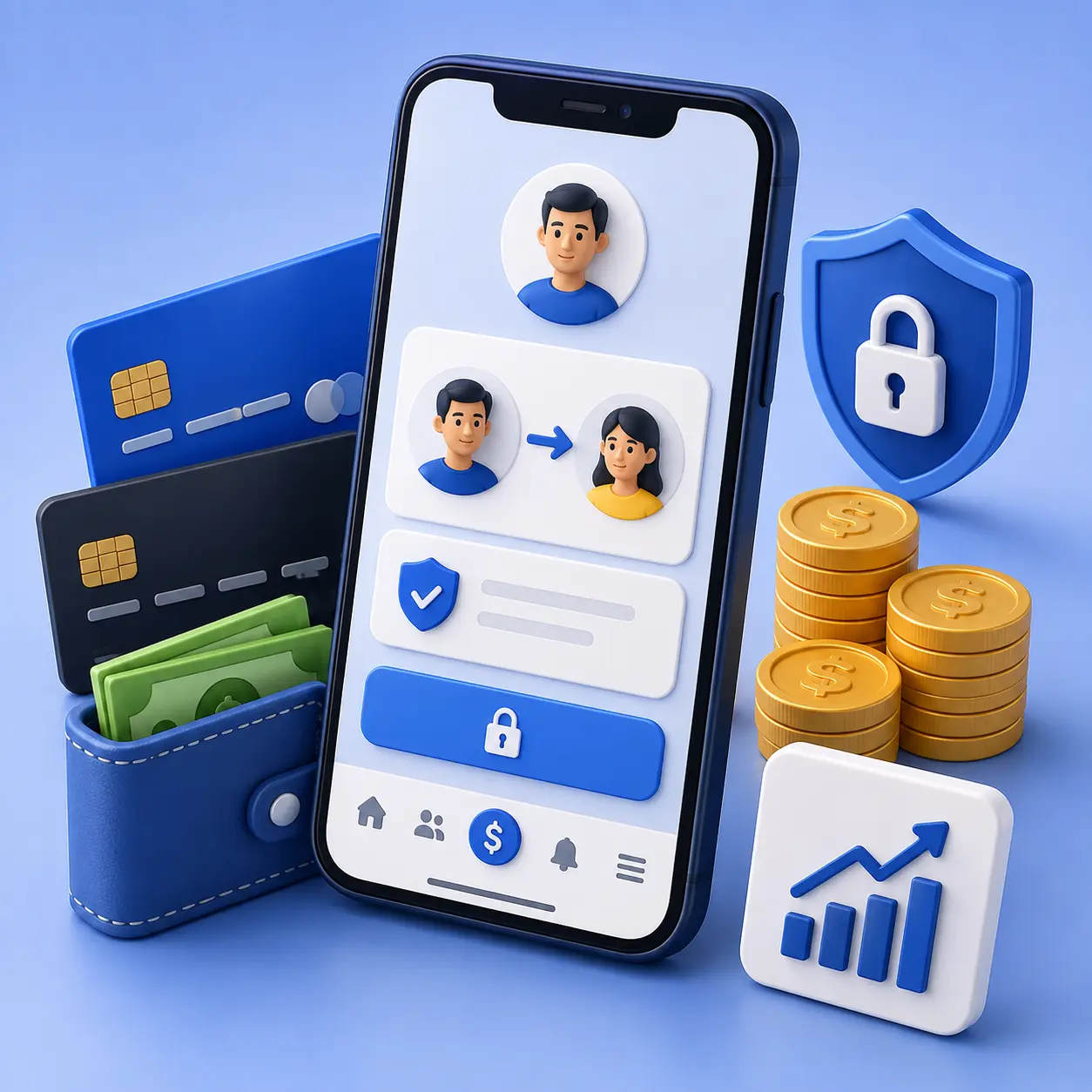
Payment apps are digital platforms that allow users to perform a variety of financial transactions, manage their finances, and perform other financial activities, all from their smartphones. These apps have revolutionized the way we handle our finances, making it easier and more convenient to manage our money on-the-go.
There are two main types of payment apps: peer-to-peer (P2P) and digital wallet. P2P payment apps, such as Venmo, allow users to send and receive money directly from one another, without the need for a bank or other intermediary. This type of app is particularly useful for splitting bills, paying back friends and family, or making small purchases. P2P payment apps typically use encryption and two-factor authentication to keep users’ financial information safe and secure.
Digital wallet payment apps, such as PayPal, allow users to store their money and make purchases online. This type of app is ideal for those who want to simplify their finances and have all their financial information in one place. Digital wallet payment apps also allow users to store their credit and debit cards, making it easier to make purchases online or in-store. Some digital wallet payment apps also offer additional features, such as the ability to invest, save, and manage their money.
Why Are Payment Apps Important?
Payment apps have become increasingly important in recent years due to the growth of the gig economy, which has made it more difficult for people to manage their finances. In the gig economy, people are working multiple jobs and earning income from various sources, making it difficult to keep track of their finances. Payment apps provide a convenient and secure way for people to handle their finances, making it easier to manage their money on-the-go.
Payment apps are important for a number of reasons. Firstly, they provide users with a convenient and secure way to manage their finances. Users can perform financial transactions, view their balance, and perform other financial activities from their smartphones, making it easier to handle their finances on-the-go. This is particularly useful for people who work multiple jobs or have busy schedules, as it allows them to manage their finances from anywhere and at any time.
In addition, payment apps can help to reduce the risk of fraud. Many payment apps use state-of-the-art security measures, such as encryption and two-factor authentication, to keep users’ financial information safe. This gives users peace of mind, knowing that their financial information is protected and secure.
Another benefit of payment apps is that they are fast and efficient. Users can perform transactions quickly and easily, without the need to wait in line or fill out long forms. This can save users a significant amount of time and make managing their finances more efficient.
Payment apps are also user-friendly, with simple and intuitive interfaces that make it easy for users to navigate. This makes it easier for users to manage their finances, even if they are not tech-savvy. Furthermore, payment apps typically charge lower fees than traditional banks, making it more affordable for users to manage their finances. This can help users to save money and make managing their finances more cost-effective.
Types of Payment Apps and Their Cost Ranges
| App Type | Core Scope | Cost (2026) | Timeline |
|---|---|---|---|
| P2P Payment App (Venmo model) | Send/receive money between users, split bills, social feed | $40,000–$100,000 | 4–8 months |
| Digital Wallet App (PayPal model) | Store balance, pay merchants, card management, investment | $80,000–$200,000+ | 6–12 months |
| Neobank / Super App | Banking + payments + crypto + savings + cards | $200,000–$500,000+ | 12–24 months |
Top Benefits Of Payment Apps:
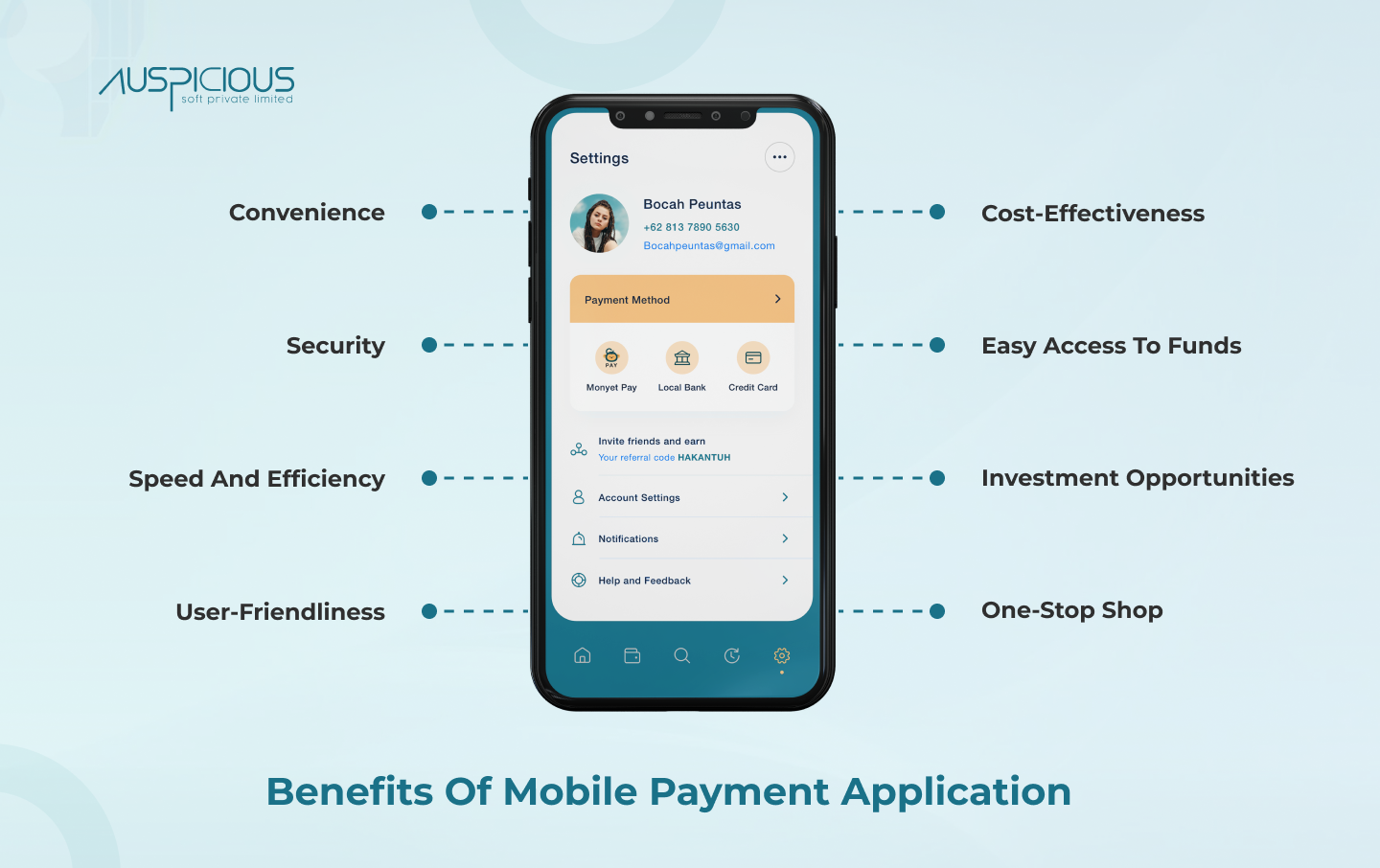
Payment apps offer numerous benefits to users, including convenience, security, speed, user-friendliness, cost-effectiveness, easy access to funds, and investment opportunities. In this section, we will take a closer look at each of these benefits in more detail.
1. Convenience:
Payment apps are designed to make managing your finances easier and more convenient. With a payment app, you can perform financial transactions, view your balance, and perform other financial activities from your smartphone, making it easier to handle your finances on-the-go. This is particularly useful for people who work multiple jobs or have busy schedules, as it allows them to manage their finances from anywhere and at any time.
2. Security:
One of the biggest concerns when it comes to handling finances is security. Payment apps use state-of-the-art security measures, such as encryption and two-factor authentication, to keep users’ financial information safe. This gives users peace of mind, knowing that their financial information is protected and secure. Payment apps are also subject to regular security audits, ensuring that they are always up-to-date with the latest security measures.
3. Speed and Efficiency:
Payment apps are fast and efficient, allowing users to perform transactions quickly and easily. This can save users a significant amount of time and make managing their finances more efficient. For example, when paying a friend for a shared expense, you can quickly send the money using the app, instead of having to wait for a check to clear or transfer funds from your bank account. This can be especially useful for small businesses that need to make quick payments to suppliers or contractors.
4. User-Friendliness:
Payment apps are designed to be user-friendly, with simple and intuitive interfaces that make it easy for users to navigate. This makes it easier for users to manage their finances, even if they are not tech-savvy. This is particularly useful for people who are new to handling their finances or who are not familiar with financial technology.
Build a Payment App Like Venmo — Get a Free Cost & Compliance Estimate
See real pricing, must-have features & compliance requirements for fintech apps — then get a custom quote in 24 hours.
5. Cost-Effectiveness:
Payment apps typically charge lower fees than traditional banks, making it more affordable for users to manage their finances. This can help users to save money and make managing their finances more cost-effective. For example, some payment apps offer free peer-to-peer (P2P) payments, which can be a more cost-effective alternative to using a check or transferring funds from a bank account.
6. Easy Access to Funds:
Payment apps provide users with easy access to their funds. With a payment app, users can quickly and easily access their money, making it easier to manage their finances and handle unexpected expenses. This is especially useful for people who are on-the-go and need quick access to their funds.
7. Investment Opportunities:
Some digital wallet payment apps, such as PayPal, also offer investment opportunities. This allows users to invest their money, save for the future, and grow their wealth. For example, PayPal offers a savings account that pays interest on the balance. This can be a great way for users to save money and grow their wealth over time.
8. One-Stop Shop:
Digital wallet payment apps, such as PayPal, allow users to store their money and make purchases online. This type of app is ideal for those who want to simplify their finances and have all their financial information in one place. Digital wallet payment apps also allow users to store their credit and debit cards, making it easier to make purchases online or in-store.
Must-Have Features of a Payment App Like Venmo
| Feature | Description | Priority |
|---|---|---|
| KYC / Identity Verification | Government ID Scan, Selfie Match, Address Verification — Mandatory For Compliance. | Essential |
| Bank Account Linking | ACH/Plaid Integration to Link Checking Accounts For Funding Transfers. | Essential |
| P2P Money Transfer | Send/Request Money By Phone Number, Email, or Username — Real-Time. | Essential |
| Digital Wallet Balance | In-App Balance That Can Be Topped Up, Spent, or Withdrawn. | High |
| Bill Splitting | Add Friends, Split Amounts, Track Who Has Paid and Who Owes. | Essential (Venmo) |
| Debit Card (Virtual/Physical) | Spend Wallet Balance in-Store and Online. | High |
| Social Feed (Optional) | Public or Private Transaction Descriptions — Venmo's Unique Retention Feature. | Medium |
| Security: 2FA + Biometrics | Two-Factor Auth + Face ID / Fingerprint For Every Login and Transfer. | Essential |
| Transaction History | Searchable, Filterable Transaction Log With Export To CSV. | Essential |
| Push Notifications | Real-Time Alerts For Money Received, Requests, Payment Confirmations. | Essential |
| Fraud Detection (AI) | ML-Based Anomaly Detection For Unusual Transfers, Geo-Mismatch Flags. | High |
What Is The Cost Of Building A Payment App?
Building a payment app requires a significant investment of time and resources, as well as a solid understanding of the financial technology industry. The cost of mobile app development can vary greatly depending on several factors, including the features you want to include, the complexity of the app, and the development team you work with. In this section, we will take a closer look at the cost of building a payment app and what you can expect to pay.
1. Features:
The cost of building a payment app is largely dependent on the features you want to include. For example, if you want to include a range of advanced features, such as P2P payments, invoicing, and investment opportunities, you can expect to pay more than if you only include basic features, such as the ability to view your balance and perform transactions. The more features you include, the more complex the app will be and the more it will cost to develop.
2. Complexity:
The complexity of the payment app you want to build will also impact the cost. If you want to build a simple payment app with basic features, you can expect to pay less than if you want to build a complex app with a range of advanced features. This is because complex apps require more development time, as well as more specialized development skills.
| Component | Scope | Cost (USD) | Dev Hours |
|---|---|---|---|
| UI/UX Design | Onboarding, transfer flows, wallet, transaction history screens | $5,000–$10,000 | 80–160 hrs |
| Frontend (React Native) | iOS + Android — full payment app UI | $15,000–$30,000 | 280–500 hrs |
| Backend API | Transfer engine, wallet management, user auth, notifications | $18,000–$40,000 | 360–700 hrs |
| Bank/Payment Integration | Plaid (bank link), Stripe/Dwolla (ACH), card processing | $8,000–$20,000 | 150–350 hrs |
| KYC Integration | Persona, Jumio, or Onfido API for ID verification | $3,000–$7,000 | 50–100 hrs |
| Fraud Detection Module | Rule-based + ML anomaly detection | $5,000–$15,000 | 100–250 hrs |
| Admin Dashboard | User management, compliance dashboard, transaction monitoring | $5,000–$12,000 | 100–200 hrs |
| Security & Pen Testing | 3rd-party security audit + fixes | $5,000–$20,000 | External |
| QA & Testing | Full regression, security, and compliance testing | $4,000–$8,000 | 80–160 hrs |
| TOTAL (MVP P2P App) | Basic Venmo-like MVP — no crypto or cards | $40,000–$75,000 | 5–8 months |
3. Development Team:
The cost of building a payment app also depends on the development team you work with. If you work with a large, established development company, you can expect to pay more than if you work with a small, independent development team. However, it is important to note that working with a large development company does not guarantee a higher quality app, and working with a smaller development team does not guarantee a lower cost.
4. Platform:
The platform you choose to build your payment app on can also impact the cost. For example, building an app for iOS will typically cost more than building an app for Android, due to the differences in development environments and development tools. Additionally, if you want to build a cross-platform app that runs on both iOS and Android, you can expect to pay even more.
5. Location:
The location of the development team you work with can also impact the cost of building a payment app. For example, if you work with a development team in the United States, you can expect to pay more than if you work with a team in India or Eastern Europe. This is because the cost of living and the cost of doing business in these countries is lower, and development teams in these countries are able to offer lower rates.
6. Maintenance and Support:
In addition to the cost of developing the payment app, you will also need to consider the cost of maintaining and supporting the app. This includes ongoing development and bug fixes, as well as customer support. The cost of maintenance and support will depend on the complexity of the app, the number of users, and the size of the development team.
To give you a general estimate, the price to construct a P2P payment software similar to Venmo can be anywhere from $35,000 to $200,000 or more. The entire cost may also change depending on the app’s wireframe, UI/UX design, platform, development process, location, and hourly developer rates, among other variables.
Simply simply, the intricacy of the app as a whole is a key determining factor in determining how much an app will cost. For instance, a simple mobile app with a limited feature set may be less expensive than a more complex app with a large feature set.
Let’s now attempt to provide you with a quick overview of the expected expenses and timelines for developing P2P payment apps based on their complexity.
Compliance & Security Requirements (Non-Negotiable)
| Requirement | Description | Cost Estimate |
|---|---|---|
| PCI-DSS Level 1 | Card Data Processing Compliance — Required For Any App Handling Card Transactions. | $5,000–$25,000 (audit cost) |
| AML / KYC Procedures | Identity Verification For All Users — Required in US, EU, UK, India. | $3,000–$8,000 (integration cost) |
| Money Transmitter Licence | Required in Each US State To Legally Process Payments — or Partner With Licensed Processor. | $15,000–$100,000+ (legal fees) |
| E-Money Licence (EU/UK) | FCA (UK) or EU e-money Licence For European Operations. | $30,000–$150,000+ (legal fees) |
| SSL/TLS Encryption | All Data in Transit Encrypted — Baseline Security Requirement. | Included in development |
| End-to-End Encryption | Financial Transactions Encrypted At Data Level. | $3,000–$8,000 |
| Penetration Testing | Third-Party Security Audit Before Launch — Highly Recommended. | $5,000–$20,000 |
What Is The Best Payment App Development Company?
Choosing the right payment app development company is crucial to the success of your payment app. With so many companies to choose from, it can be difficult to know where to start. However, by considering factors such as experience, expertise, cost, and customer reviews, you can find the best payment app development company for your needs.
One company that stands out in the field of payment app development is Auspicious Soft. Auspicious Soft is a leading payment app development company that has been providing high-quality payment app development services for many years. They have a team of experienced developers who are knowledgeable about the latest payment technologies and are committed to delivering high-quality apps that meet their clients’ needs.
One of the key reasons why Auspicious Soft is a top choice for payment app development is their experience and expertise. The company has years of experience in the financial technology industry and has developed a range of payment apps for clients around the world. Their developers are experts in their field and have a deep understanding of the payment app development process. This experience and expertise allows them to provide high-quality apps that are easy to use, secure, and reliable.
Build a Payment App Like Venmo — Get a Free Cost & Compliance Estimate
See real pricing, must-have features & compliance requirements for fintech apps — then get a custom quote in 24 hours.
Another factor that sets Auspicious Soft apart from other payment app development companies is their cost-effective services. They understand that payment apps can be expensive to develop, and they strive to provide their clients with the best possible value for their investment. They offer competitive rates and are committed to delivering high-quality apps at an affordable price.
In addition to their cost-effective services, Auspicious Soft is also known for their excellent customer service. They are committed to providing their clients with the support they need to successfully launch their payment app. Whether it’s answering questions, providing technical support, or helping to resolve any issues that arise, Auspicious Soft is always there to help.
Finally, Auspicious Soft has a proven track record of success. They have a long history of delivering high-quality payment apps that meet the needs of their clients. By combining their experience, expertise, cost-effectiveness, and customer service, Auspicious Soft has established itself as a leading payment app development company.
Conclusion:
Payment apps have revolutionized the way we handle our finances, making it easier to manage our money on-the-go. These apps provide a convenient and secure way to perform financial transactions, manage our finances, and perform other financial activities, all from our smartphones. The cost of building a payment app like Venmo will depend on a number of factors, including the complexity of the app, the features you want to include, and the development team you hire.
In conclusion, payment apps provide numerous benefits, including convenience, security, speed, lower fees, and user-friendliness. Whether you are a small business owner, a freelancer, or simply someone who wants to manage their finances more efficiently, payment apps are a great investment. So, if you are looking to build a payment app like Venmo, consider the benefits and start your journey towards financial freedom today.
FINANCIAL DISCLAIMER: This guide covers app development costs and technical architecture only. Payment apps handling real-money transactions require regulatory compliance including PCI-DSS certification, AML (Anti-Money Laundering) policies, KYC (Know Your Customer) procedures, and appropriate money transmitter licences (US) or e-money licences (EU/UK). Consult a qualified fintech legal advisor before launching. Auspicious Soft builds technically compliant platforms — licensing is the client’s responsibility.
FAQs
Q: How much does it cost to build a payment app like Venmo in 2026?
A basic P2P payment MVP with send/receive, bank linking, and KYC costs $40,000–$75,000. A full-featured app with digital wallet, virtual debit card, bill splitting, and fraud detection costs $80,000–$150,000. An enterprise super-app with crypto and investment features costs $200,000+.
Q: Do I need a money transmitter licence to build a payment app?
Yes, in the US you need a money transmitter licence (MTL) in each state where you operate — or you can partner with a licensed processor like Stripe or Dwolla who holds the licences on your behalf. In the EU/UK, you need an e-money institution licence from the FCA or relevant national regulator. Always obtain legal counsel before launch.
Q: How long does payment app development take?
A basic P2P MVP takes 5–8 months. A full digital wallet with cards and business payments takes 8–14 months. The timeline is largely driven by compliance and regulatory requirements, not just development complexity.
Q: What is the most important feature of a payment app?
Security and trust are the most critical features — not a specific UI element. Users will only adopt a payment app if they are completely confident their money is safe. This means: bank-grade encryption, biometric authentication on every transaction, real-time fraud monitoring, and instant customer support for disputed transactions.
Q: What payment APIs should I use to build a Venmo-like app?
Core integrations: Plaid (bank account linking for ACH transfers), Stripe or Dwolla (payment processing and ACH), Persona or Jumio (KYC/identity verification), Sardine or Sift (fraud detection). For international transfers, add Wise or Currencycloud. Auspicious Soft has pre-built integrations with all of these services.
Do not Miss Our Latest Tech Insights
Stay one step ahead in the fast-moving world of AI and technology. Add us as a Preferred Source on Google and get our latest articles, guides, and industry insights delivered straight to your search feed.