
TABLE OF CONTENT
- What Is An iOS App Developer? A 2023 Guide
- What Are iOS Devices?
- What Are iOS Apps?
- What Are The Common Features Of iOS Applications?
- What Are The Benefits Of Developing An iOS App?
- What Are The Factors That Vary The Cost Of The Best iOS App Development?
- What Is The Cost Of iOS App Development?
- How To Choose The Best iOS App Development Company?
- Final Verdict
- FAQs
Overview
- iOS devices are Apple’s hardware ecosystem — iPhone, iPad, Mac, Apple Watch, and Vision Pro.
- Push notifications, biometric auth, App Store payments, and iCloud sync are iOS app baseline requirements.
- iOS app development costs $30,000-$300,000 in 2026, depending on feature complexity and team location.
- Verify live App Store apps, first-submission approval rate, and lead developer expertise before signing.
Welcome to the world of iOS app development – a dynamic and exciting field that has taken the tech industry by storm in recent years. With the constant growth in the number of smartphones and mobile users, iOS app development has become a lucrative career option for tech enthusiasts.
iOS developers command $120,000-$165,000 average annual salary in the USA. There are an estimated 3.4 million iOS developers worldwide. Swift 6.0 and SwiftUI are the current language and framework standards. Apple Intelligence APIs are the newest iOS developer skill requirement for 2026.
But, what exactly does an iOS app developer do, and how do they fit into this rapidly evolving industry? In this guide, we’ll explore the intricacies of iOS app development and delve into the skills and qualities required to become a successful iOS app developer in 2026.
As we dive into the world of iOS app development, we’ll cover everything from the basics of Swift programming language to the latest trends and practices in iOS app development. Whether you’re an aspiring iOS app developer or just interested in learning about this fascinating field, this guide is a must-read.
So, grab your favorite beverage, settle into a comfortable spot, and let’s explore the world of iOS app development together.

What Are iOS Devices?
iOS devices refer to the family of Apple hardware products that run Apple’s operating systems. In 2026, the iOS developer’s target hardware has expanded significantly beyond iPhone: iPhone (running iOS 18-19), iPad (running iPadOS 18-19), Apple Watch (running watchOS 11), Apple TV (running tvOS), Mac (running macOS with Catalyst-translated iOS apps), and Apple Vision Pro (running visionOS for spatial computing experiences). This multi-device ecosystem is both an opportunity (a single Swift codebase can run on all Apple devices through SwiftUI’s adaptive layout system) and a complexity (each device category has distinct interaction paradigms, screen sizes, and user expectations that must be accounted for in design and development).
iOS devices run on the iOS operating system, which is updated regularly with new features and improvements. The latest version of iOS, iOS 16, was released in 2022 and includes new features such as enhanced privacy controls, improved Siri functionality, and new AR experiences.
iOS devices also have access to the Apple App Store, which has over 2.22 million apps available for download. These apps range from games and social media platforms to productivity and business tools, making the iOS platform highly versatile and useful for a wide range of purposes.

What Are iOS Apps?
iOS apps are software applications that are designed to run on iOS devices, including iPhones, iPads, and iPod Touches. iOS apps are available for download through the Apple App Store, which is accessible through all iOS devices.
iOS apps are developed using the Swift programming language, which is a modern and user-friendly language that is easy to learn and use. Swift was introduced by Apple in 2014 and has quickly become a popular choice among iOS app developers.
iOS apps can be designed for a wide range of purposes, from games and entertainment to productivity and business tools. Some of the most popular iOS apps include social media platforms like Facebook and Instagram, messaging apps like WhatsApp and iMessage, and productivity tools like Microsoft Office and Google Docs.
One of the benefits of developing iOS apps is the ability to leverage the unique features of iOS devices, such as the accelerometer, gyroscope, and touch screen. These features can be used to create engaging and immersive user experiences that are not possible on other platforms.
iOS apps must adhere to Apple’s strict guidelines and standards to be approved for inclusion in the App Store. This ensures that iOS apps are safe, secure, and of high quality. Additionally, Apple reviews all apps submitted to the App Store, which helps to maintain the overall quality of the iOS app ecosystem.
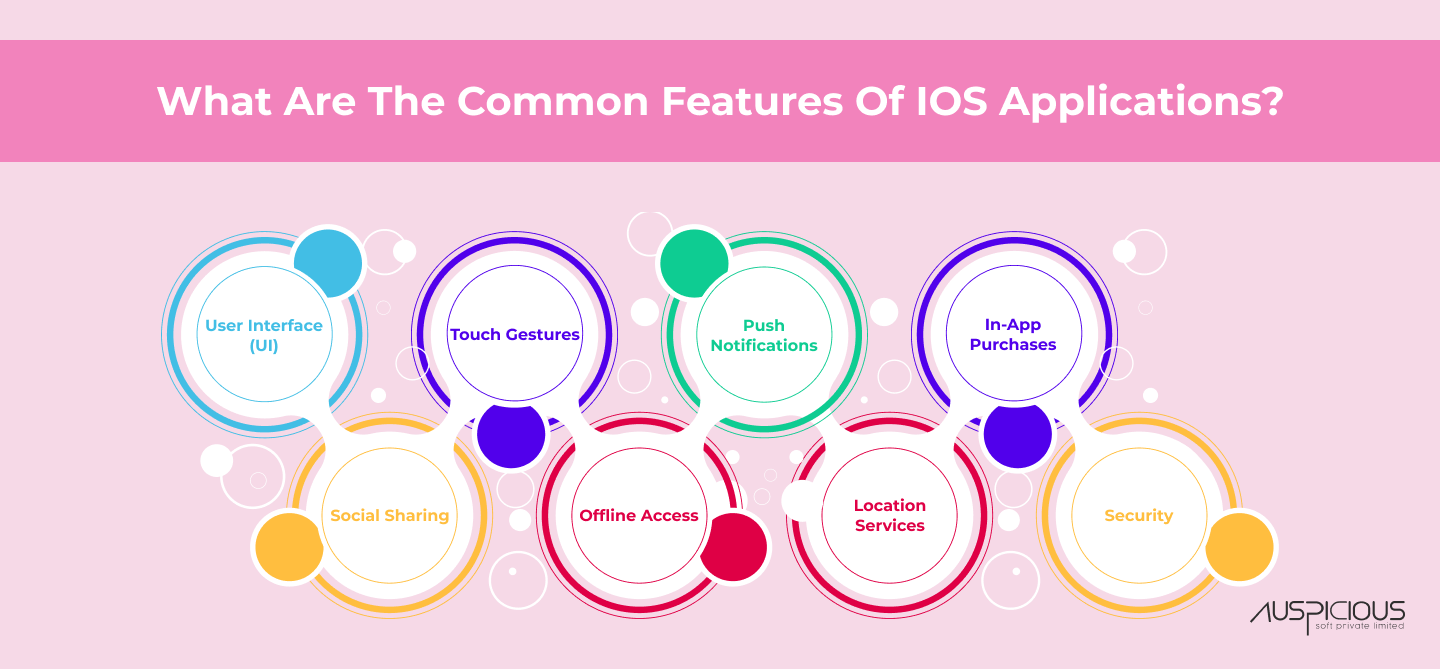
What Are The Common Features Of iOS Applications?
iOS apps in 2026 are expected to implement a set of platform features that users have come to consider baseline requirements rather than premium additions. Push notifications (delivered via Apple Push Notification service, APNs) maintain user engagement between sessions. Biometric authentication (Face ID and Touch ID via the LocalAuthentication framework) provides secure, frictionless login that iOS users expect as standard. App Store In-App Purchases (StoreKit 2) power subscription and premium feature monetization. iCloud sync (CloudKit) provides seamless data continuity across a user’s Apple devices. Accessibility support (VoiceOver, Dynamic Type, High Contrast) is required for App Store compliance and serves an estimated 20% of users who rely on accessibility features. And HealthKit integration enables fitness, wellness, and medical apps to participate in the health data ecosystem. Here are eight of the most common features of iOS applications:
● User Interface (UI):
The UI of iOS applications is one of their most defining features. Apple is known for its focus on design, and iOS applications are no exception. iOS app UI is typically clean, simple, and intuitive, with consistent layouts and typography across all apps. This makes it easy for users to navigate and interact with the app.
● Touch Gestures:
iOS devices are known for their touchscreen interfaces, and iOS apps take full advantage of this feature. Common touch gestures used in iOS apps include swiping, tapping, pinching, and dragging. These gestures enable users to interact with the app in a natural and intuitive way.
● Push Notifications:
These are a common feature in iOS apps that allow developers to send messages directly to a user’s device. These notifications can be used to alert users of new content or updates, or to prompt users to take a specific action within the app.
● In-App Purchases:
It allows developers to monetize their apps by offering users additional content or features for a fee. This feature is commonly used in games, where users can purchase virtual currency, power-ups, or other items that enhance their gameplay experience.
● Social Sharing:
It allows users to share content from an iOS app directly to social media platforms like Facebook or Twitter. This feature can help to increase user engagement and promote the app to a wider audience.
● Offline Access:
Many iOS apps allow users to access content or features offline, without an internet connection. This feature is particularly useful for apps that rely heavily on multimedia content, like music or video streaming apps.
● Location Services:
It allows iOS apps to access a user’s location information, enabling them to provide location-based services like maps, directions, and location-based recommendations.
● Security:
iOS devices are known for their security features, and iOS apps are no exception. iOS apps are designed to be secure, with built-in measures like encryption and data protection to safeguard user information and prevent unauthorized access.
These features contribute to the popularity and success of iOS applications, making them an essential part of the iOS ecosystem.
What Are The Benefits Of Developing An iOS App?
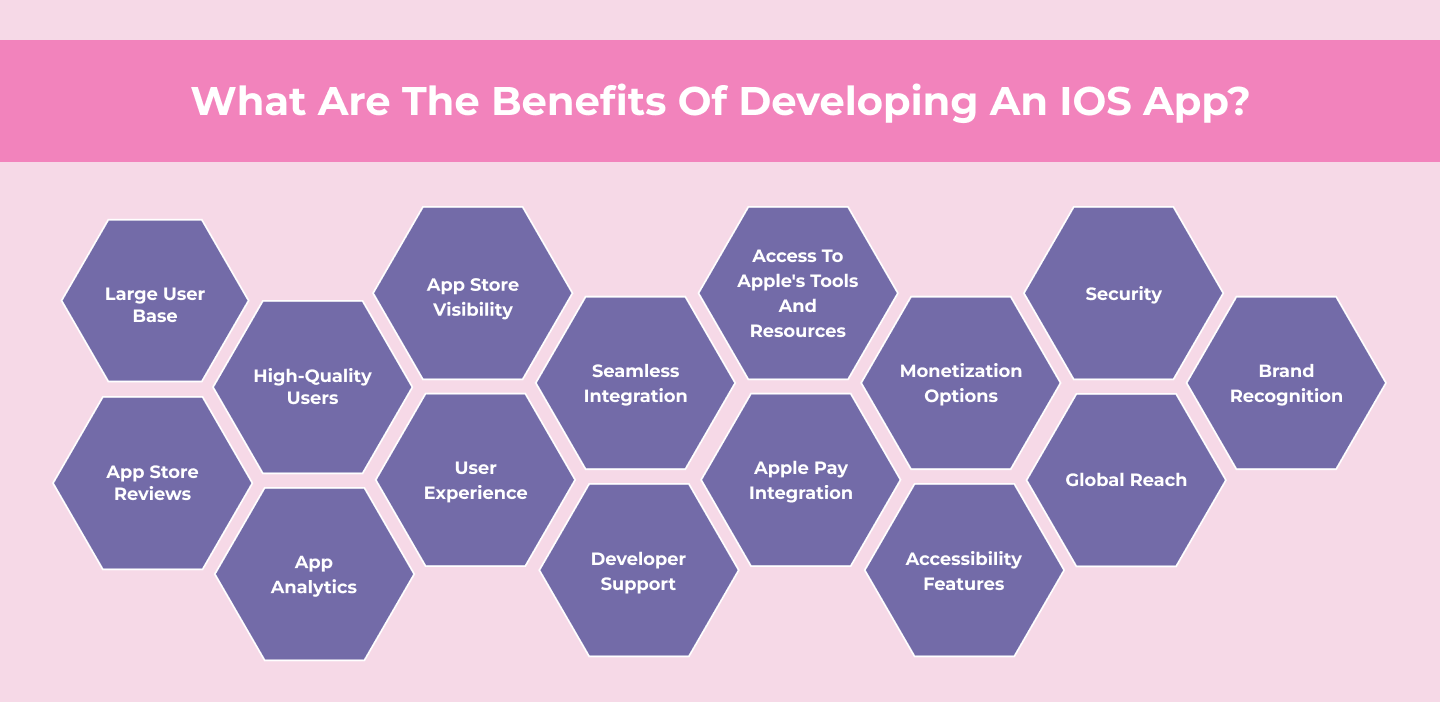
Developing an iOS app can provide numerous benefits for individuals and businesses. Apple’s iOS devices, including iPhones and iPads, have a large and loyal user base, making it an attractive platform for developers. Let’s explore some benefits of developing an iOS app, ranging from access to Apple’s development tools and resources to global reach and user experience.
● Large User Base
Apple’s iOS devices, including iPhones and iPads, have a large user base, which means there is a substantial market for iOS apps. This can help developers reach a wider audience and increase their chances of success.
● High-Quality Users
iOS users are known for their high engagement rates and willingness to spend money on apps. This makes iOS users an attractive demographic for developers who want to monetize their apps.
● App Store Visibility
The Apple App Store is one of the largest app marketplaces in the world, and getting an app listed in the store can provide significant visibility and exposure.
● Seamless Integration
iOS devices are known for their seamless integration with other Apple products, including Apple Watch, Apple TV, and HomePod. This integration can provide opportunities for developers to create complementary apps that work together with other Apple products.
● Access to Apple’s Tools and Resources
Apple provides a range of development tools and resources, including Xcode, Swift, and the Apple Developer Program. These tools can help developers create high-quality apps that meet Apple’s strict standards.
● Monetization Options
iOS apps offer a range of monetization options, including in-app purchases, subscription models, and advertising. This flexibility allows developers to choose the model that works best for their app and target audience.
● Security
iOS devices are known for their strong security features, including built-in encryption and data protection. This can help to reassure users that their data is safe when using an iOS app.
● Brand Recognition
Developing an iOS app can help to increase brand recognition, as well as credibility and reputation. Having an iOS app can signal to users that a business is tech-savvy and forward-thinking.
● App Store Reviews
App Store reviews can provide valuable feedback for developers, as well as social proof for potential users. Positive reviews can help to increase downloads and user engagement.
● App Analytics
Apple provides a range of app analytics tools, including App Analytics and TestFlight, which can help developers track user engagement, identify areas for improvement, and optimize their apps for better performance.
● User Experience
Apple places a strong emphasis on user experience, and iOS app developers are encouraged to prioritize this aspect of app development. This can help to create apps that are intuitive, easy to use, and visually appealing.
● Developer Support
Apple provides developer support through various channels, including forums, documentation, and direct support from Apple engineers. This support can help developers troubleshoot issues and improve their app development skills.
● Apple Pay Integration
Apple Pay is a popular mobile payment system that is built into iOS devices. Integrating Apple Pay into an iOS app can provide users with a convenient and secure way to make payments within the app.
● Accessibility Features
Apple is committed to making its products and services accessible to everyone, and this includes iOS apps. Developers are encouraged to build accessibility features into their apps, which can help to reach a wider audience and improve user satisfaction.
● Global Reach
Apple’s iOS devices are used around the world, and developing an iOS app can provide a global reach for developers. This can help to expand a business’s reach and increase its customer base.
What Are The Factors That Vary The Cost Of The Best iOS App Development?
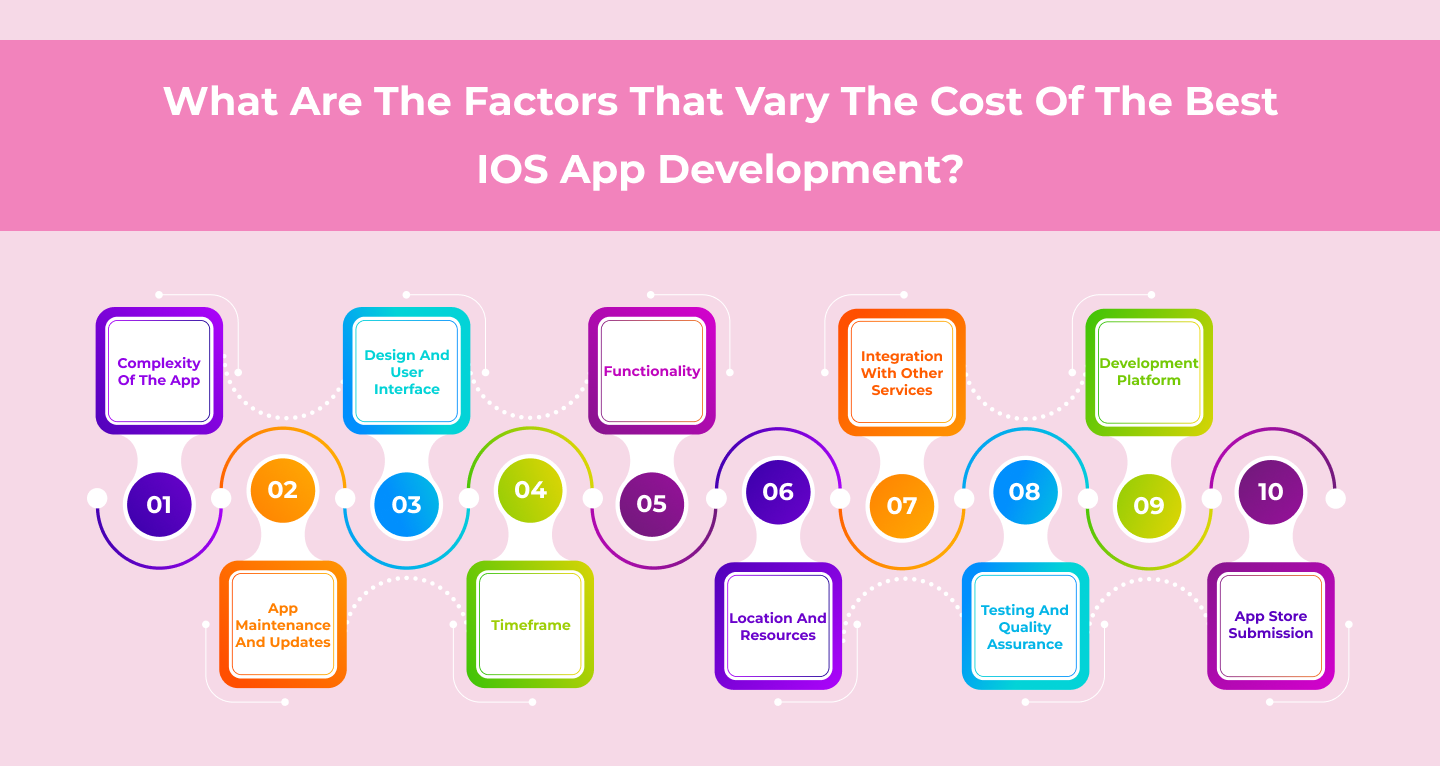
The cost of developing an iOS app can vary widely depending on a range of factors. Here are some of the key factors that can influence the cost of iOS app development:
● Complexity of the App
The complexity of the app is one of the most significant factors that can influence the cost of development. A simple app with basic features will generally cost less than a complex app with advanced features and functionalities.
● Design and User Interface
The design and user interface of the app can also impact the cost of development. A custom-designed app with a unique and visually appealing interface will generally cost more than a basic, template-based design.
● Functionality
The functionality of the app is another key factor that can influence the cost of development. Apps that require complex algorithms, data processing, or other advanced functionalities will generally cost more to develop.
● Integration with Other Services
If the app needs to integrate with other services, such as social media platforms, payment gateways, or third-party APIs, this can add to the development costs.
● Development Platform
The choice of development platform can also impact the cost of iOS app development. Native iOS app development using Swift and Xcode is generally more expensive than cross-platform development using frameworks such as React Native or Flutter.
● App Maintenance and Updates
App maintenance and updates are an ongoing cost of iOS app development. This includes fixing bugs, adding new features, and ensuring compatibility with new iOS updates.
● Timeframe
The timeframe for development can also impact the cost of the app. A shorter timeframe will generally result in higher development costs, as developers may need to work overtime or hire additional resources to meet the deadline.
● Location and Resources
The location and resources of the development team can also influence the cost of iOS app development. Development teams located in countries with lower labor costs may be able to offer lower prices, while development teams with access to advanced technology and resources may be able to offer higher quality and more advanced features.
● Testing and Quality Assurance
It is a crucial component of iOS app development. This involves testing the app for bugs, errors, and compatibility issues to ensure that it functions properly. The cost of testing and quality assurance can vary depending on the complexity of the app.
● App Store Submission
Submitting an app to the Apple App Store also involves a cost. Apple charges a yearly fee to be part of the Apple Developer Program, which allows developers to submit their apps to the App Store.
What Is The Cost Of iOS App Development?
In general, the cost of iOS app development can range from a few thousand dollars to hundreds of thousands of dollars, depending on the app’s complexity and features. To understand the cost of iOS app development, it is necessary to consider the following factors:
● Development Team Structure:
The cost of iOS app development also depends on the development team structure, which can be categorized as follows:
A. Freelancers:
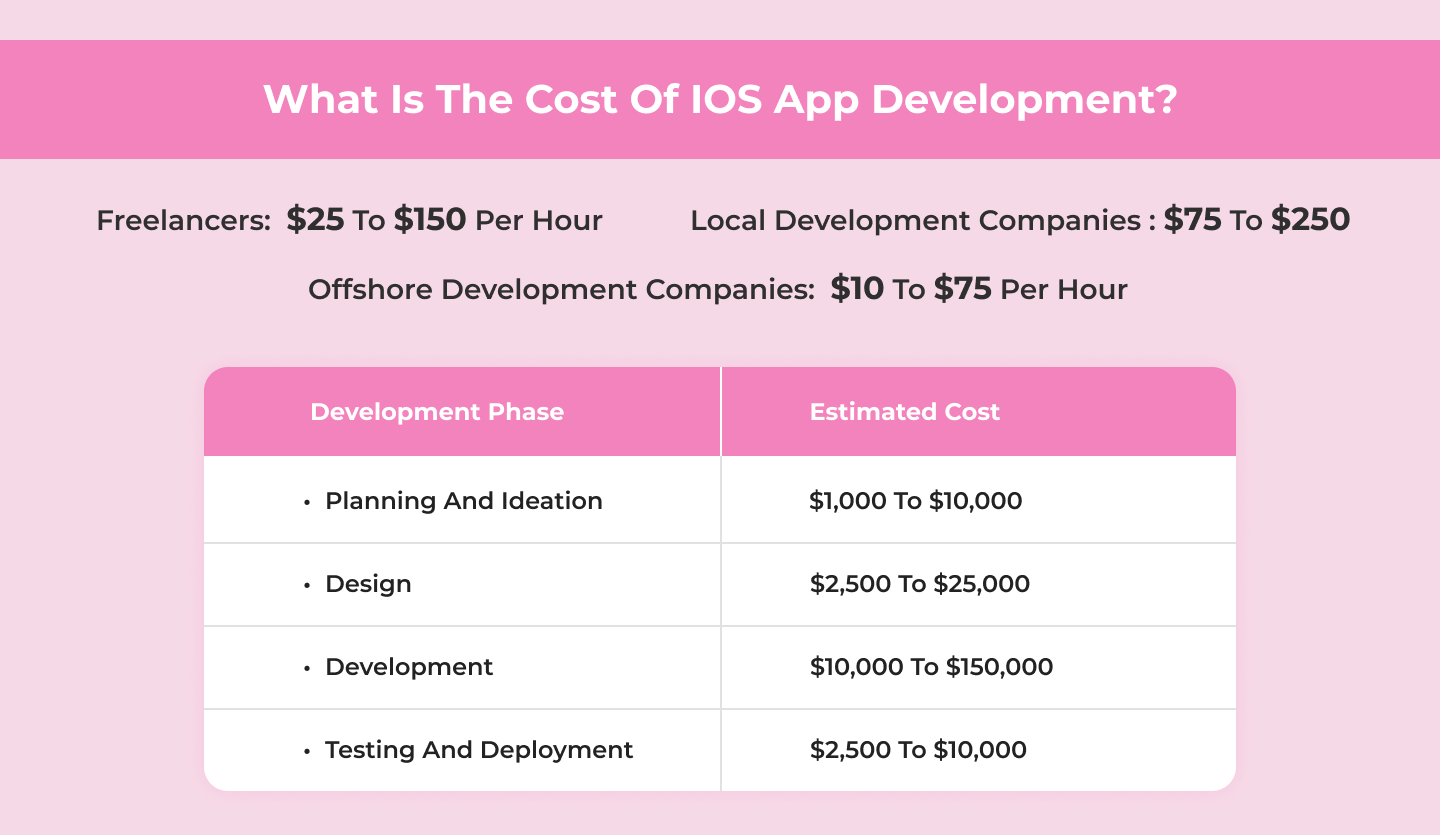
Hiring freelancers can be an affordable option for small businesses and startups looking to develop a basic iOS app. Freelancers typically charge an hourly rate, which can range from $25 to $150 per hour, depending on their expertise and experience.
B. Offshore Development Companies:
Offshore development companies offer iOS app development services at a lower cost compared to local development teams. The hourly rate for offshore development companies can range from $10 to $75 per hour.
C. Local Development Companies:
Local development companies are the most expensive option, but they offer the highest quality iOS app development services. The hourly rate for local development companies can range from $75 to $250 per hour.
● App Development Phases:
The cost of iOS app development can also vary based on the app development phases, which can be categorized as follows:
a. Planning and ideation:
This phase involves brainstorming ideas, defining app requirements, and creating a project plan. The cost of this phase can range from $1,000 to $10,000, depending on the complexity of the app and the scope of the project.
b. Design:
This phase involves creating the user interface and designing the app’s visual elements. The cost of this phase can range from $2,500 to $25,000, depending on the complexity of the app and the level of detail required.
c. Development:
This phase involves coding and building the app’s functionality. The cost of this phase can range from $10,000 to $150,000, depending on the complexity of the app and the number of features.
d. Testing and Deployment:
This phase involves testing the app for bugs and errors and deploying it to the App Store. The cost of this phase can range from $2,500 to $10,000, depending on the complexity of the app and the level of testing required.
| App Type | Features | Timeline | US Developer Rate | Offshore Rate |
|---|---|---|---|---|
| Simple Business App | Login, basic features, notifications | 2-4 months | $30,000-60,000 | $12,000-25,000 |
| Standard iOS App | Payments, API, social features | 4-7 months | $60,000-120,000 | $25,000-50,000 |
| Feature-Rich App | AI features, real-time, complex UX | 6-10 months | $120,000-250,000 | $50,000-100,000 |
| Enterprise iOS Platform | Compliance, multi-user, MDM | 10-18 months | $250,000-500,000+ | $100,000-200,000 |
● App Features:
The cost of iOS app development also depends on the features included in the app. Some common features that can affect the development cost include:
a. User authentication and authorization
b. Social media integration
c. Push notifications
d. In-app purchases
e. Integration with third-party APIs
f. E-commerce functionality
g. Geolocation and maps
h. Chat and messaging functionality
The more features included in the app, the higher the development cost will be.
In summary, the cost of iOS app development can vary based on the development team structure, app development phases, and app features. Therefore, it is crucial to have a clear understanding of the app’s requirements and functionalities and work with a reliable development team that can provide accurate cost estimates and deliver high-quality iOS app development services.
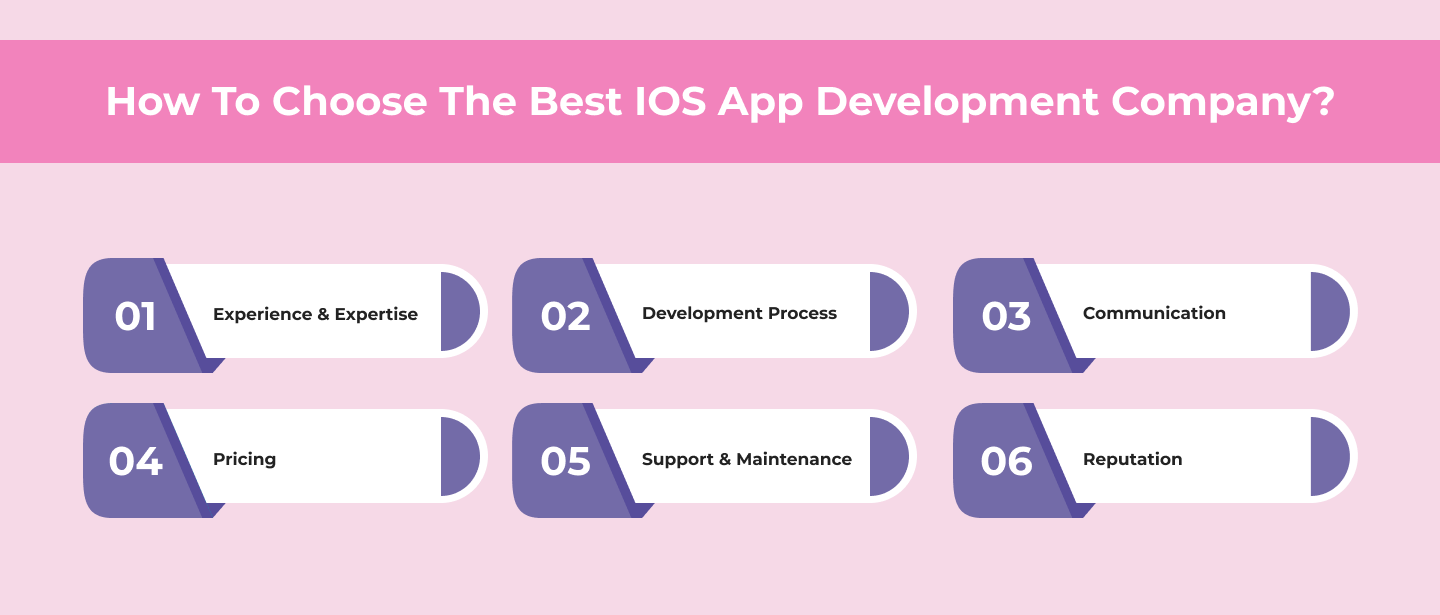
How To Choose The Best iOS App Development Company?
Choosing the right iOS app development company is crucial for the success of your app. With so many options available in the market, it can be challenging to find the right one that fits your requirements and budget. In this article, we will discuss some essential factors to consider when choosing the best iOS app development company.
● Experience and Expertise:
The first factor to consider when choosing an iOS app development company is their experience and expertise. Look for a company that has extensive experience in developing iOS apps and has a team of skilled developers who are proficient in using the latest iOS app development technologies and tools. Check their portfolio to see if they have developed apps similar to yours and read client testimonials to get an idea of their expertise.
● Development Process:
The development process is another crucial factor to consider when choosing an iOS app development company. Look for a company that has a well-defined and transparent development process that involves regular communication and feedback. The development process should be agile and flexible, allowing for changes and modifications as needed. Make sure the company has a robust testing process in place to ensure the app is bug-free and meets all requirements.
● Communication:
Communication is a key factor in the success of any project. Choose an iOS app development company that has excellent communication skills and can provide regular updates on the project’s progress. The company should have a dedicated project manager who can address any concerns or queries promptly.
● Pricing:
Pricing is an essential factor when choosing an iOS app development company. Look for a company that offers a transparent pricing model and provides a detailed breakdown of the development costs. Compare the pricing with other companies in the market to ensure you are getting a fair deal. Keep in mind that the cheapest option may not always be the best one, as quality should be the top priority.
● Support and Maintenance:
Once the app is developed, it will require regular maintenance and updates to keep it up-to-date and bug-free. Choose an iOS app development company that offers reliable support and maintenance services, including regular updates and bug fixes. Check the company’s service level agreement (SLA) to see what kind of support they provide after the app is launched.
● Reputation:
Finally, consider the company’s reputation when choosing an iOS app development company. Look for a company that has a good reputation in the market and has worked with reputable clients in the past. Check online reviews and ratings to get an idea of the company’s reputation and reliability.
Final Verdict
iOS app development is a crucial process that requires careful planning, expertise, and resources. The cost of iOS app development can vary based on several factors, including the development team structure, app development phases, and app features. When choosing the best iOS app development company, consider factors such as experience and expertise, development process, communication, pricing, support and maintenance, and reputation.
By considering these factors, you can find a reliable iOS app development company that can deliver a high-quality app that meets your requirements and expectations. With the right iOS app development partner, you can create a successful app that provides value to your users and helps you achieve your business goals.
FAQs
Q: What does an iOS app developer do?
A: An iOS app developer designs, builds, tests, and maintains applications for Apple’s iOS devices — iPhone, iPad, Apple Watch, and Apple TV. Their responsibilities include writing Swift code using SwiftUI for the user interface and UIKit for legacy features, integrating with Apple’s ecosystem APIs (HealthKit, ARKit, CoreML, Apple Intelligence, App Store Connect), optimizing app performance using Instruments, submitting apps through the App Store review process, and maintaining apps for compatibility with new iOS versions released annually.
Q: What skills does an iOS developer need in 2026?
A: Core skills for iOS developers in 2026: Swift 6.0 (with strict concurrency and async/await), SwiftUI (declarative UI framework), Xcode 16+ proficiency, UIKit for legacy code maintenance, Core Data and CloudKit for data persistence, StoreKit 2 for in-app purchases, URLSession and async networking, XCTest for unit and UI testing, Git for version control, and App Store Connect for submission. Advanced skills in demand: Apple Intelligence APIs, ARKit 6, HealthKit, CoreML, and Swift Package Manager. Apple Intelligence integration experience commands a 15-20% salary premium in 2026.
Q: How much do iOS developers earn in the USA in 2026?
A: iOS developer salaries in the USA in 2026: Junior iOS developer (0-2 years): $75,000-$100,000/year. Mid-level (3-5 years): $100,000-$140,000/year. Senior iOS developer (6+ years): $140,000-$185,000/year. Principal / Staff iOS engineer: $180,000-$250,000+/year. The highest salaries are at Apple, Meta, Google, and Airbnb — with total compensation (base + RSU + bonus) exceeding $300,000 for senior engineers. iOS developers with Apple Intelligence and visionOS experience command a 15-20% premium above these ranges.
Q: Do iOS developers need to know Swift or Objective-C in 2026?
A: Swift is the primary iOS development language in 2026 and is required for all new iOS apps. Objective-C knowledge is still valuable for maintaining older codebases (many enterprise apps have Objective-C modules) but is not required for new development. Apple introduced Swift in 2014 and has steadily deprecated Objective-C in new API documentation. New iOS developers should focus exclusively on Swift 6.0 and SwiftUI; Objective-C can be learned if required by a specific employer with legacy code.
Q: What is the difference between an iOS developer and a mobile developer?
A: An iOS developer specializes exclusively in Apple’s iOS ecosystem — Swift, Xcode, SwiftUI, and Apple-specific APIs. A mobile developer typically refers to someone who builds cross-platform apps (using Flutter or React Native) for both iOS and Android from a single codebase. iOS developers command higher salaries for platform-specific depth and Apple Intelligence expertise. Mobile (cross-platform) developers offer the broader business value of building for both major platforms simultaneously. The right choice depends on whether your app requires deep iOS-specific integration or benefits more from cross-platform cost efficiency.