
Mobile app development costs in 2026 span a wider range than ever — from $10,000 for a simple MVP to over $500,000 for an enterprise-grade platform with AI features, real-time data processing, and global compliance requirements. The difference comes down to four variables: platform choice, app complexity, team location, and ongoing maintenance scope.
Quick Answer (2026 Cost Ranges): Simple App — $10,000–$30,000 | Medium Complexity — $30,000–$80,000 | Complex App — $80,000–$200,000 | Enterprise — $200,000–$500,000+
Platform Choice and Its Impact on Cost
This guide, updated by the Auspicious Soft development team from our active 2026 project portfolio, gives you the most accurate cost estimates available — broken down by every factor that actually moves the number.
1. Key Factors Influencing Mobile App Development Costs
There are many factors that contribute to the overall costing of the developing mobile app. Below is a detailed look at the most significant ones.
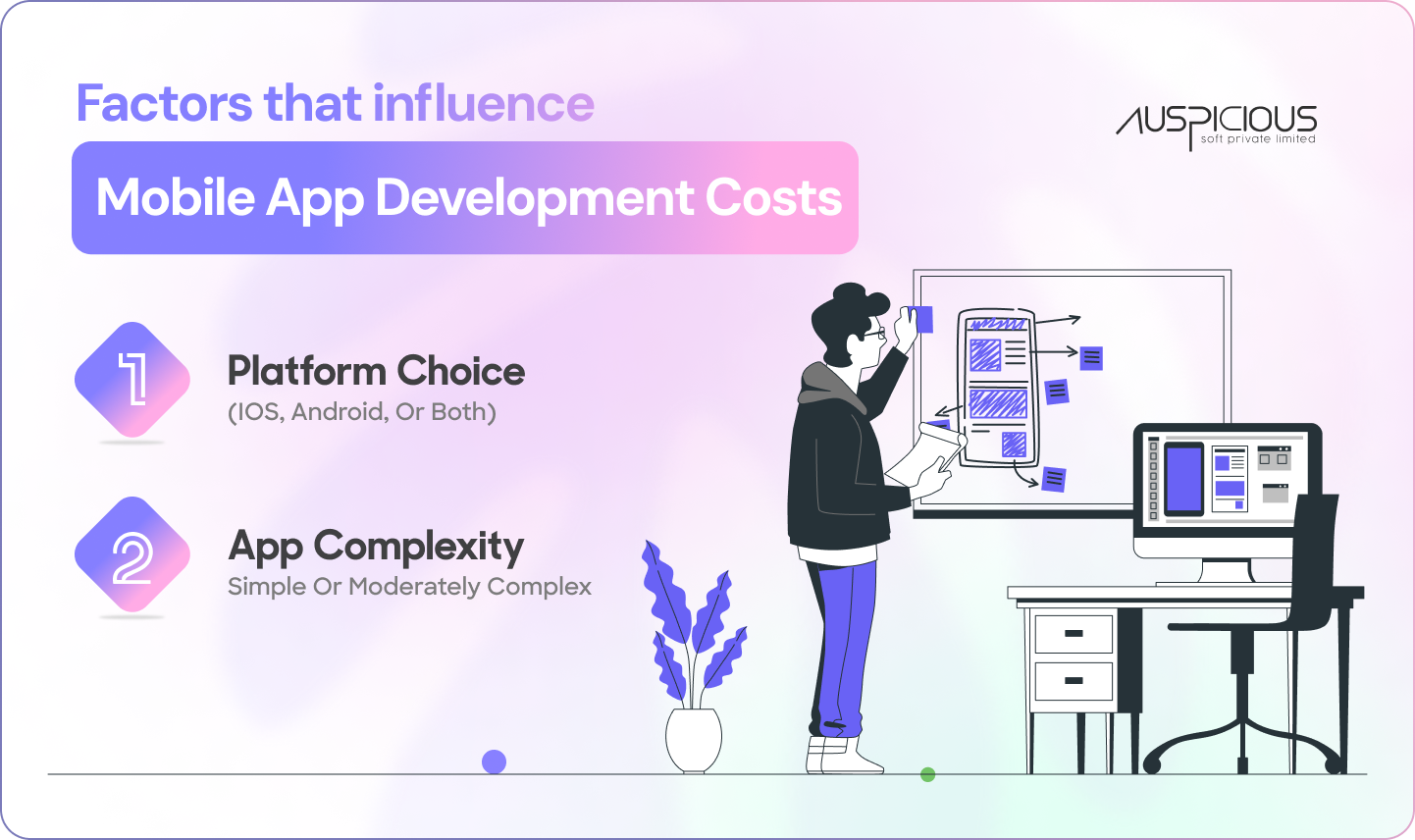
a) Platform Choice: iOS, Android, or Both
Both IOS app development and Android app development have a direct impact on the development cost. Out of the two, building a single platform is less expensive.
iOS App Development: If we talk about the ios app development , it’s cheaper to develop it as it offers a more standardized hardware environment. Also on the same side the ios app development demands a high quality design and functionality.
Android App Development: If we talk about android app development that is more expensive due to its wide range of devices and also the screen sizes. As the experts need to account for the differences in the hardware, operating systems version and performance across devices.
Cross-Platform Development: In 2024, the cross platform framework will be used in a wide range to reduce the cost. This framework helps the experts to build an application that works on both the iOS app development and android app development, helping to lower the development time and the cost.
b) App Complexity
App complexity is another major determinant of cost. Here’s how it breaks down:
Simple Apps: Apps that have some functionality, for eg notepad apps and calculators have lower development costs. The simple applications generally include the basic user interfaces.
Moderately Complex Apps: These applications have user authentication, integration with payment gateway, databases, and with APIs.
c) Design Requirements
App design plays a very important role in both the user experience and also the cost of the development. Well designed apps are more likely to succeed, but they come with a high price tag.
Custom and Advanced Design: If the aim of the customer is to get a unique look with customer animations, transitions or even branding , design costs can rise.
2. Development Stages and Associated Costs
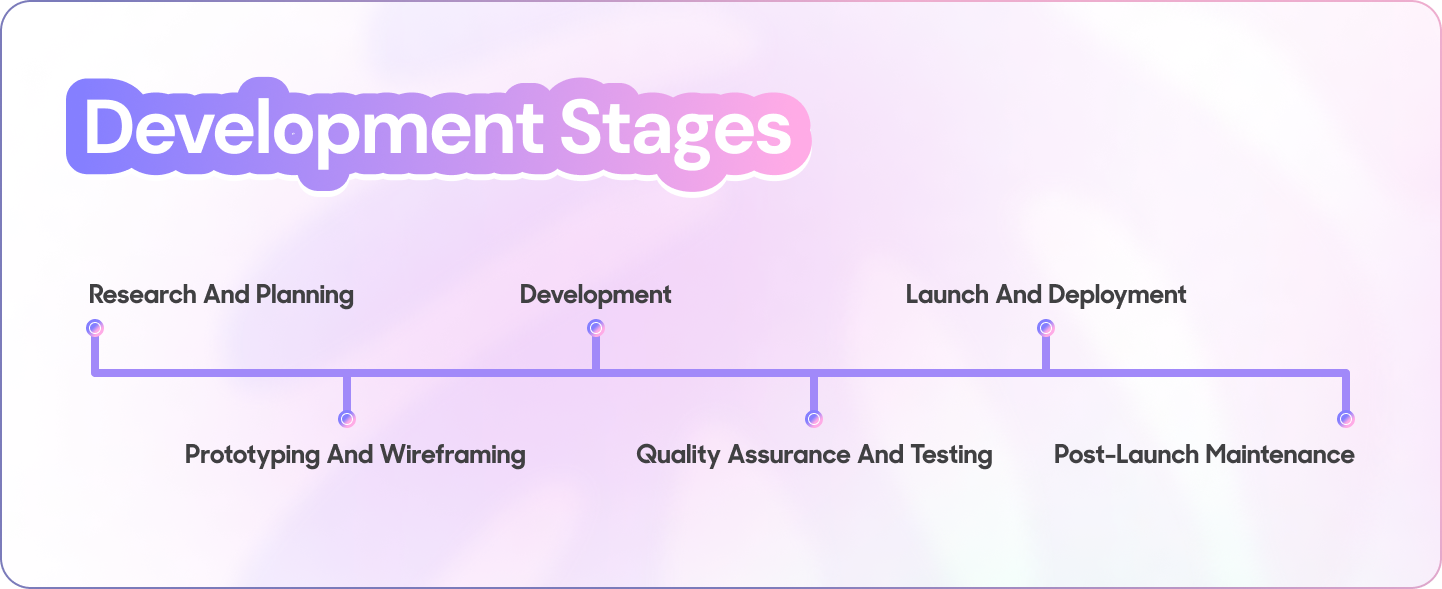
The mobile app developing can be broken into various stages, each with its own cost:
a) Research and Planning
The most important phase is to conduct market research and competitor analysis. Also planning the app’s flow, features, and also the technical requirements will need collaboration between your team and the developers.
b) Prototyping and Wireframing
Creating a wireframe and a prototype will help to visualize how the app will function and look. And on the other hand it also helps to understand the scope of work.
c) Development
The actual coding happens in the development stage. This can be broken down into the front-end and the back-end development.
d) Quality Assurance and Testing
The next step comes is the testing that is most essential to ensure that your application is bug-free and works seamlessly on the various devices.
e) Launch and Deployment
The next step that comes is the launch and the deployment of your appDeploying your app.
f) Post-Launch Maintenance
After the launch once your app is live, its maintenance is required to fix various issues, and also add various new features.
g) App Complexity — The Biggest Cost Driver
| Complexity | Features Included | Dev Hours | Cost Range (2026) |
|---|---|---|---|
| Simple | Basic UI, Static Content, 1–3 Screens, no backend | 100–300 Hrs | $10,000–$30,000 |
| Moderate | User Auth, API Integration, Database, Payment Gateway | 300–700 Hrs | $30,000–$80,000 |
| Complex | Real-Time Features, GPS, Multi-Role Users, Admin Panel | 700–1,500 Hrs | $80,000–$200,000 |
| Enterprise | AI/ML, IoT, ERP Integration, Compliance, Multi-Region | 1,500+ hrs | $200,000–$500,000+ |
3. Hiring the Right Development Team
The type of team you hire will also affect development costs:
Freelancers: When we hire a freelancer it is often cheaper but the risk in terms of long term support and reliability is more.
App Development Agencies: Agencies help to provide a more structured approach with the team of developers, project managers, and developers.
In-House Team: If you hire your own developers, your upfront costs will also get higher, but you will have full control over the development process. This can be a good long-term investment if you plan on developing multiple apps or updating your app frequently.
4. Conclusion: Budgeting for App Development in 2024
In 2024, mobile app development requires more careful considerations of various factors, that includes platform choice, design, features, and the development team.
When you plan for an app, it is essential to define clear goals and prioritize features to stay within your budget. Whether you’re building a simple app for one platform or a complex, cross-platform solution, understanding the costs involved, including ios app development cost, will ensure you’re well-prepared for the development journey ahead.
FAQs
Q: How much does it cost to develop a mobile app in 2026?
App development costs in 2026 range from $10,000 for a simple single-platform app to $500,000+ for an enterprise-grade platform. A typical startup app with moderate complexity costs $30,000–$80,000 with a 3–6 month timeline.
Q: Is it cheaper to build an iOS or Android app?
In 2026, iOS app development is slightly cheaper for a single platform due to a more standardised device ecosystem. Android development requires broader device compatibility testing. Cross-platform (React Native or Flutter) is the most cost-effective option for covering both.
Q: How much does app maintenance cost per year?
Annual app maintenance typically costs 15–20% of the original development budget. For a $50,000 app, expect $7,500–$10,000 per year for OS updates, bug fixes, security patches, and minor feature additions.
Q: Can I build a good app for under $20,000?
Yes — a well-scoped MVP with 3–5 core features on a single platform can be built for $15,000–$20,000 with an experienced offshore team. The key is strict scope discipline: build one thing perfectly rather than ten things partially.
Q: What is the cheapest way to develop an app in 2026?
The most cost-effective approach is: (1) Use React Native for cross-platform coverage, (2) Partner with an experienced India-based development agency ($25–$60/hr vs $150–$250/hr in the US), (3) Build an MVP first, validate, then invest in v2.